Story of Chang and Eng Bunker – Conjoined Twins

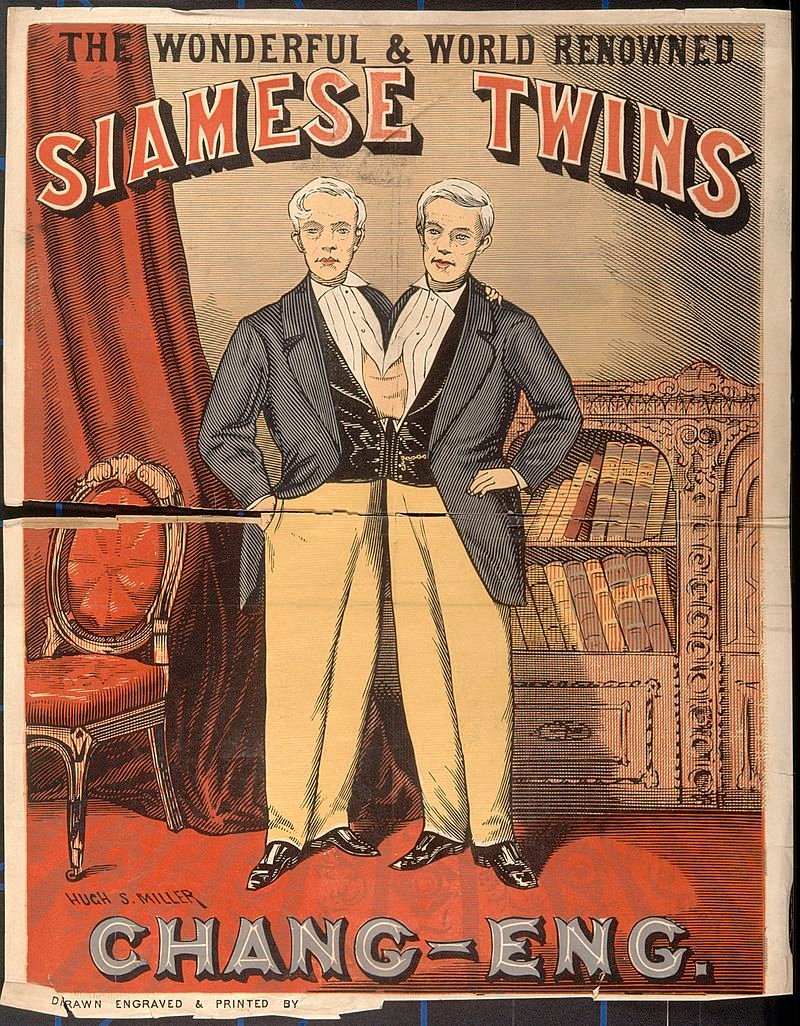
Chang and Eng Bunker were Siamese-American conjoined twins born on May 11, 1811. They are most widely recognized for coining the phrase “Siamese twins,” which is generally used to this day to refer to conjoined twins. Little was known at the time about conjoined twins, and because of its rarity, they were two of the most widely studied humans within the 19th century.

The “First” Siamese Twins

Chang and Eng were born in what we today know as Thailand. They were joined at the sternum by a band of flesh and cartilage about five inches long and nine inches in circumference. Their livers were also connected. Upon consulting various medical professionals, the brothers were urged not to attempt surgery to separate them. At the time, medical technology was not advanced enough for a successful operation.

Their Life in the United States

Chang and Eng left for the United States in 1829. They were only seventeen years old. Their popularity skyrocketed after they became heavily involved in “freak shows.” However, after three years of consistent involvement in shows, they decided to tour on their own. They quickly found financial success. Upon their departure, they expressed that their managers had been cheating them of money. The brothers often performed athletic stunts, including running, somersaults, and swimming. They also played checkers and performed parlor tricks. Tickets for the show cost about 25 cents, and souvenirs, such as pamphlets or drawings of the men, were often sold at the shows as well.

The Pre-/Post-Civil War Years

In 1839, after nearly a decade of touring, the brothers decided to settle down and quit their current lifestyle. They moved to North Carolina and became citizens of the United States. Chang and Eng married local sisters and raised 21 children. Many of their children ultimately ended up touring with their fathers once they came out of “retirement.” The brothers even owned slaves in North Carolina up until the end of the Civil War. In the years following the war, they lost their slaves and a portion of their wealth as well. This is ultimately what caused the brothers to continue touring. However, many audiences in the north were unsupportive of them due to their slaveholding practices in the south. To combat this continuous criticism, the brothers presented themselves as old men with many children who simply supported their state during the period. They were even outspoken about several of their sons who were harmed during the war, even though they were part of the Confederate States Army. This made the audience angry. Many believed the men were attempting to take advantage of them.

Health Problems

In 1870, Chang and Eng visited Russia and Germany with plans to explore other parts of Europe. They returned home soon after to avoid the Franco-Prussian War. During the journey back home, Chang suffered a stroke on the ship and his right side became paralyzed. As a result of Chang’s medical condition, the brothers decided to retire from touring altogether, even though Eng remained in good health. Chang’s condition continually deteriorated and he began drinking heavily. Eventually, his right leg was slung. Chang developed bronchitis four years later in January 1874. He was urged by medical professionals to stay indoors to avoid the cold weather. Still, against this advice, the brothers traveled to Eng’s house on January 15, further exposing Chang to harsh weather. The next day, Chang appeared to have recovered from the previous day of travel. However, that same night he found himself having difficulty breathing, so they decided to sit upright in a chair for the night. Eng quickly became paranoid about spending nearly an entire week with his brother being ill and urged Chang to lay in bed instead.

The Death of Chang and Eng

Early the next morning, one of Eng’s sons came to check on the twins. He found Chang dead beside his brother. Still alive, Eng expressed that he must go also. About two hours after Chang’s death, Eng passed away before the family physician could assist him. Chang and Eng’s body was autopsied and researched following their death. They are buried in North Carolina. Their fused livers are currently displayed in a jar at Mutter Museum in Philadelphia.

Secret Life of H.G Wells

Herbert George Wells, the internationally celebrated English writer, was born in the Bromley area of Kent, England, on September 21st, 1866. He was a renowned novelist, historian, teacher, and journalist. HG Wells penned dozens of artistic works, including short stories, novels, autobiographies, and biographies. The author was particularly acclaimed as a gifted writer of science fiction. Well’s book, The Time Machine, is a highly acclaimed and phenomenal work that catapulted him to literary fame. Other famous titles by Wells include War of the Worlds and The Invisible Man. The renowned author, who was dubbed as “the Shakespearean father of science fiction,” died in 1946. Despite his fame as a distinguished man of letters, the secret life of HG Wells, particularly his erotic liaisons with a coterie of women, is both controversial and shocking.

The Shocking Sex Life of HG Wells

HG Wells was recently unveiled as a determined, unrelenting, and unapologetic advocate of free love. As Wells himself famously said towards the end of his life, “I have pleased myself tremendously through romantic deeds.., every iota of sexual impulse in me… has fully expressed itself. Let me admit it, I am immoral and have preyed on admirers.” Interestingly, a newly launched biography reveals some graphic, sordid details about the author’s intriguing sex life. HG Wells has been described as an irresistible magnet that strongly attracted women. Indeed, most of the women’s adulterous appetites drove them to follow him passionately, even if it meant they would die. Much of the prolific writer’s erotic life was generally unknown by his adoring fans. His extraordinary literary exploits were more than matched by his overactive and unusual sexual thirst that led him to dally in fascinating sexual encounters with many young women. Some of them laid out elaborate love traps that would catch the all-too-willing scholar-turned sexual predator. At one time, Wells shockingly had sex with a woman within a church building. He would later have more sex with her in the nearby bushes.

The “Unattractive” Romantic Lover

It did not deter that Wells was apparently sexually unappealing, going by his physical attributes. His appearance was even described as “unprepossessing.”  The renowned writer is also described as “a short man with a high-pitched voice and a tubby in tow.” Regardless, Wells proved to be the undisputed champion of indiscriminate love escapades that paired him with an amazing multiplicity of partners. Never mind that he was already married to two wives. One of Wells’ first documented secret lovers was Amber Reeves. The young lady was the daughter of New Zealand’s High Commissioner to the UK, William Reeves. When they first met, Amber was barely 18. She studied at the Cambridge, Newnham College, was brilliant and intellectually gifted. She was a great admirer of HG Wells and enthusiastically shared his philosophies. Interestingly, Wells already had three other lovers, Rosamund Bland, Dorothy Richardson, and Violet Hunt. Regardless, the relationship between Wells and Amber gradually grew intimate, with the two enjoying a peculiar closeness. Wells described the illicit affair as “romantically spontaneous,” suggesting that Amber lured him with her youthful magnetic enthusiasm.

Sex in a Church Building

The two rented a room near the Victoria Station in Warwick. This became the love birds’ ever-cozy nest. They went for long walks and ate at restaurants.  Sometimes Wells made love to Amber in the bushy, windy area near Hythe. They even once made love in a local church building. Of course, the affair soon became a scandal with Amber revealing the matter to her mother, lecturers, and fellow students. When Amber demanded to have a child with him, Wells was more than ready. He later sent some letters addressing the newborn as “Dear Pup,” assuring it of “daddy’s love.” Years later, the author admitted “feeling happiness and unregretted exhilaration as well as relishing a sense of sin” in these illicit affairs.

The Russian Spy Lover

In the 1930s, HG wells got involved in yet another steaming love affair with Moura Benckendorf, who was the official interpreter of Maxim Gorky, a Russian writer. Moura became one of Wells’ most enigmatic lovers. As author Andrea Lynn revealed, Moura feigned love to gain access to HG Well’s high circle of friends. In her book, the “Shadow Lovers,” Lynn says that through Moura, Wells met Benard Shaw Sydney, and Beatrice Wells, and Stalin. After this meeting, the communist dictator received international praise. Wells thought of Moura as an elusive woman of surprises. She once pretended to be pregnant with him. Later still, HG Wells had a fling with Odette Keun, a Dutch writer who greatly admired him. She famously lured Wells into a room that was ready and prepared for sex. Of course, Wells could not resist. The pair soon moved into Well’s winter abode in France to enjoy a brief romantic escapade.

Story of Abandoned Soviet Space Shuttles in the Kazakh Steppe

In 2017, space enthusiasts were thrilled by the news that two Soviet-era space crafts had been found abandoned in the Kazakhstan desert region. The exciting discovery sparked speculation and curiosity regarding what the Russian space agency planned to do with the cherished remains of the vintage space shuttles. The twin crafts were hidden in a lonely hangar in the Kazakh steppe’s Baikonur Cosmodrome. The valued vehicles were ‘busy’ collecting dust, rust, and bird droppings. The Baikonur Cosmodrome is an active spaceport located approximately 1,500 miles southwest of Moscow. To date, the Russians still use the Cosmodrome to send or retrieve astronauts who visit the International Space Station.

Space Race Shuttles

Image credit: David de Rueda
The intriguing story of the twin shuttles began sometime in the 1970s and 1980s when space scientists in the former USSR designed and built them. This scheme constituted a part of the space race that pitted the then superpowers (USA and USSR) in a thrilling battle for dominance of outer space. The twin Soviet vehicles were meant to compete with the winged orbiters designed by the US.

Structurally Unique Shuttles

Image credit: Caters News Agency
The two surviving vehicles found were a shuttle orbiter and a Buran orbiter. Though referred to as twin shuttles, there are significant structural differences. The shutter orbiter, for instance, was designed with its own engine. It also had a massive rocket that worked as the fuel tank. Its counterpart, the Buran shuttle, was not designed with a typical engine. Instead, as part of the Buran shuttle design series, it was attached to a massive rocket named Energia. These specially designed vehicles gave the Soviets greater leeway in sending vessels to space. Moreover, the Buran was designed with emergency eject seats that served all crew members. The Buran shuttle was deemed to be relatively safer compared to their US relatives.
The Buran Made History, but Never Fully Launched

Initially, the Buran shuttles built by the Soviets were designed to transport heavy cargo into space. This cargo was meant to build sophisticated weapons as well as space stations. The successful launch of one of the Buran crafts in 1988 showed the world just how superior a shuttle the country crafted. The ultimate goal of the space program, however, was never quite achieved. After the fall of the Berlin Wall in 1989, the end of the Cold War, and the disintegration of the USSR in 1991, the Soviet shuttle program came to a halt. In 1993, Russian President Boris Yeltsin decided to cancel the Soviet space program in its entirety. The Buran became the sole Soviet orbiter to ever leave the earth. Moreover, the shuttle that was launched was eventually destroyed in 2002. This happened soon after its hangar collapsed following a massive earthquake that killed eight people. The shuttles that remain in the Baikonur hanger are a representation of not only the political competition between two nations, but also the attempt to send humans to the outer space and, perhaps, conquer the universe. The hangar is not open to the public but attracts hordes of enthusiasts and explorers nonetheless.

Shuttles Immortalized

A German museum almost purchased the two shuttles for $12 million, but the cost of transporting them was too much. The deal fell through. Instead, they remain in the hangar, left for curious photographers to immortalize. In 2015, photographer Ralph Mirebs made his way into the cherished complex, taking pictures of the forgotten relics of a lost space race. Mirebs courageously hiked a 24-mile stretch into the Kazakh desert. He eventually entered the site, spending three nights surrounded by the decaying space vehicles. A few months ago, the renowned Russian film director and photographer, Alexander Kaunas, accompanied by an aide, took a risky journey of discovery, desiring to explore these abandoned monuments.
Image credit: RSC Energia
Visiting the monument just next to the shuttle hangar, you will discover a lonely cavern. This cavern holds the relics of the huge Energia rocket, which once fired the Buran shuttles into space. Will the precious shuttles be left to rot? Will they fall victim to neglect in their desert hangar? These shuttles are just two amongst many others that sit and wait for a museum to take them in. Other abandoned space vessels have been placed on display in various strategic places, including Moscow Gorky Park and the Sydney Summer Olympics.

Wadi Us-Salaam, Iraq: The Largest Cemetery in the World

In the holy city of Najaf, Iraq, an Islamic cemetery known as Wadi Us-Salaam lays claim as the largest in the world. Burial at this hallowed ground has been a religious rite for well over one thousand years. Millions have been laid to rest across a crowded, but expansive 1500 acres which occupies nearly 30% of the city. Increased violence over several decades has accelerated the rate of burials at an alarming rate. More recently, the crooked maze of paths between tombs has been used by combatants to hide and ambush opposing forces, bringing the conflict to the Shi’a holy ground. Why is this burial ground revered, and how did it become so large?

True Story of The Missing Mines of The Wild West

The missing mines of the Wild West are fantastic tales of treasures lost in the Wild West of America. According to folklore, a person who discovers any one of the lost mines will become very rich. These tales have spurred many treasure hunts in the past, which, unfortunately, have yielded no positive results. However, since humans love adventure and the prospect of money, these stories continue to excite and inspire people, especially children.
Origin of Mining

It is safe to say that mining is the second earliest endeavor of man. Agriculture is the first. Scientists believe that the earliest form of mining predates Homo Sapiens. It’s incredible, right? What has turned into the search for minerals and precious stones initially began as a practical search for the most appropriate stones for making tools! The account further asserts that as man evolved, so did their understanding of the role of natural resources. This led to the improvement in approaches and methods of extraction.

Mining in the Wild West

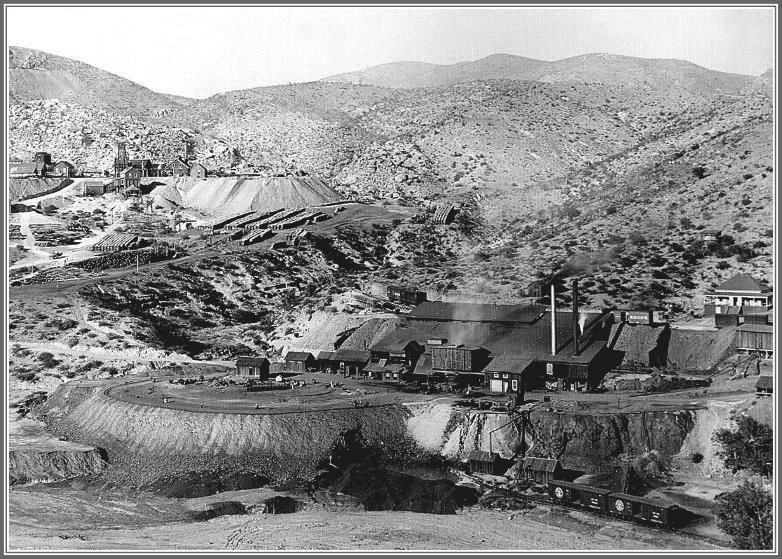
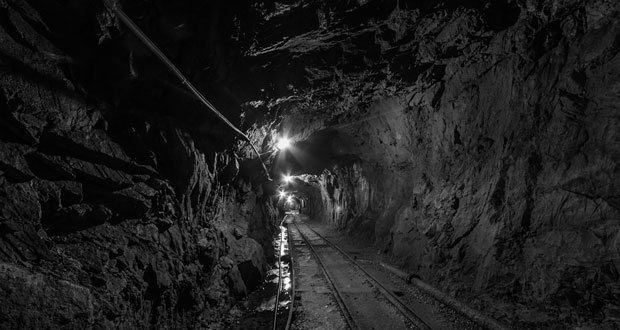
Before searching for the missing mines, let’s go on a journey through the history of mining in the Wild West. It is impossible to talk about mining in the Wild West without remembering the 1849 California Gold Rush. The Gold Rush, a result of gold fever, was a search for gold and other precious metals by miners looking to make it rich. People left their homes on this quest, and some never returned. As it is commonly known, mining cannot be done effectively by an individual or even carried out in isolation. It is incredibly unsafe and nearly impossible because of the processes involved. A team of miners must first conduct a preliminary investigation aimed at locating the gem and even an economic analysis before the actual extraction. Then comes the blasting, the structural reinforcement, etc. It’s an arduous task for a single person. Still, the Gold Rush brought a surge of people out West with one goal: dig, discover, get rich in the process. Solo or in a team, it was mine or die! This dream birthed several mines in the West that resulted in massive job provisions but came with unbelievable hardships, including starvation, hunger, and death.

Lost Mines of the Wild West

Did you know that stories about the lost mines leave a lot of people in doubt? Several persons do not think that the lost mines exist, and even doubt the legends of the lost treasures. This distrust in folklore is primarily based on the fact that these tales have been handed down several generations. At some point, people who pass down the stories have added hyperbole and differing information. Tons of mines may or may not be in existence today, but the three most famous lost mines are the Lost Dutchman’s Gold Mine, The Lost Cement Mine, and The Lost Dutch Oven Mine.

The Lost Dutchman’s Gold Mine

This mine, according to legend, sits near the Apache junction on the eastern side of Phoenix, Arizona. It is also rumored to be a mine extremely rich in gold. The Weaver’s needle serves as its landmark. Those who go searching for the mine will find their compasses malfunctioning and navigating over treacherous terrain. The mine remains lost, but the dream of the Dutchman’s treasure is very real.

The Lost Dutch Oven Mine

The lost Dutch Oven Mine was found by Tom Schofield, a railroad worker who decided to go search for gold himself. Schofield ended up in the Clipper Mountains in California, where he found an abandoned house, a spring, and then a trail. He followed the path to an old Spanish Camp where he found pieces of ore and gold nuggets. Tom brought back as much gold as he could carry. When he ran out of gold, he went back to get more but could not locate the site again.

The Lost Cement Mine

Two men discovered the Lost Cement Mine after they were separated from their group. They stumbled upon hard, igneous rock that had gold laid within it. The Lost Cement Mine, according to tales, is located in eastern Sierra Nevada, in California. There is no distinctive landmark for the Lost Cement Mine, except for the mention of the hard igneous rock. This makes it pretty hard to trace.

Conclusion

Many explorers attempt to search for these mines. The Wild West still lures them in with tales of gold and mystery. But to this day, no curious adventurer has found any of the lost mines.

Story of Madam Gustika

Madam Gustika was a performer in a freak show. That fact has come to define her memory, but there was so much more to her than that. She was famous for having stretched lips, which was considered extremely bizarre for the time. But what is bizarre? To Madam Gustika, her lips were completely normal because that was part of her culture.

Her Famous Photograph

Her fame revolves around a photograph taken on the 12th April 1930 that shows her smoking a pipe. By placing ever-larger disks between her gums and her lips, she was able to stretch her lips to about 8 inches or 20 cm out from the rest of her mouth. While we don’t know much else about her, we’re certain that she appeared in a freak show, probably on Coney Island.

Freak Show Sensation

This would’ve probably been the first time people had seen someone who was born in Africa and raised in a 100% African environment. People weren’t used to seeing such people in those days, so it caused a lot of excitement when she first appeared in the United States. This was when freak shows were still popular because T.V. had just been invented and had not yet reached mainstream acceptance. There was still a niche market to be exploited, and this was a time was when people would go to Coney Island and see the various amusements on the boardwalk there. Working-class people couldn’t afford to go overseas on holiday, so seaside attractions or picnics were the main recreational activities in those days. Seeing people from different areas of the world was one of the main draws for the local audience.

Where Did Madam Gusitka Come From?

Madam Gustika was probably from Ethiopia. However, people like her were erroneously described as being from the Ubangi tribe because it sounded exotic and was easy to pronounce. Madam Gustika was billed as being a member of the Duckbill tribe, but not much else is written about her. The fact that she was smoking a pipe in the photograph made her relatable, even though her pipe was a western model. This was probably a gimmick to show that she could still use her mouth because the practicality of having enlarged lips must be questionable.

Why Were Her Lips Stretched?

A lot of tribes around the world used plates in their mouths to stretch their lips. Such discs were often made from wood or clay because these were the materials that were readily available. Practices like these continue to this day in Ethiopia among the Mursi and Suri women. In other tribes, the practice has been discontinued. The Sara women in Chad stopped wearing plates in their mouths 100 years ago. Over in Brazil, the Suya men did the same thing while the Makonde tribe in Mozambique and Tanzania did the same thing. Historically, the practice of lip stretching could be gender-specific and either be a symbol of identity or a sign of beauty as well. As these tribes came into contact with the wider world, their priorities changed, and inevitably parts of their culture like beauty modification were lost to history. Even in these unique cultures, times change, and preserving something for its own sake can become a burden to those people who don’t care about tribal identity as much as their ancestors did.

Moving Away From Freak Shows

The days when Ringling Bros. and Barnum and Bailey ran freak shows are over, but they still occupy a niche market. Such shows are good for one night, and then the public loses interest, which is what happened to the freak shows that peaked in popularity decades ago. Such acts are now seen as exploitive and lacking dignity. The idea that people could be different can be a profound shock to westerners. But the process goes both ways – people who aren’t used to other cultures can suffer from culture shock just as much as we can. Thankfully we live in a more enlightened era, so such spectacles as Madam Gustika are almost a thing of the past. The real “freaks” were in the audience and not on the stage. Hopefully, Madam Gustika led a happy life, and we can learn from the mistakes of the past.

The Abandoned Fishing Village Of Houtouwan, China

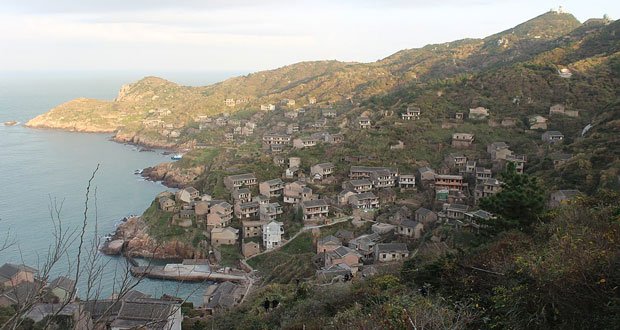
Houtouwan is located north of Shengshan Island, which is one of the 400 Shengsi Islands. The village lies atop cliffs and mist-shrouded mountains adjacent to the sea obscuring the horizon. People began settling in the village in the 1950s when the Chinese fishing industry and the fish market was booming. By the last quarter of the 20th century, the village had been inhabited by more than 2000 people majority of them being fishermen.

Factors that led to the mass migration

Residents began moving out of the village in the early 1990s. The last lot moved out around the year 2000, leaving behind a handful of people. Lack of proper roads and schools are the main reasons why residents moved out of the village. The growing competition from nearby Shanghai led to the decline of fish stocks, which was the primary source of livelihood for the locals. Also, poor enforcement of fishing regulations at the time led to problems with food delivery, which in turn contributed to the mass migration. Hence, residents relocated to the nearby modern cities such as Shanghai to access better services. The locals have since named it Wurencun, which means no person village.

Swallowed by nature

Mother Nature slowly reclaimed its belongings, and soon after, greenery swallowed up the uninhabited village. The dilapidated houses became ivy-covered after the great exodus of residents. The then-popular fishing village is now blanketed with greenery and covered in creeping vines. The ghost town is now filled with an eerie silence save for the chirping of birds, mosquito buzz, and the ocean breeze.

Unique tourist attraction

Houtouwan rose to fame in 2015 when a number of fascinating photos of the abandoned village went viral online. It instantly became an Internet sensation and a travel hotspot for nature lovers. Soon after, there was a surge of tourists from the mainland to the deserted village. As a result, government officials of Shengshan Island had to come up with a few measures to control the number of tourists visiting the village daily and find ways to monetize it. This led to the setting up of a viewing platform that tourists can access for only $3. Moreover, tourists can hike around the village for a ticket price of $8. Warning signs have been erected to caution tourists from entering dilapidated structures. In addition, places of accommodations have been set up all around the island.

Best season to visit Houtouwan

Tourists are advised to plan their trips to the deserted village during summer for the best experience. Popular activities that can be undertaken by tourists in the abandoned village often include hiking, photographing the dilapidated buildings, and sunbathing on the beaches.

How to reach Houtouwan village

Getting to Houtouwan from mainland China is a bit hectic. From Shanghai, go to the Nanpu Bridge bus station and get a bus or taxi to take you to Shenjiawan Dock. The journey usually takes around 90 minutes to reach the Shenjiawan Dock. You can either take the Zhoushan Shenjiamen Banshengdong Dock ferry that departs at 7 a.m or the Shanghai’s Shenjiawan Pier dock ferry that leaves at 9:15 a.m. The journey to Gouqi Island takes about 90 minutes via ferry, while boats take up to four hours of travel time to Shengshan. It is advisable to reserve a return ticket if you plan to stay overnight on the island. To access the village, tourists must travel by boat to Shengshan then take a taxi up the hill to a cemetery that overlooks the village. Upon reaching the cemetery, you’ll have to descend on foot. Once you arrive in Houtouwan village, you’ll see snaking dirt roads that connect the abandoned structures. Most of the paths connecting the crumbling buildings are impassable except for stray dogs.

Most verdant village in the world

Image credit: Damir Sagolj / Reuters
The first impressions of the picturesque village are gleaming roof tiles, and broken verandas of story houses wound by vines. You’ll see shadows of architecture and man-made structures reclaimed by nature. It is the perfect representation of man versus nature and an instance where nature has triumphed against civilization. There’s a blocked path over the ridge that is deemed “too dangerous” and is off-limits to visitors. The handful of residents remaining in the village often act as tour guides and sell drinking water to tourists as a source of income. Hiking and exploring the village usually takes a few hours. Today the once-bustling fishing village has become a popular tourist attraction site for its unique devastation drawing tourists from the mainland. Tourists are attracted to the beautiful remnants of the ghost village. Homes severely damaged by weather and abandoned buildings are now engulfed by nature. The abandoned fishing village is a representation of a broader migration trend of the Chinese people who migrate from rural areas to urban cities.

Story of Grady Stiles – The “Lobster Boy”

The story of Grady Stiles is both fascinating and horrifying. Grady Stiles was a famous freak show performer, but his life took several dark turns and ended in cold blood.

The “Lobster Boy”

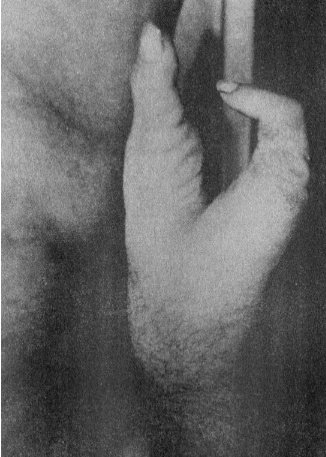
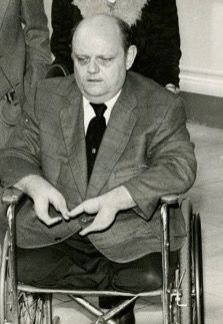
Stiles was born in 1937 with a deformity called ectrodactyly. Ectrodactyly is a genetic condition in which a person’s fingers and/or toes are fused together. This gives the appearance of a claw-like hand or foot. Ectrodactyly was in Stiles’s family for several generations, going back about 130 years before he was born. His father also had the condition and performed in a carnival sideshow attraction. He brought Grady into his act when he was just seven years old. Grady’s condition affected both his hands and feet, meaning that he could not walk properly. He got around using a wheelchair or by crawling, dragging himself with formidable upper body strength. Grady continued as a featured sideshow performer, going by the stage name “Lobster Boy.”

A Tragic Personal Life

  Grady married another carnival employee named Mary Herzog. Together, they had two children, one born with ectrodactyly. Grady included his children in his act, touring under the name “The Lobster Family.” When it was off-season, they lived in Gibsonton, Florida, also known as “Showtown USA.” Many carnival and circus performers gathered there while not on tour. Sadly, Grady’s life was plagued by alcoholism and anger issues. He was extremely abusive towards his family, especially when drunk. Eventually, he threw his wife and children out. Mary remarried “The World’s Smallest Man,” Harry Glenn Newman, and had one child together. Grady also remarried, this time to a woman named Barbara Browning. They had a child who was born with his genetic condition.

The Murder

By the time Grady remarried, his daughter Donna was engaged and planning their wedding. Apparently, Grady did not like Donna’s fiancé. On the night before the wedding, he asked her fiancé to come over to the house just to talk. Grady instead took a shotgun and murdered him on the spot. As Donna held her bleeding fiancé while he died, her father said, “I told you I would kill him.” He smiled.

The Aftermath

Grady went to trial in Pittsburgh, Pennsylvania, where he pleaded guilty to 3rd-degree murder. He never once showed any remorse. However, since there was no prison or institution in the state that was equipped to handle an inmate with his condition — he had cirrhosis of the liver which worsened his physical debility — he was only sentenced to 15 years probation. It’s said that after the incident, Donna never spoke to her father again. Yet somehow, Grady’s first wife, Mary, was drawn back to him. She left Harry and remarried Grady on the premise that he was a “new man” who would stop drinking and change his ways. Predictably, he did not change. Grady soon fell back into his typical pattern of drinking and abuse, often threatening to kill his wife and his family. Mary reportedly endured being choked by him. She would wake up to find him holding a knife to her throat. He also sexually abused her and once tried to smother her with a pillow after she suggested getting a divorce.

Grady’s Death

By that point in 1992, Mary was terrified for her and her family’s life. She decided that something needed to be done. She and her son, Harry Glenn Newman Jr. (known as Glenn), approached a 17-year-old named Chris Wyant who supposedly had gang ties. They paid him $1,500 to murder Grady. While Grady was sitting in the living room of his trailer home in his underwear, Wyant entered and shot him in the back of the head. He was 55-years-old when he was murdered. Glenn was given a lie detector test during the police investigation, but he failed. He broke down and admitted everything that happened. He was sentenced to life in prison. His mother, Mary, was given 12 years in prison on the charge of conspiring to commit murder. Wyant was convicted of 2nd-degree murder and sentenced to 27 years in prison.

The End of “The Lobster Boy”

Grady Stiles’s funeral was barely attended by anyone, and no one volunteered to be his pallbearers. Understandably, he was hated by the community. His entire life was marked by tragedy, hate, anger, abuse, and most of all, bloody violence.