As one of the oldest parts of the United States, New England lays claim to many abandoned (and allegedly cursed or haunted) buildings. Most common among these are the many dilapidated hospitals and asylums that dot the area. For the curious tourist or believer in the supernatural, here are four large abandoned hospitals in New England. While it can be tempting to want to explore these unique buildings, please be aware that they are likely not open to the public. Remember that urban exploration is a dangerous and often illegal activity. Please do not attempt this.
Medfield State Hospital
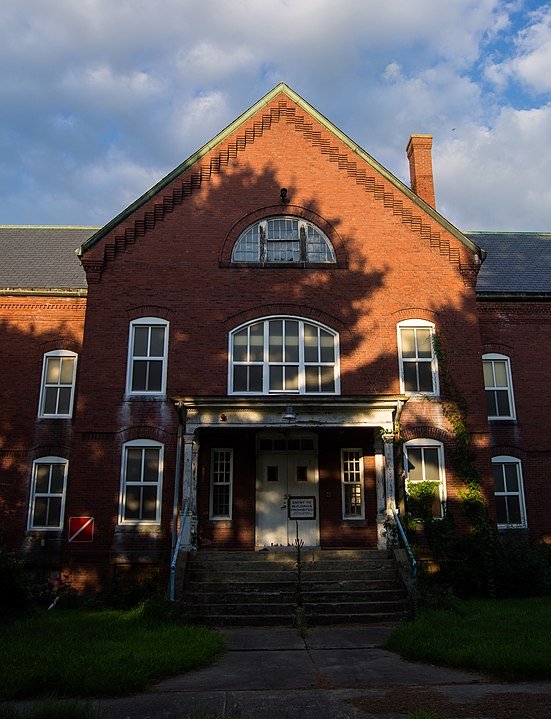
By Ghostfacesouthshore – Own work, CC BY-SA 3.0, https://commons.wikimedia.org/w/index.php?curid=26485539 Located at 45 Hospital Rd in Medfield, Massachusetts, this facility, as with many of the abandoned medical facilities in New England, was a mental health institution. This group of three buildings was constructed over a series of eighteen years, from 1896-1914. It consisted of 58 buildings at its peak, though the Odyssey House, the Cottage House, and the Laundry Building have since been demolished. Also located on the campus is the Medfield State Hospital Cemetery, with over 800 graves. Local police patrol the grounds, and trespassing during the night is strictly prohibited. However, the property is open to the public during the day and has even been used as a shooting location for films like The Box and Shutter Island. Videos and pictures of the state of the buildings’ interiors can be found on Youtube, as documented by amateur urban explorers. As one would expect, the time has not been kind to the insides of these structures. Wallpaper has peeled and curled, debris and dirt coats the floors, and graffiti lines many of the walls. In one inexplicably eerie picture, a nearly untouched and intact lobby adorned with couches and a blue patterned carpet remains as a look into the past.
Belchertown State School
Built in 1922, the building is located on 6 Berkshire Ave, Belchertown, Massachusetts. This ‘School’ was one of the most notorious mental asylums ever created. Cruel and inhumane conditions for patients as well as down-right abuse of the mentally handicapped led to a litany of lawsuits that ultimately forced the facility to close in 1992. Further research will lead you to discover the heinous treatment, including so-called “medical professionals” ripping out healthy teeth to make it easier to feed the disabled. It’s no surprise that the institute was rightfully shut down, and though several plans to demolish all the buildings and renovate the property for business owners, only two were ever torn down. Those were the Hospital building and the Auditorium. Police have increased their vigilance in recent years, in response to arson attempts. But that hasn’t stopped the more determined trespassers from gaining access. The insides of the buildings paint a clear and oddly beautiful picture with mostly caved in ceilings, debris, and glass-covered floors, an excessive amount of graffiti, and the effort nature has made to reclaim the property. Vibrant green trees and grass have sprung up in the parts of the complex where the sunlight can reach, and the darker rooms in the buildings hold a plethora of ominous graffiti left by those with a morbid sense of humor.
Cedarcrest Hospital
This hospital, built on 525 Russell Rd, Newington, CT, in 1910, was originally made for the treatment of children with tuberculosis. The facility’s old name is The Hartford County Home for the Care and Treatment of Persons Suffering from Tuberculosis. After the invention of the vaccine for tuberculosis, the hospital shifted focus to treating the mentally ill and those suffering from various addictions. Nowadays, though abandoned, the state still owns the property. The presence of police and the FBI who still use a couple of the buildings discourages any exploration. That being said, people have made it inside, and some easy research will show a good amount of footage. The interior has actually held up pretty well, and much of it seems untouched by vandalism. However, the abundance of pitch-black sections and rumors of hauntings gives a creepy feeling to those brave enough to explore.
Norwich State Hospital
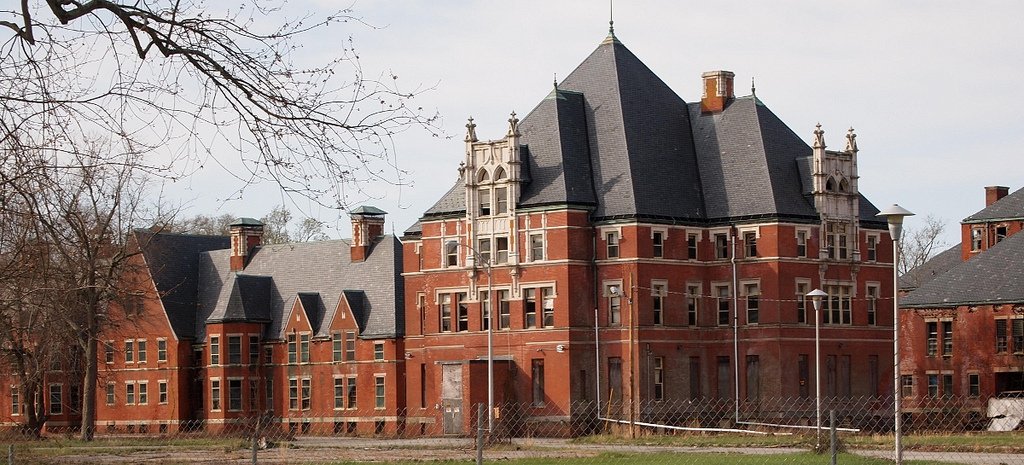
On CT-12, Norwich, CT, sits the abandoned Norwich State Hospital. This facility has worn many hats over the years, housing geriatric patients, people suffering from addictions, the mentally ill, and for a short period, people with tuberculosis. The grounds hold over thirty buildings across 900 acres of land, as well as miles of underground tunnels connecting all of the buildings. Several tv shows have filmed on location, including Ghost Adventures from the SyFy channel. The state has hired guards constantly patrolling the property. However, the tunnels provide a way for trespassers to get from building to building without being seen. The patients’ rooms are tiny, just enough for two bed-frames and walking space in between. Trees and vines grow in through the broken windows, and dead leaves cover the floors. Some of the hallways and rooms are completely caved in. Fragile, yellowed documents with patient records on them can be found in some offices. The tunnels now consist of mounds of dirt for a floor and corroded pipes overhead. All this is only accessible by a hole in a wall clearly meant to keep people out.
What These Landmarks Represent
These sites have value, standing as relics of an age of the misunderstanding of mental illness and outdated medical procedures. They have a beauty and at the same time, a horror that attracts tv shows, movies, tourists, and trespassers. Dozens of these abandoned hospitals exist throughout New England, many with alleged hauntings, and all with historical significance.
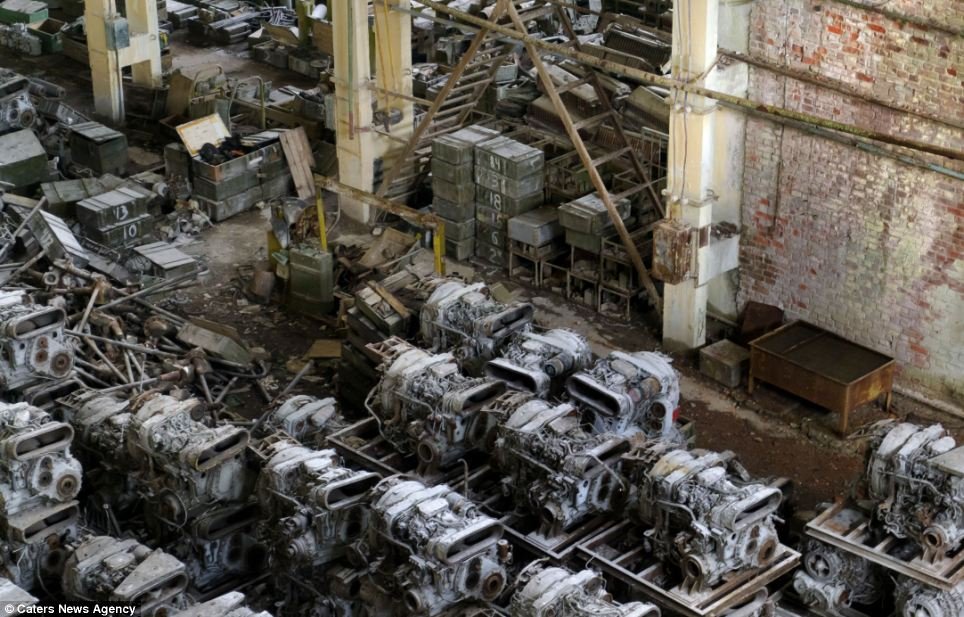
This fascinating and astonishing revelation certainly amazed thousands of historians, war scientists, and plain, curious ordinary people; yes, there are hundreds of secret, abandoned, Soviet military tanks gradually rusting away somewhere within the Eastern European state of Ukraine. A conservative estimate puts the number of these fascinating war monuments at several hundred. About 400 of these are silently located in a most secretive, closely guarded yard in the Ukrainian town of Kharkiv. The secret yard is located in the eastern Ukrainian region of Slobozhanshchyna, only 20 miles away from Russia’s common border with Ukraine. Interestingly, recently, a curious and daring 18-year-old, known as Pavel Itkin, took the risk and eventually succeeded in accessing the yard, undetected; this was hugely risky because the yard is kept under tight surveillance, with armed guards perpetually manning the site. Brave Pavel eventually made away with scores of mouth-watering photographs, graphically documenting the astonishing range of war machinery, stashed away in a silent graveyard, with scores of prized engines and military tanks in tow. Many found the stunning photographs, that went viral, to be amazing and incredulous. Let us take a brief tour around the secret military war-chest that hides history.
The Incredible Secret Ukrainian War Graveyard
There is no doubt about it; the photos taken by Pavel Itskin and a few other Jonny-come-lately revealed the depth of the tank-rich Ukrainian military graveyard. It also proved that Ukraine currently houses hundreds of secret vintage war vehicles that could come in handy in case the East European state got to war with a rival. The undercover visit to Kharkiv revealed multiple rows of deadly war arsenal, some dating as far back as World War II, progressively rusting away. These previously deadly war chests are now kept idle in the Ukrainian town located some 20 miles from the Ukraine- Russia common border. Apparently, the tightly-guarded storage center is now mostly disused. Significantly, after the fall of the former USSR in 1991, the busy military depot at Kharkiv was suddenly abandoned and left as a war relic, marked by scores of vintage military vehicles and tanks. This depot was once a specialist military yard, skilled in the rehabilitation and overhaul of assorted warcraft. Among the vintage war machines that found a place here include the fearsome T-80, T-72, and T-64 tanks. These war-chests were probably built at a nearby factory in Malyshev.
Most Produced War Tank of the Century
Notably, the T-64 is recognized as a primary Soviet war tank that first emerged in the 1960s. Later, in 1972, the T-72 came into the picture. The T-72 subsequently earned a place as among the most produced military tanks by the close of the last century. On its part, the T-80 came in 1976, around the same time as the T-72. The T-80 was dubbed as the first tank of its kind to be propelled by a gas turbine engine. Ukraine still uses the T-80 to-date. Several countries went on to use the T-80 as a prototype, building a variety of tanks modeled after the Soviet veteran. Some of these include Russia, South Korea, Pakistan, Cyprus, Kazakhstan, and Belarus. In the 1960 s and 1970s, during its heydays, the Kharkiv yard rehabilitated over 55 engines and 60 tanks in a month. In 1991, when the USSR collapsed, the yard was abandoned since Ukraine, a fledgling state, had neither the desire nor the money to rehabilitate the used machines. Despite the down-sizing of the depot’s operations in the 1990s, the yard remained formally in operation with assigned mechanics remaining around to repair the machinery, once in a while. The young photographer’s overall impression of the peculiar depot was significantly expressed in a word: “stunning.”
Malyshev Enters the News Radar
Malyshev is widely described as a powerhouse that houses some of the biggest tank factories of the 21st century. To date, armored vehicles, industrial machinery, and assorted tanks are regularly produced here. In 2014, the Malyshev factory entered the news radar when it became a storage yard for keeping the bodies of people who died when the MH17 airplane was shot down.
Battle Tanks, Patrol Guards, and Watchtowers
According to some who visited the mystery site, the Kharkiv war tank graveyard contains hundreds of vintage battle tanks. Tucked somewhere in the back corridors, you will read the sign: “Russia – Bratja.” This is, evidently, a solemn notice proclaiming the military comradeship that binds the Soviets to the Ukrainians. As noted, the site is always under surveillance, with guards on patrol and others manning the watchtowers. Apparently, the site remains considerably operational, with busy technicians repairing tanks that are later transported to the Donbas warzone. The witness spoke about the existence of several dozens of snow-covered under-barrels protruding up the perimeter wall. There are both newly painted and rusty military tanks adorning the supposed graveyard. In 2015, it was reported that the work of rehabilitating over 50 military tanks at the site was complete and that these would be released for operational projects in Eastern Ukraine. Many people admire the deep historical values of this fascinating, vintage, military graveyard located in the well-documented city of Kharkiv, Ukraine. We hope that this bit of history, plucked from Eastern Europe’s Ukraine, inspires in you both nostalgia and considerable curiosity.
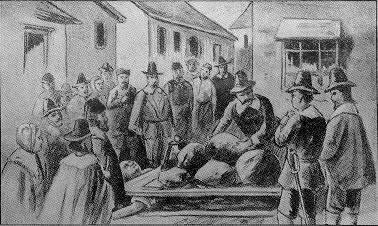
Drawing of the death of Giles Corey (Sept. 19, 1692) by being pressed with heavy stones. Credit: Wikimedia
Giles Corey was killed during the Salem Witch Trials in 1692. These trials were a series of events that have since become renowned for their gory, shameful, and unjustified proceedings. In the strict and ultra-religious Puritan society of the new American colonies, citizens viewed witchcraft in Massachusetts as something utterly profane and inexcusable. They believed witches to be followers of Satan, and the idea of witches living in the area caused mass hysteria and societal breakdown, despite being entirely based on lies and fear.
What Sparked the Salem Witch Trials
Trouble started within the village of Salem when the two daughters of minister Samuel Parris began having fits of convulsions and screaming. The cause was diagnosed as bewitchment and blamed on Tituba, a slave woman brought from Barbados who was working in the household. Other young girls in the village began to exhibit the same symptoms, and more people were consequently accused of witchcraft and dealing with the Devil, and so began various investigations, hearings, convictions, and even executions of these supposed “witches.” Several of these accused “witches” themselves accused others in an attempt to lessen the punishment thrust upon them. Paranoid frenzy spread like wildfire as more girls joined in on the accusations, finding ludicrous ways to show evidence, such as claiming specters of the accused visited them at night, forcing them to sign the Devil’s book. Sorcery and Satan worship were not seen to be bound by gender, and so either a man, woman, boy, or girl could be a witch. Giles Corey was one such village citizen who was unfortunate enough to get caught up in the unjust consequences of the delirium.
Who was Giles Corey
Giles Corey was born in 1611 in England. He immigrated to Salem, where he lived until 1659, at which point he bought a large piece of farmland in Salem Farms, just outside of Salem Village. He did not get on well with some of his fellow villagers, clashing with because he was considered to have lived a “scandalous” life. He did, in fact, have a few run-ins with the law, proving him to be not such an upstanding citizen. He was accused of stealing twice, and in 1675 he pummeled a farmworker named Jacob Goodell to death for stealing apples, though he claimed Jacob had fallen from a horse.Depiction of the Salem Witch Trials He was put on trial, found guilty, and ordered to pay a substantial fee in place of imprisonment. From all this, he earned a horrible reputation, causing villagers to sometimes blame him for other crimes, like when John Proctor’s house burned down. This most likely helped to contribute to his being accused as a witch. He married a woman named Martha, who was devoted to the church, and he then, at the age of 80, applied to be a member of the church as well. He was asked to repent for his sins for a month and was then accepted back to the brethren. After marrying Martha, Giles never committed another crime, and the village saw Martha as an impetus for change in his life.
Witchcraft Accusations
It, therefore, speaks to the amount of fearful panic and deranged paranoia running rampant that Martha of all people was accused of witchcraft. When giving testimony in court, she was so calm about her denial of it that the judges mistook her demeanor for evil intentions. Martha incriminated herself further when she tried to go to Ann Putnam’s house, where Ann and her mother acted as if Martha was torturing them. Moreover, the village girls began to mimic Martha’s movements as if she was controlling them, cementing her guilt in the eyes of the jury. Giles defended his wife and was then swiftly accused of witchcraft as a result. The fact that he was a stubborn man who very likely expressed skepticism and criticism of the whole situation might have also made him seem guilty. There was no substantial evidence against him, other than his previous murder conviction. He was alleged to have been at a witches’ sacrament, torturing girls. Giles was arrested and put in jail with his wife, then left there for five months awaiting trial.
The Trial and Sentence
At his trial on September 16, 1962, he attended only to plead “not guilty” and then, being a proud man, refused to put himself fully on the court to be judged by a jury, as he knew they had already decided on his definite guilt. He was ruled as a “standing mute” because he denied being tried, and was thus sentenced to death.Drawing of the death of Giles Corey (Sept. 19, 1692) by being pressed with heavy stones He was given the atrocious death sentence by way of peine forte et dure, which meant having heavier and heavier stones placed on your body until you were crushed to death. This practice was actually determined to be illegal in the colony by the governor of Massachusetts because there was no law permitting it, and it went against the Puritan code that disallowed “barbarous punishment.” Nevertheless, his sentence was carried out. He was placed in a pit in the field next to the jail where all his neighbors could see. They positioned a large board across his body and heavy stones set on top. He is famously known for continuing to utter the words, “more weight,” in an attempt to seem obstinant and quicken his death. Over the course of two days, his request was granted with more and more weight, until finally he was pressed to death at the age of 81 on September 19, 1692. Until this day, he is the only person in the history of the United States to be given a court-ordered death sentence via pressing.
The Effect of His Death
Memorial marker in the Salem cemetery for Giles Corey Giles Corey’s tale led to him being perceived as a martyr willing to die for what was right, or at least as someone who fought against the ridiculousness of what was happening in his society. At the time, his death influenced others to see the light about the unfairness of trials, seeing as the way he acted during his punishment did not reflect someone who was indeed guilty of being a witch. To this day, he is viewed as one of the faces who stood up against the immoral and unwarranted proceedings. By the end of the events, 25 people had been killed – 19 by hanging. Martha, Giles’ wife, was hung to death on September 22, only three days after her husband died, and was buried along with him and all of the other convicted people on the part of town that became known as “Gallows Hill.”
On January 26, 1996, America saw the tragic end of one of its most bemedaled Olympic wrestlers, Dave Schultz. He was killed by the hands of his improbable murderer, du Pont family fortune heir, and philanthropist, John du Pont. The reclusive scion first caught the public’s eye after donating over $3 million into U.S. Wrestling and starting FoxCatcher Farms, a factory of wrestling champions that Dave would later manage. But none of this mattered when du Pont opened fire at the wrestling icon. His motive remains a mystery.
Who Was John du Pont?
Image credit: https://murderpedia.org/ John Eleuthère belonged to one of the wealthiest broods in America, the du Ponts of DuPont Chemical & Energy Operations Inc. The family’s default riches lent him a rather cold and solitary childhood. He found solace riding thoroughbreds in their prodigious Pennsylvania farm or ogling at avians and other fauna. Before sunset, he would retreat into the family’s mansion, a place none the warmer for the lonely progeny, whose far older siblings barely even looked at him. The only concept of a relationship he had was with his chauffeur, whom his mother paid to stay “friends” with him. An odd duck from the beginning, John founded the Delaware Museum of Natural History as soon as he finished a doctorate in natural sciences. Still, nothing proved meaningful for the young du Pont, who also kept dabbling with different sports and even ended up on the Olympic pentathlon team in 1976.
Unexplained Passion for Wrestling
As a young boy, John suffered a horse-riding mishap that cost him his two testicles, which kept him away from any contact sport forever, including wrestling. It’s believed that this added to his deep insecurity and created a hole that he would spend the rest of his life fixing. Nevertheless, du Pont felt a pressing need to participate in wrestling as much as he could, even if he couldn’t be the wrestler himself. In 1985, he put up FoxCatcher Farms on the family’s estate and devoted himself to churning the greatest wrestling champions the world would ever know, much to the zeal of the wrestling community. Finally, somehow, du Pont felt a sense of purpose.
Early Days at FoxCatcher Farms
The first Olympian du Pont hired to lead his team was Dave’s brother, Mark, but it didn’t take long before the older Schultz decided to quit. Mark loathed how du Pont handled him like a property with a six-figure monthly price tag – and didn’t hesitate to show it. In 1988, he stopped his own victory at an Olympic trial match in Pensacola, Florida just to pique du Pont. Two years later, Dave had taken over his brother’s place on the team and would soon be known as FoxCatcher’s softhearted coach. Aside from Mark and Dave Schultz, no other freestyle wrestling brothers had bagged medals both at the Olympics and the World Championships. Dave went on to become a World and Olympic medalist seven times in a row, and that’s on top of gaining a reputation for being wrestling’s very own Mr. Nice Guy. In the end, this led him to accept du Pont’s offer to lead team FoxCatcher despite his brother’s unencouraging words. Everyone felt Dave saved the team as no one else was excited about going. Meanwhile, du Pont became harder and harder to deal with, let alone relate to, and Dave Schultz became the only human who could come close enough to taming him.
Du Pont’s Mental Disintegration
Du Pont’s mother’s death in 1988 sent him on a downward spiral that soon gave way to visions of Disney characters romping around the estate and suspicions of geese casting a black spell on him. He discarded all treadmills in the property, believing they reversed time, and hired security to scan the property for spying trespassers, including behind walls and underground. Drugs and alcohol were believed to be the cause of duPont’s mental decline, but in any case, it was clear that team FoxCatcher had gone haywire. Du Pont fired three wrestlers on a whim, including Kevin Jackson, announcing the camp was now a white supremacist group that repelled black wrestlers. Dan Chaid cowered as an unprovoked du Pont pointed a machine gun to his head. This environment took a toll on the entire camp and made it a torture den for everyone.
Dave Schultz, Murdered
Dave Schultz While Dave was the closest to John at FoxCatcher Farms, he was no bootlicker and was never afraid to speak his thoughts, even if it meant jabbing at his moneyed boss’s ego. The story goes that this drove du Pont to develop an irrational, baseless fear of his team manager, which might have contributed to the murder. Then again, no one really understands why John picked up a 44 magnum and hatched his plot. All the world knows is that he killed Dave in cold blood, and his wife only had three words for the 911 operator who asked why: because he’s insane.
Justice for Dave Schultz
Justice came relatively easy for Dave Schultz and his family, with the du Ponts pinning the blame on John’s security adviser, Patrick Goodale. They accused Goodale, who literally – and perhaps figuratively – drove du Pont to his prey, by bleeding the heir of his money while enabling his schizophrenic tendencies. He made him a monster as the world looked on. Mark, Dave’s brother, reeled from his own personal misery as the movie FoxCatcher showed in cinemas and depicted him as du Pont’s lover. As soon as Mark saw the final cut, he set Twitter ablaze and didn’t stop short of writing the director, lambasting the movie for its lack of accuracy. Mark’s anger soon fizzled out but without undoing the harm. National media had started plucking scenes from the film to develop stories that somehow sealed him as the paramour of his own brother’s murderer. The best consolation was the jury’s rejection of du Pont’s insanity plea, although they did acknowledge his mental illness – just that he wasn’t ill enough to be declared insane and exonerated. Du Pont was sentenced to 30 years in prison and became the first and the only member of the Forbes 400 richest Americans pack ever to be convicted of murder. At 72, thirteen years into incarceration, John du Pont died of chronic obstructive pulmonary disease in his prison cell.
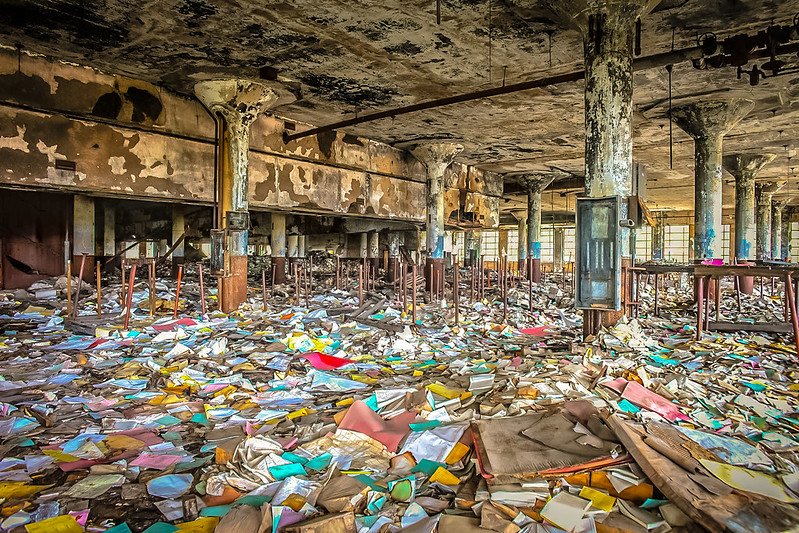
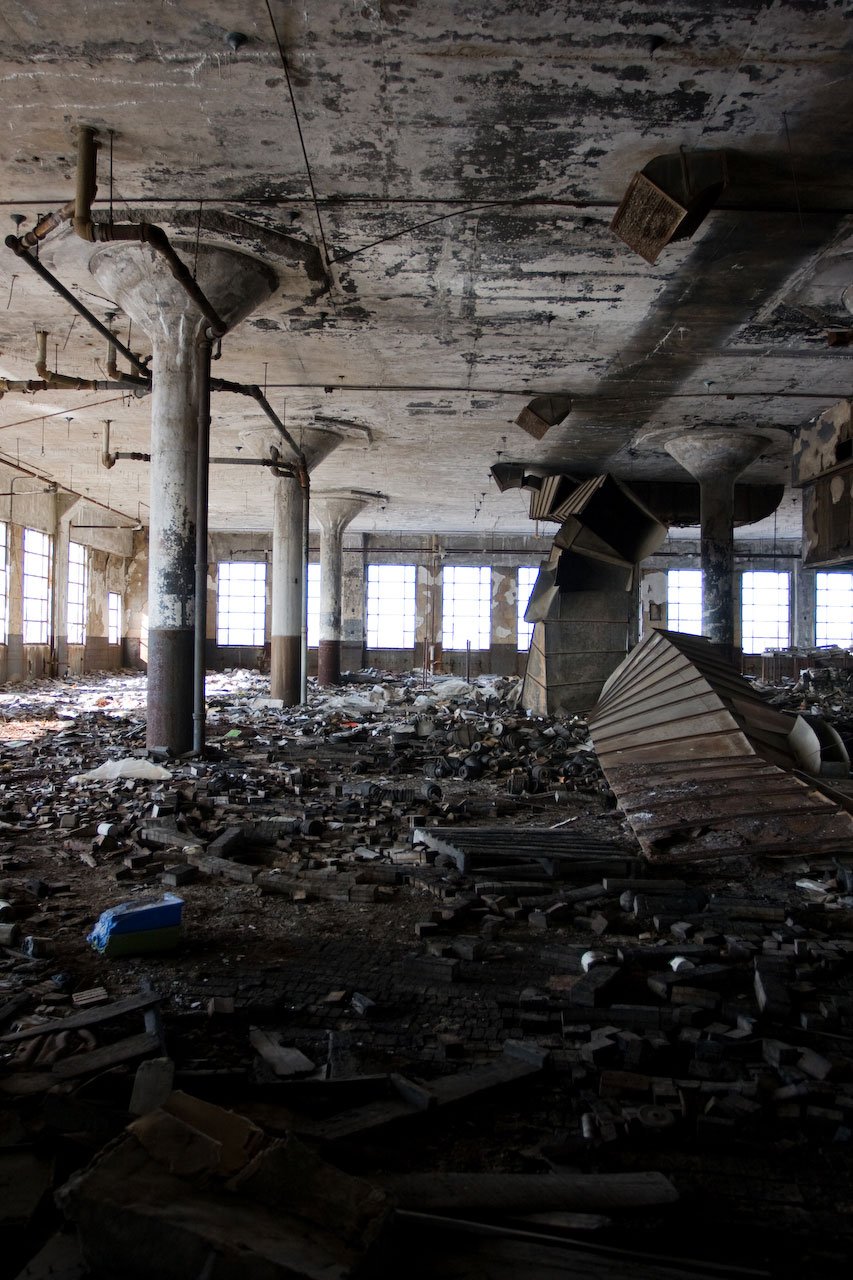
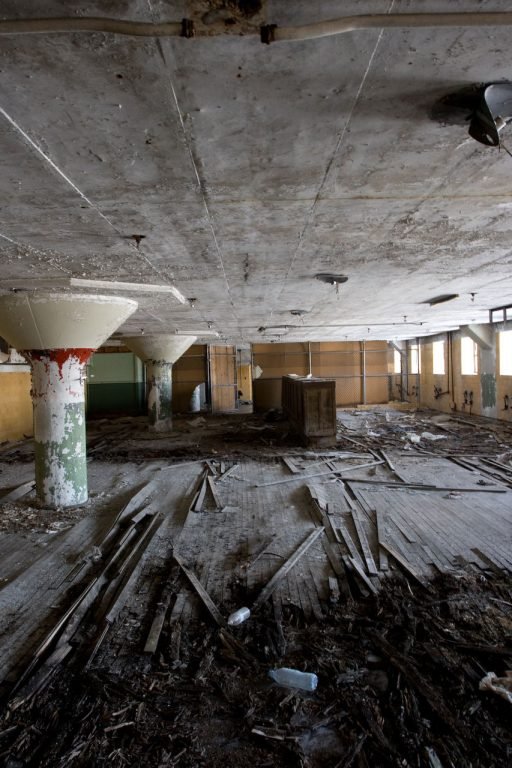
The abandoned Detroit Public Schools Book Depository sits on 2230 Dalzelle Street, quiet yet screaming with questions. Designed by architect Albert Kahn and constructed in the early 1900s, the building was originally used as a post office before it was converted into a giant stockroom for the city’s public school records, books, and other supplies. In 1987, a fire razed the warehouse and ravaged certain areas but none so desolately as its precious contents. In a move met with heavy criticism, the building’s new owners fled the property as quickly as the fire wrecked it, never to return for anything – not even official school documents that dated more than a century back, or books and supplies that remained pristine in their original packaging as wanderers would later unearth. The building remains where it always stood, on Detroit’s oldest extant neighborhood, only now it’s densely vandalized and gutted of interior metals.
Massive Book Destruction
Of far greater value than any property lost to the fire are pieces of living literature that building owners had dismissed with bold, unrestrained abandon. A tour of the building instantly reveals a creepy, wondrous charm unique to its pillaged interior. Damp and musty air, floors padded with carbonized and decayed paper, collapsed metal shelves, and piles of educational materials are reduced to waste as thousands of Detroit schoolchildren remain deprived and starved of them. To this day, the former book depository is an iconic museum of wasted knowledge, not as a casualty of profundities like divergent ideals or social systems, but of brazen negligence.
A Billionaire’s Purchase
In 1995, trucking and real estate tycoon Manuel Moroun acquired the two key symbols of southwestern Detroit’s blight – the Detroit Public Schools Book Depository and the old, bedraggled Michigan Central Rail Depot that sits adjacent. Even after the purchase by the Moroun family, the warehouse stayed open to lookers and the homeless. Its fence and side entrance were riddled with holes and the elevator shaft was left wide open. And while the new owners had received a permit to demolish it in 2001, the building is untouched to this day.
Home of the Homeless and the Story of Johnnie Redding
Over two decades since the fire, a man broke headlines after getting stuck at the bottom of the building’s flooded elevator shaft, frozen. His name was Johnnie Redding. A group of curious explorers first encountered the corpse as they played ice hockey in the basement but chose to ignore it as did homeless people who regularly congregated in the warehouse.Photo by Hallie Harker There are at least 20,000 homeless people in Detroit, with most shelters offering no more than a chair that’s automatically reassigned as soon as it is vacated. Holding onto a chair has become the daily grind for thousands of the city’s vagrants. But for a time, the home was the former Michigan Public Schools Book Depository, even if they shared it with a frozen body whose legs stuck out like popsicle sticks with shoes.
Found and Reported
It wasn’t until a reporter acted on an anonymous tip that news of the corpse officially reached authorities. Soon, grim pictures of Redding’s dismembered body, the result of extrication efforts with the aid of chainsaws, flooded the media. Since the reporter published his first story on the ill-fated former factory worker, countless spins had emerged online, especially in blogs and blog commentaries that attempted to unsnarl the tangle that was Redding. Initially thought to be homeless, the 59-year-old’s brother passionately refuted the speculation, saying Johnnie had “too many places to live in,” including the Holcomb family home where he grew up and a sister’s home in Georgia. Homer Redding said they saw each other on Johnnie’s birthday in 2009 as he was heading on out to party. It was also around this time that his body was found in the neglected warehouse. Like everyone else, including investigators, the Reddings are still clueless as to how Johnnie ended up in the abandoned building. Why it took at least 24 hours and three emergency calls for the Detroit Fire Department to respond, is also as much a secret as the Detroit Public Schools’ failure to recover heaps of intact, usable books and supplies that somehow escaped the blaze.
The Cause of Death
Of course, what happened to Johnnie is another riddle. Was it murder? Murders were quite rampant on this side of town. Perhaps he drank himself to death or tripped down the sinister-looking elevator shaft. The coroner eventually ruled cocaine overdose as the cause of death, but only one thing was clear: the frozen man sparked a controversy that marked the advent of tighter security around the once free-for-all property.
Transfer to Ford Motor Company
Michigan Central Station By Brian W. Schaller – Own work, FAL, Link In 2018, the long-deserted former book depository and train station in Detroit’s Corktown neighborhood were transferred from the Moroun family to Ford Motor Company, which had been eyeing it both as part of a new urban campus. While the Morouns were predictably mum on the properties changing hands, Ford was more vocal about its agenda of establishing its presence in Detroit. Before the transfer, Ford’s technology and electrification crew had moved four blocks east of the train station in a facility called The Factory, which would become the nerve center of the automotive giant’s self-driving and electric vehicle departments. Industry experts cited the possibility that the Morouns still had a stake in ownership, but this wasn’t your ordinary scenario unless it came with a tax advantage.
The Detroit School Book Repository Today
Today, Ford has closed all access points to the area, except for a tunnel that runs below 15th Street from the warehouse to the train station, which had once come in handy for the city’s postal service. Before the sale to Ford, the Morouns came under fire for leaving the property to rot instead of investing in it through their years of ownership. But that’s just another question in the arsenal of truths, half-truths and blatant lies that make the abandoned Detroit Public Schools Book Depository a running mystery. (Image credits: Thomas Hawk / Flickr)
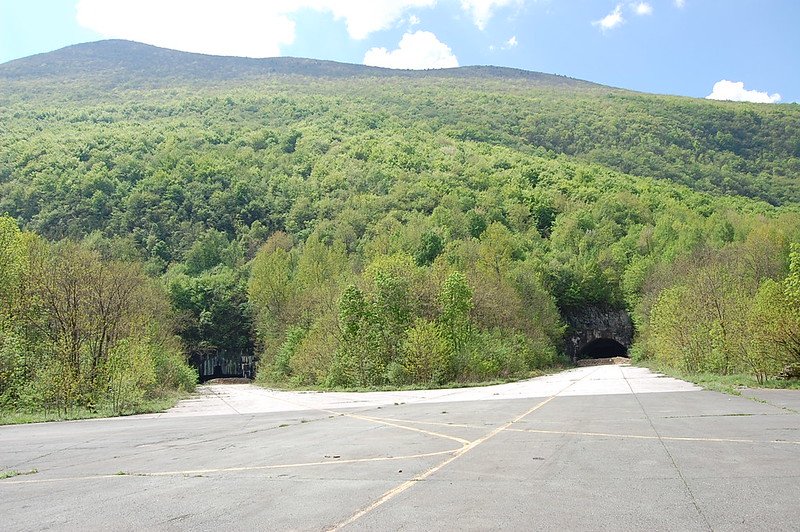
There are a lot of historical places in Europe to visit where you can learn quite a lot about the past. One of those places in the southeast is the long-abandoned Underground military Air Base known as Zeljava. It was strategically hidden behind mountains and located near a number of important facilities, including Europe’s Plitvice Lakes. This underground air Base holds a lot of secrets about what happened during the Croatian War of Independence and very few people know about its significance.
When was the Zeljava Underground Air Base Built?
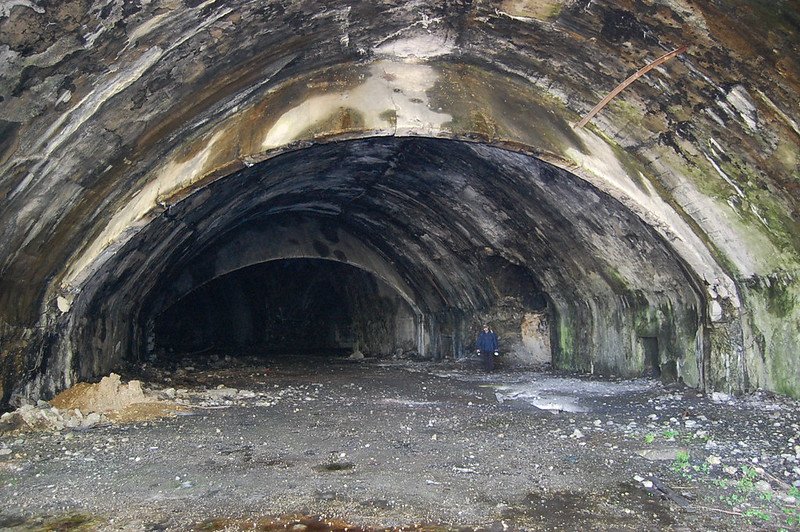
Hidden in the center of different military facilities and numerous airfields nearby, Zeljava Underground Air Base, is considered to be one of the largest, hugely complex and extremely expensive underground airports in Europe. Some people believe it was built by the Yugoslavian government between 1946 and 1968 while shrouded in complete secrecy. It fully functioned until 1992. After this, it was abandoned by the Communist government during the civil war between Serbians and Croatians. Since then, it is now only guarded by the border police and no military installations are welcome near the border.
What Was Its Purpose?
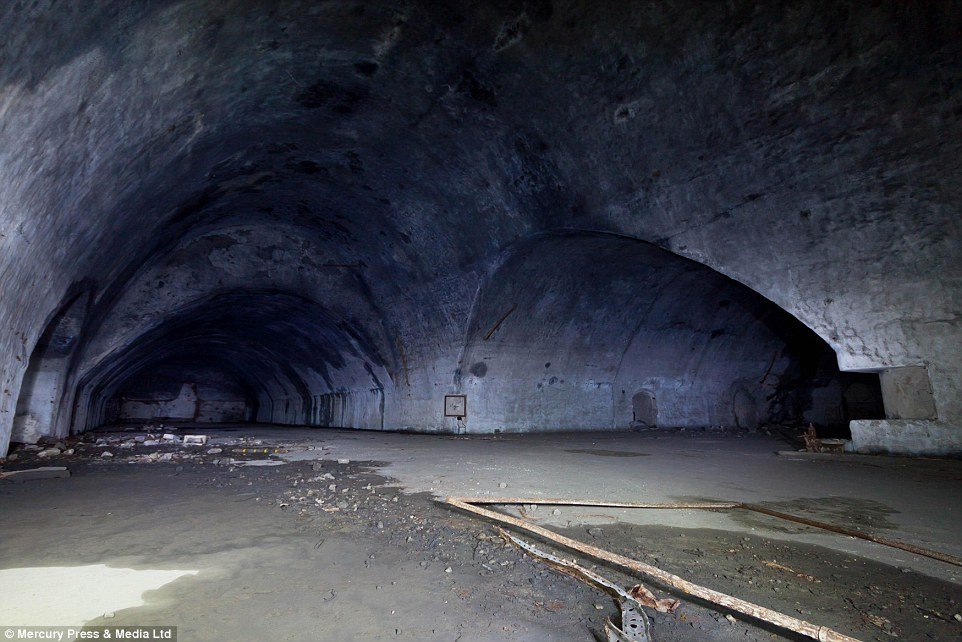
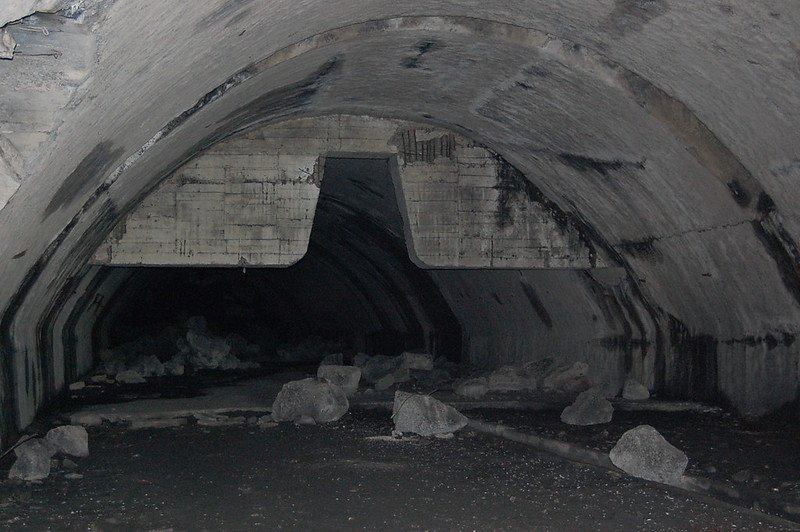
This important former military airbase lies on the border between Croatia and Bosnia and Herzegovina. The military airbase’s official code name is “Objekat505,” though it is informally sometimes referred to as the Bihac airport since it is located near Bihac city. It’s said that the construction of the Underground military Air Base, which was seen as a centralized control area that had secure forms of communications, was built with the sole purpose of establishing countrywide early warning systems, and was meant to defend the country against external attacks. This project saw the Yugoslavian government use an estimated 6 billion dollars, building a complex design able to sustain a direct hit from a nuclear bomb. Zeljava Underground Air Base was constructed with four entrances with pressurized retractable doors and exits all capable of neatly launching MiG fighter jets. One of those entrances has an exit which leads directly to the Bosnian side. Steer clear of this particular exit unless you want a run-in with the law. Otherwise, you might be accused by the Bosnian police of trying to cross the border illegally! The Underground mess hall was purported to be large enough to feed more than 900 people, and it stocked enough supplies, firewood, and arms to last a month without needing to ask for a resupply. Zeljava Air Base also has two underground tunnels which had aircraft squadrons, plenty of underground water supply, and a power generator.
Destroying the Air Base
Unfortunately, no one had planned for Civil war and when it broke out, this massive airbase ended up being destroyed by the Serbians following instructions from the great Marshal Tito himself to stop the Croatians from getting their hands on the facility during the civil war, where thousands of innocent people were killed and thousands more left homeless. To destroy the facility, they set off built-in explosives and the entire demolition took roughly about a year. Currently, only the police use it to train their K9 on how they can retrieve the explosives.
During this period, aircraft and other equipment were transferred to airbases in Serbia as well as several affected civilians who were also moved to Serbia for safety and anything else that could be mined. Whatever was not salvaged was permanently destroyed in 1992.
Zeljava Underground Air Base Today
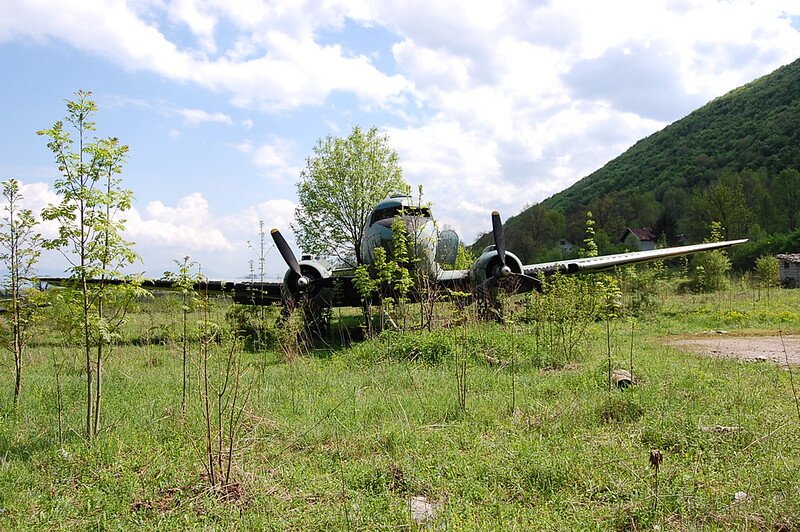
Abandoned Aircraft The cold and humid facility which once housed plenty of MiG Fighter jets now lies silent and completely abandoned, with no hope of reconstruction due to the huge financial budget it would require. It now only boasts of rusting and rotting bullet-riddled planes and missiles, huge dangerous holes, wheels, and metals on the floor and ceilings which were severely damaged by the explosives used. Be vigilant as they look like they can curve in at any time. The military base’s tunnels are completely dark, and the air is quite dusty and polluted from all the charges deployed in the base which destroyed it from the inside. And even though the Underground Air Base is no longer functional, it is important to note that there are still a lot of active minefields. Visitors are advised to stay on the road and not to venture into any of the restricted areas.
Touring the Base
Many sources say that the facility also had five runways, some used for taxiing, while others were used for takeoff and landing and only people with special authorization were allowed to enter the heavily guarded facility. The facility also had barracks and other buildings as well as workshops. To access the facility now, you need to have or at least hire a car since no buses go to that particular area. It’s also a good idea to hire a tour guide for your safety and security as there have been many lives lost around the area near the minefields. These tour guides will save you a lot of time and most of them are well-known to the police on patrol. They can help you translate and understand area maps so you can focus on enjoying your visit.
Tour Supplies
This isn’t your average museum tour. You’re going to want to come prepared with some serious supplies. First of all, carry powerful flashlights and back up batteries to help you navigate through the darkness inside the Underground Air Base. You’ll also need warm clothing to keep you comfortable inside the cold, damp building. And most importantly, wear sturdy shoes to protect your feet from stepping on any sharp steel or metal shrapnel. Unfortunately, this airbase may not be the spot to visit if you have a fear of enclosed places. The long, dark tunnels can feel cramped. Carry a mask to shield yourself from the dust and toxic fumes. And make sure you carry your passport and identification with you, as the patrol police officers are constantly checking the facility. Above everything else, come prepared to learn and explore this historical site. (Image credits:krunchi on Flickr)
About an hour west of Bournemouth and less than a half mile from England’s intimidating Jurassic Coast is Tyneham village, a feudal relic and one of the country’s best-preserved ghost towns. Tyneham’s 225 residents were evacuated by the War Office in December of 1943 in preparation for D-Day. After the war the temporary measure became permanent and the village was never allowed to return. In the years following the war the Army abandoned the village and to this day uses the area as a test range and training ground.
When it was built in 1914, the Nueces County Courthouse was both majestic and massive. The local newspaper proudly declared “the new building poses us an empress, sitting on her throne with her courtiers, the city of Corpus Christi lying at her feet.” The impressive Classic-Revival structure was the county’s third courthouse, built during a time when county buildings represented more to the people than mere offices and courtrooms. It was symbolic to the arrival of Corpus Christi Bay as an economic center of South Texas. During the twentieth century Nueces County exploded in size, eventually outgrowing the square footage of the building. The courthouse battled progress, technology, and multiple hurricanes but ultimately it lost its fights with capacity, deterioration, and maintenance funding. Since the county moved out in 1977, the courthouse has spent forty years unused and deteriorating while Corpus Christi’s most decorated civil servants debated its future. In 2017, that future may finally come into focus.


 Built in 1922, the building is located on 6 Berkshire Ave, Belchertown, Massachusetts. This ‘School’ was one of the most notorious mental asylums ever created. Cruel and inhumane conditions for patients as well as down-right abuse of the mentally handicapped led to a litany of lawsuits that ultimately forced the facility to close in 1992. Further research will lead you to discover the heinous treatment, including so-called “medical professionals” ripping out healthy teeth to make it easier to feed the disabled. It’s no surprise that the institute was rightfully shut down, and though several plans to demolish all the buildings and renovate the property for business owners, only two were ever torn down. Those were the Hospital building and the Auditorium. Police have increased their vigilance in recent years, in response to arson attempts. But that hasn’t stopped the more determined trespassers from gaining access. The insides of the buildings paint a clear and oddly beautiful picture with mostly caved in ceilings, debris, and glass-covered floors, an excessive amount of graffiti, and the effort nature has made to reclaim the property. Vibrant green trees and grass have sprung up in the parts of the complex where the sunlight can reach, and the darker rooms in the buildings hold a plethora of ominous graffiti left by those with a morbid sense of humor.
 This hospital, built on 525 Russell Rd, Newington, CT, in 1910, was originally made for the treatment of children with tuberculosis. The facility’s old name is The Hartford County Home for the Care and Treatment of Persons Suffering from Tuberculosis. After the invention of the vaccine for tuberculosis, the hospital shifted focus to treating the mentally ill and those suffering from various addictions. Nowadays, though abandoned, the state still owns the property. The presence of police and the FBI who still use a couple of the buildings discourages any exploration. That being said, people have made it inside, and some easy research will show a good amount of footage. The interior has actually held up pretty well, and much of it seems untouched by vandalism. However, the abundance of pitch-black sections and rumors of hauntings gives a creepy feeling to those brave enough to explore.
 On CT-12, Norwich, CT, sits the abandoned Norwich State Hospital. This facility has worn many hats over the years, housing geriatric patients, people suffering from addictions, the mentally ill, and for a short period, people with tuberculosis. The grounds hold over thirty buildings across 900 acres of land, as well as miles of underground tunnels connecting all of the buildings. Several tv shows have filmed on location, including Ghost Adventures from the SyFy channel. The state has hired guards constantly patrolling the property. However, the tunnels provide a way for trespassers to get from building to building without being seen. The patients’ rooms are tiny, just enough for two bed-frames and walking space in between. Trees and vines grow in through the broken windows, and dead leaves cover the floors. Some of the hallways and rooms are completely caved in. Fragile, yellowed documents with patient records on them can be found in some offices. The tunnels now consist of mounds of dirt for a floor and corroded pipes overhead. All this is only accessible by a hole in a wall clearly meant to keep people out.