In the holy city of Najaf, Iraq, an Islamic cemetery known as Wadi Us-Salaam lays claim as the largest in the world. Burial at this hallowed ground has been a religious rite for well over one thousand years. Millions have been laid to rest across a crowded, but expansive 1500 acres which occupies nearly 30% of the city. Increased violence over several decades has accelerated the rate of burials at an alarming rate. More recently, the crooked maze of paths between tombs has been used by combatants to hide and ambush opposing forces, bringing the conflict to the Shi’a holy ground. Why is this burial ground revered, and how did it become so large?
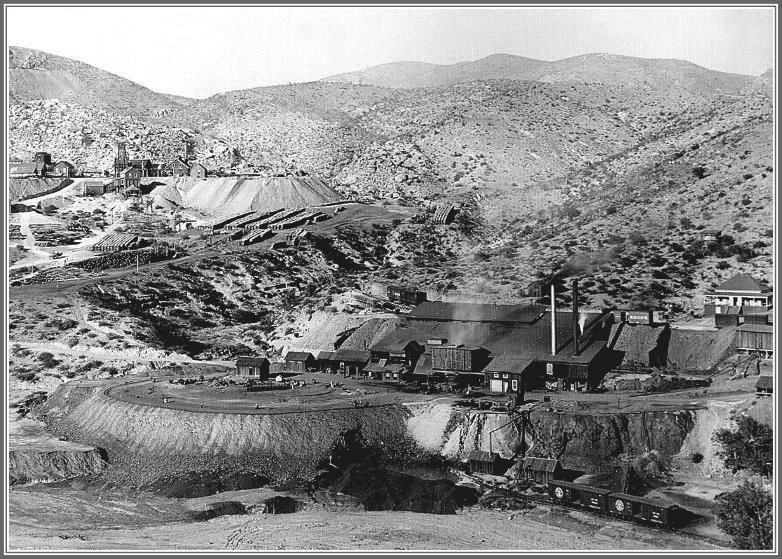
The missing mines of the Wild West are fantastic tales of treasures lost in the Wild West of America. According to folklore, a person who discovers any one of the lost mines will become very rich. These tales have spurred many treasure hunts in the past, which, unfortunately, have yielded no positive results. However, since humans love adventure and the prospect of money, these stories continue to excite and inspire people, especially children.
Origin of Mining
It is safe to say that mining is the second earliest endeavor of man. Agriculture is the first. Scientists believe that the earliest form of mining predates Homo Sapiens. It’s incredible, right? What has turned into the search for minerals and precious stones initially began as a practical search for the most appropriate stones for making tools! The account further asserts that as man evolved, so did their understanding of the role of natural resources. This led to the improvement in approaches and methods of extraction.
Mining in the Wild West
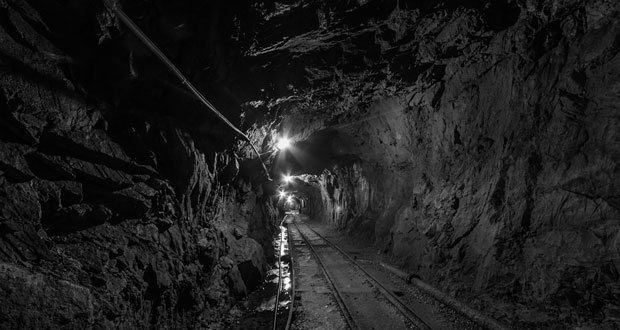
Before searching for the missing mines, let’s go on a journey through the history of mining in the Wild West. It is impossible to talk about mining in the Wild West without remembering the 1849 California Gold Rush. The Gold Rush, a result of gold fever, was a search for gold and other precious metals by miners looking to make it rich. People left their homes on this quest, and some never returned. As it is commonly known, mining cannot be done effectively by an individual or even carried out in isolation. It is incredibly unsafe and nearly impossible because of the processes involved. A team of miners must first conduct a preliminary investigation aimed at locating the gem and even an economic analysis before the actual extraction. Then comes the blasting, the structural reinforcement, etc. It’s an arduous task for a single person. Still, the Gold Rush brought a surge of people out West with one goal: dig, discover, get rich in the process. Solo or in a team, it was mine or die! This dream birthed several mines in the West that resulted in massive job provisions but came with unbelievable hardships, including starvation, hunger, and death.
Lost Mines of the Wild West
Did you know that stories about the lost mines leave a lot of people in doubt? Several persons do not think that the lost mines exist, and even doubt the legends of the lost treasures. This distrust in folklore is primarily based on the fact that these tales have been handed down several generations. At some point, people who pass down the stories have added hyperbole and differing information. Tons of mines may or may not be in existence today, but the three most famous lost mines are the Lost Dutchman’s Gold Mine, The Lost Cement Mine, and The Lost Dutch Oven Mine.
The Lost Dutchman’s Gold Mine
This mine, according to legend, sits near the Apache junction on the eastern side of Phoenix, Arizona. It is also rumored to be a mine extremely rich in gold. The Weaver’s needle serves as its landmark. Those who go searching for the mine will find their compasses malfunctioning and navigating over treacherous terrain. The mine remains lost, but the dream of the Dutchman’s treasure is very real.
The Lost Dutch Oven Mine
The lost Dutch Oven Mine was found by Tom Schofield, a railroad worker who decided to go search for gold himself. Schofield ended up in the Clipper Mountains in California, where he found an abandoned house, a spring, and then a trail. He followed the path to an old Spanish Camp where he found pieces of ore and gold nuggets. Tom brought back as much gold as he could carry. When he ran out of gold, he went back to get more but could not locate the site again.
The Lost Cement Mine
Two men discovered the Lost Cement Mine after they were separated from their group. They stumbled upon hard, igneous rock that had gold laid within it. The Lost Cement Mine, according to tales, is located in eastern Sierra Nevada, in California. There is no distinctive landmark for the Lost Cement Mine, except for the mention of the hard igneous rock. This makes it pretty hard to trace.
Conclusion
Many explorers attempt to search for these mines. The Wild West still lures them in with tales of gold and mystery. But to this day, no curious adventurer has found any of the lost mines.
Madam Gustika was a performer in a freak show. That fact has come to define her memory, but there was so much more to her than that. She was famous for having stretched lips, which was considered extremely bizarre for the time. But what is bizarre? To Madam Gustika, her lips were completely normal because that was part of her culture.
Her Famous Photograph
Her fame revolves around a photograph taken on the 12th April 1930 that shows her smoking a pipe. By placing ever-larger disks between her gums and her lips, she was able to stretch her lips to about 8 inches or 20 cm out from the rest of her mouth. While we don’t know much else about her, we’re certain that she appeared in a freak show, probably on Coney Island.
Freak Show Sensation
This would’ve probably been the first time people had seen someone who was born in Africa and raised in a 100% African environment. People weren’t used to seeing such people in those days, so it caused a lot of excitement when she first appeared in the United States. This was when freak shows were still popular because T.V. had just been invented and had not yet reached mainstream acceptance. There was still a niche market to be exploited, and this was a time was when people would go to Coney Island and see the various amusements on the boardwalk there. Working-class people couldn’t afford to go overseas on holiday, so seaside attractions or picnics were the main recreational activities in those days. Seeing people from different areas of the world was one of the main draws for the local audience.
Where Did Madam Gusitka Come From?
Madam Gustika was probably from Ethiopia. However, people like her were erroneously described as being from the Ubangi tribe because it sounded exotic and was easy to pronounce. Madam Gustika was billed as being a member of the Duckbill tribe, but not much else is written about her. The fact that she was smoking a pipe in the photograph made her relatable, even though her pipe was a western model. This was probably a gimmick to show that she could still use her mouth because the practicality of having enlarged lips must be questionable.
Why Were Her Lips Stretched?
A lot of tribes around the world used plates in their mouths to stretch their lips. Such discs were often made from wood or clay because these were the materials that were readily available. Practices like these continue to this day in Ethiopia among the Mursi and Suri women. In other tribes, the practice has been discontinued. The Sara women in Chad stopped wearing plates in their mouths 100 years ago. Over in Brazil, the Suya men did the same thing while the Makonde tribe in Mozambique and Tanzania did the same thing. Historically, the practice of lip stretching could be gender-specific and either be a symbol of identity or a sign of beauty as well. As these tribes came into contact with the wider world, their priorities changed, and inevitably parts of their culture like beauty modification were lost to history. Even in these unique cultures, times change, and preserving something for its own sake can become a burden to those people who don’t care about tribal identity as much as their ancestors did.
Moving Away From Freak Shows
The days when Ringling Bros. and Barnum and Bailey ran freak shows are over, but they still occupy a niche market. Such shows are good for one night, and then the public loses interest, which is what happened to the freak shows that peaked in popularity decades ago. Such acts are now seen as exploitive and lacking dignity. The idea that people could be different can be a profound shock to westerners. But the process goes both ways – people who aren’t used to other cultures can suffer from culture shock just as much as we can. Thankfully we live in a more enlightened era, so such spectacles as Madam Gustika are almost a thing of the past. The real “freaks” were in the audience and not on the stage. Hopefully, Madam Gustika led a happy life, and we can learn from the mistakes of the past.
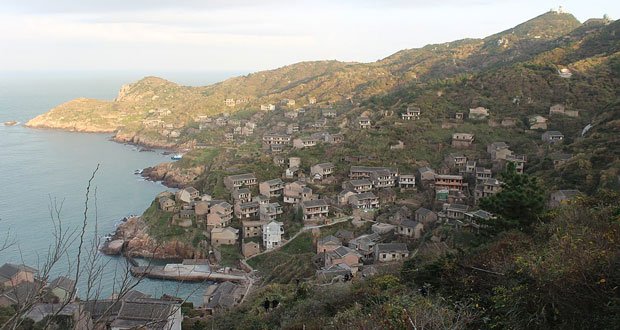
Houtouwan is located north of Shengshan Island, which is one of the 400 Shengsi Islands. The village lies atop cliffs and mist-shrouded mountains adjacent to the sea obscuring the horizon. People began settling in the village in the 1950s when the Chinese fishing industry and the fish market was booming. By the last quarter of the 20th century, the village had been inhabited by more than 2000 people majority of them being fishermen.
Factors that led to the mass migration
Residents began moving out of the village in the early 1990s. The last lot moved out around the year 2000, leaving behind a handful of people. Lack of proper roads and schools are the main reasons why residents moved out of the village. The growing competition from nearby Shanghai led to the decline of fish stocks, which was the primary source of livelihood for the locals. Also, poor enforcement of fishing regulations at the time led to problems with food delivery, which in turn contributed to the mass migration. Hence, residents relocated to the nearby modern cities such as Shanghai to access better services. The locals have since named it Wurencun, which means no person village.
Swallowed by nature
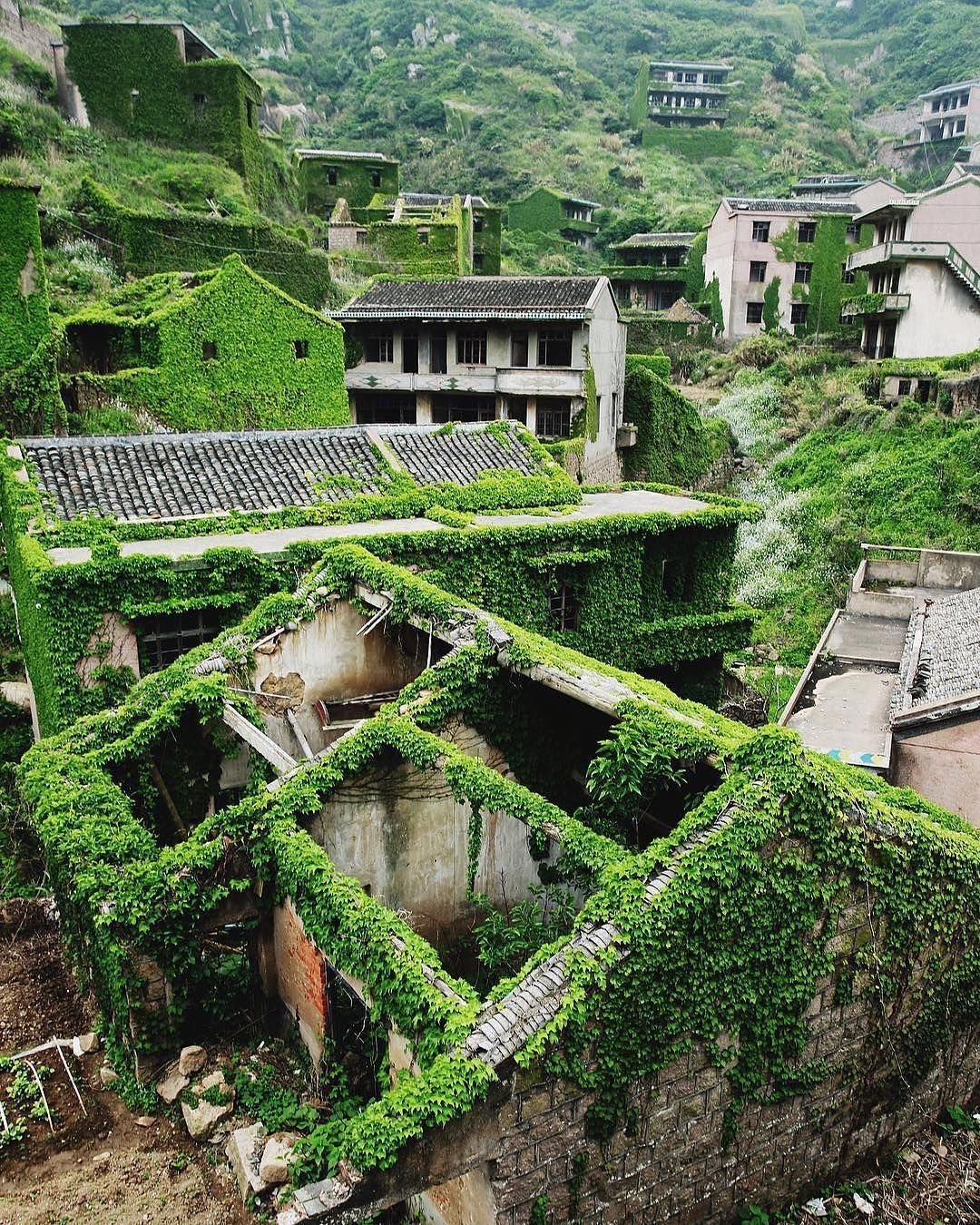
Mother Nature slowly reclaimed its belongings, and soon after, greenery swallowed up the uninhabited village. The dilapidated houses became ivy-covered after the great exodus of residents. The then-popular fishing village is now blanketed with greenery and covered in creeping vines. The ghost town is now filled with an eerie silence save for the chirping of birds, mosquito buzz, and the ocean breeze.
Unique tourist attraction
Houtouwan rose to fame in 2015 when a number of fascinating photos of the abandoned village went viral online. It instantly became an Internet sensation and a travel hotspot for nature lovers. Soon after, there was a surge of tourists from the mainland to the deserted village. As a result, government officials of Shengshan Island had to come up with a few measures to control the number of tourists visiting the village daily and find ways to monetize it. This led to the setting up of a viewing platform that tourists can access for only $3. Moreover, tourists can hike around the village for a ticket price of $8. Warning signs have been erected to caution tourists from entering dilapidated structures. In addition, places of accommodations have been set up all around the island.
Best season to visit Houtouwan
Tourists are advised to plan their trips to the deserted village during summer for the best experience. Popular activities that can be undertaken by tourists in the abandoned village often include hiking, photographing the dilapidated buildings, and sunbathing on the beaches.
How to reach Houtouwan village
Getting to Houtouwan from mainland China is a bit hectic. From Shanghai, go to the Nanpu Bridge bus station and get a bus or taxi to take you to Shenjiawan Dock. The journey usually takes around 90 minutes to reach the Shenjiawan Dock. You can either take the Zhoushan Shenjiamen Banshengdong Dock ferry that departs at 7 a.m or the Shanghai’s Shenjiawan Pier dock ferry that leaves at 9:15 a.m. The journey to Gouqi Island takes about 90 minutes via ferry, while boats take up to four hours of travel time to Shengshan. It is advisable to reserve a return ticket if you plan to stay overnight on the island. To access the village, tourists must travel by boat to Shengshan then take a taxi up the hill to a cemetery that overlooks the village. Upon reaching the cemetery, you’ll have to descend on foot. Once you arrive in Houtouwan village, you’ll see snaking dirt roads that connect the abandoned structures. Most of the paths connecting the crumbling buildings are impassable except for stray dogs.
Most verdant village in the world
Image credit: Damir Sagolj / Reuters The first impressions of the picturesque village are gleaming roof tiles, and broken verandas of story houses wound by vines. You’ll see shadows of architecture and man-made structures reclaimed by nature. It is the perfect representation of man versus nature and an instance where nature has triumphed against civilization. There’s a blocked path over the ridge that is deemed “too dangerous” and is off-limits to visitors. The handful of residents remaining in the village often act as tour guides and sell drinking water to tourists as a source of income. Hiking and exploring the village usually takes a few hours. Today the once-bustling fishing village has become a popular tourist attraction site for its unique devastation drawing tourists from the mainland. Tourists are attracted to the beautiful remnants of the ghost village. Homes severely damaged by weather and abandoned buildings are now engulfed by nature. The abandoned fishing village is a representation of a broader migration trend of the Chinese people who migrate from rural areas to urban cities.
The story of Grady Stiles is both fascinating and horrifying. Grady Stiles was a famous freak show performer, but his life took several dark turns and ended in cold blood.
The “Lobster Boy”
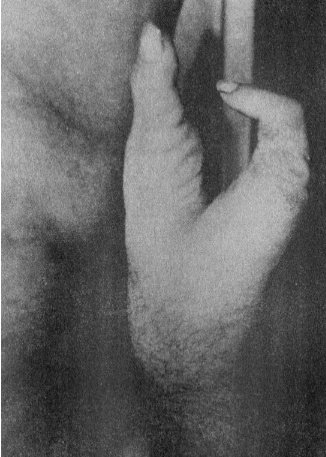
Stiles was born in 1937 with a deformity called ectrodactyly. Ectrodactyly is a genetic condition in which a person’s fingers and/or toes are fused together. This gives the appearance of a claw-like hand or foot. Ectrodactyly was in Stiles’s family for several generations, going back about 130 years before he was born. His father also had the condition and performed in a carnival sideshow attraction. He brought Grady into his act when he was just seven years old. Grady’s condition affected both his hands and feet, meaning that he could not walk properly. He got around using a wheelchair or by crawling, dragging himself with formidable upper body strength. Grady continued as a featured sideshow performer, going by the stage name “Lobster Boy.”
A Tragic Personal Life
Grady married another carnival employee named Mary Herzog. Together, they had two children, one born with ectrodactyly. Grady included his children in his act, touring under the name “The Lobster Family.” When it was off-season, they lived in Gibsonton, Florida, also known as “Showtown USA.” Many carnival and circus performers gathered there while not on tour. Sadly, Grady’s life was plagued by alcoholism and anger issues. He was extremely abusive towards his family, especially when drunk. Eventually, he threw his wife and children out. Mary remarried “The World’s Smallest Man,” Harry Glenn Newman, and had one child together. Grady also remarried, this time to a woman named Barbara Browning. They had a child who was born with his genetic condition.
The Murder
By the time Grady remarried, his daughter Donna was engaged and planning their wedding. Apparently, Grady did not like Donna’s fiancé. On the night before the wedding, he asked her fiancé to come over to the house just to talk. Grady instead took a shotgun and murdered him on the spot. As Donna held her bleeding fiancé while he died, her father said, “I told you I would kill him.” He smiled.
The Aftermath
Grady went to trial in Pittsburgh, Pennsylvania, where he pleaded guilty to 3rd-degree murder. He never once showed any remorse. However, since there was no prison or institution in the state that was equipped to handle an inmate with his condition — he had cirrhosis of the liver which worsened his physical debility — he was only sentenced to 15 years probation. It’s said that after the incident, Donna never spoke to her father again. Yet somehow, Grady’s first wife, Mary, was drawn back to him. She left Harry and remarried Grady on the premise that he was a “new man” who would stop drinking and change his ways. Predictably, he did not change. Grady soon fell back into his typical pattern of drinking and abuse, often threatening to kill his wife and his family. Mary reportedly endured being choked by him. She would wake up to find him holding a knife to her throat. He also sexually abused her and once tried to smother her with a pillow after she suggested getting a divorce.
Grady’s Death
By that point in 1992, Mary was terrified for her and her family’s life. She decided that something needed to be done. She and her son, Harry Glenn Newman Jr. (known as Glenn), approached a 17-year-old named Chris Wyant who supposedly had gang ties. They paid him $1,500 to murder Grady. While Grady was sitting in the living room of his trailer home in his underwear, Wyant entered and shot him in the back of the head. He was 55-years-old when he was murdered. Glenn was given a lie detector test during the police investigation, but he failed. He broke down and admitted everything that happened. He was sentenced to life in prison. His mother, Mary, was given 12 years in prison on the charge of conspiring to commit murder. Wyant was convicted of 2nd-degree murder and sentenced to 27 years in prison.
The End of “The Lobster Boy”
Grady Stiles’s funeral was barely attended by anyone, and no one volunteered to be his pallbearers. Understandably, he was hated by the community. His entire life was marked by tragedy, hate, anger, abuse, and most of all, bloody violence.
As one of the oldest parts of the United States, New England lays claim to many abandoned (and allegedly cursed or haunted) buildings. Most common among these are the many dilapidated hospitals and asylums that dot the area. For the curious tourist or believer in the supernatural, here are four large abandoned hospitals in New England. While it can be tempting to want to explore these unique buildings, please be aware that they are likely not open to the public. Remember that urban exploration is a dangerous and often illegal activity. Please do not attempt this.
Medfield State Hospital
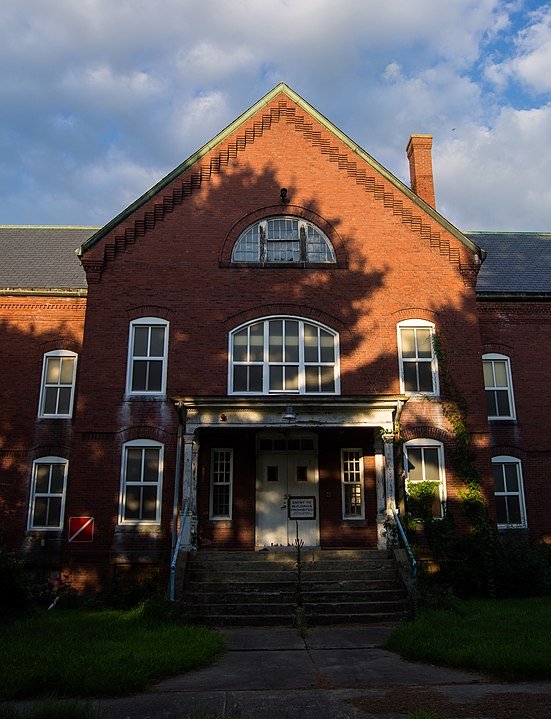
By Ghostfacesouthshore – Own work, CC BY-SA 3.0, https://commons.wikimedia.org/w/index.php?curid=26485539 Located at 45 Hospital Rd in Medfield, Massachusetts, this facility, as with many of the abandoned medical facilities in New England, was a mental health institution. This group of three buildings was constructed over a series of eighteen years, from 1896-1914. It consisted of 58 buildings at its peak, though the Odyssey House, the Cottage House, and the Laundry Building have since been demolished. Also located on the campus is the Medfield State Hospital Cemetery, with over 800 graves. Local police patrol the grounds, and trespassing during the night is strictly prohibited. However, the property is open to the public during the day and has even been used as a shooting location for films like The Box and Shutter Island. Videos and pictures of the state of the buildings’ interiors can be found on Youtube, as documented by amateur urban explorers. As one would expect, the time has not been kind to the insides of these structures. Wallpaper has peeled and curled, debris and dirt coats the floors, and graffiti lines many of the walls. In one inexplicably eerie picture, a nearly untouched and intact lobby adorned with couches and a blue patterned carpet remains as a look into the past.
Belchertown State School
Built in 1922, the building is located on 6 Berkshire Ave, Belchertown, Massachusetts. This ‘School’ was one of the most notorious mental asylums ever created. Cruel and inhumane conditions for patients as well as down-right abuse of the mentally handicapped led to a litany of lawsuits that ultimately forced the facility to close in 1992. Further research will lead you to discover the heinous treatment, including so-called “medical professionals” ripping out healthy teeth to make it easier to feed the disabled. It’s no surprise that the institute was rightfully shut down, and though several plans to demolish all the buildings and renovate the property for business owners, only two were ever torn down. Those were the Hospital building and the Auditorium. Police have increased their vigilance in recent years, in response to arson attempts. But that hasn’t stopped the more determined trespassers from gaining access. The insides of the buildings paint a clear and oddly beautiful picture with mostly caved in ceilings, debris, and glass-covered floors, an excessive amount of graffiti, and the effort nature has made to reclaim the property. Vibrant green trees and grass have sprung up in the parts of the complex where the sunlight can reach, and the darker rooms in the buildings hold a plethora of ominous graffiti left by those with a morbid sense of humor.
Cedarcrest Hospital
This hospital, built on 525 Russell Rd, Newington, CT, in 1910, was originally made for the treatment of children with tuberculosis. The facility’s old name is The Hartford County Home for the Care and Treatment of Persons Suffering from Tuberculosis. After the invention of the vaccine for tuberculosis, the hospital shifted focus to treating the mentally ill and those suffering from various addictions. Nowadays, though abandoned, the state still owns the property. The presence of police and the FBI who still use a couple of the buildings discourages any exploration. That being said, people have made it inside, and some easy research will show a good amount of footage. The interior has actually held up pretty well, and much of it seems untouched by vandalism. However, the abundance of pitch-black sections and rumors of hauntings gives a creepy feeling to those brave enough to explore.
Norwich State Hospital
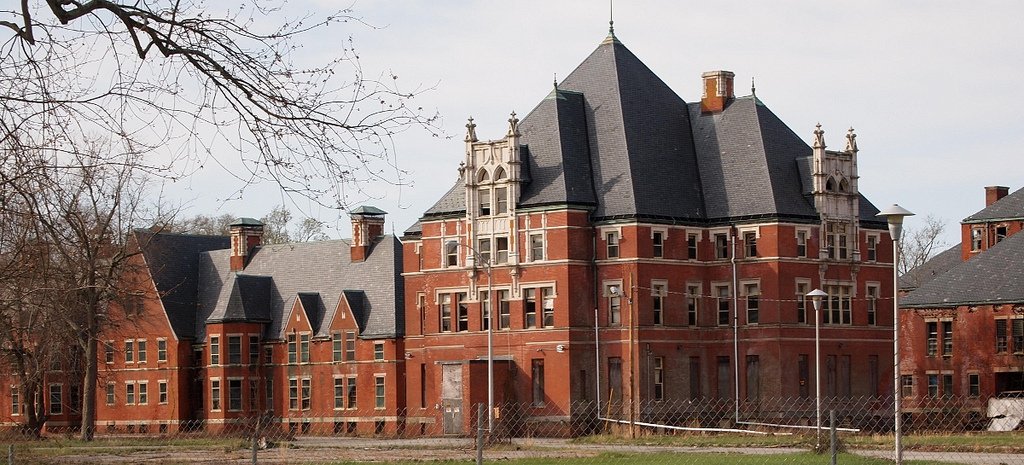
On CT-12, Norwich, CT, sits the abandoned Norwich State Hospital. This facility has worn many hats over the years, housing geriatric patients, people suffering from addictions, the mentally ill, and for a short period, people with tuberculosis. The grounds hold over thirty buildings across 900 acres of land, as well as miles of underground tunnels connecting all of the buildings. Several tv shows have filmed on location, including Ghost Adventures from the SyFy channel. The state has hired guards constantly patrolling the property. However, the tunnels provide a way for trespassers to get from building to building without being seen. The patients’ rooms are tiny, just enough for two bed-frames and walking space in between. Trees and vines grow in through the broken windows, and dead leaves cover the floors. Some of the hallways and rooms are completely caved in. Fragile, yellowed documents with patient records on them can be found in some offices. The tunnels now consist of mounds of dirt for a floor and corroded pipes overhead. All this is only accessible by a hole in a wall clearly meant to keep people out.
What These Landmarks Represent
These sites have value, standing as relics of an age of the misunderstanding of mental illness and outdated medical procedures. They have a beauty and at the same time, a horror that attracts tv shows, movies, tourists, and trespassers. Dozens of these abandoned hospitals exist throughout New England, many with alleged hauntings, and all with historical significance.
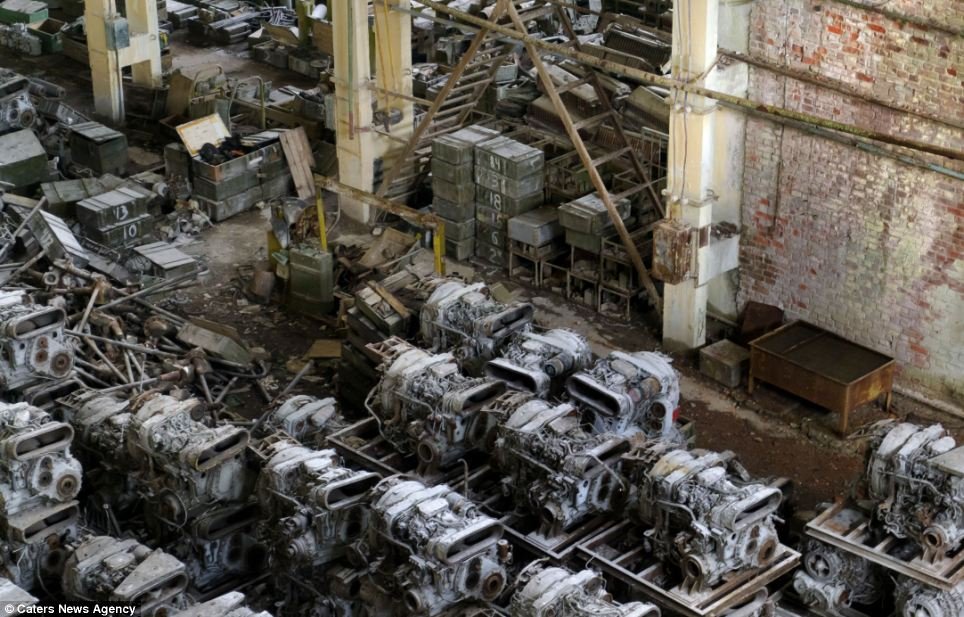
This fascinating and astonishing revelation certainly amazed thousands of historians, war scientists, and plain, curious ordinary people; yes, there are hundreds of secret, abandoned, Soviet military tanks gradually rusting away somewhere within the Eastern European state of Ukraine. A conservative estimate puts the number of these fascinating war monuments at several hundred. About 400 of these are silently located in a most secretive, closely guarded yard in the Ukrainian town of Kharkiv. The secret yard is located in the eastern Ukrainian region of Slobozhanshchyna, only 20 miles away from Russia’s common border with Ukraine. Interestingly, recently, a curious and daring 18-year-old, known as Pavel Itkin, took the risk and eventually succeeded in accessing the yard, undetected; this was hugely risky because the yard is kept under tight surveillance, with armed guards perpetually manning the site. Brave Pavel eventually made away with scores of mouth-watering photographs, graphically documenting the astonishing range of war machinery, stashed away in a silent graveyard, with scores of prized engines and military tanks in tow. Many found the stunning photographs, that went viral, to be amazing and incredulous. Let us take a brief tour around the secret military war-chest that hides history.
The Incredible Secret Ukrainian War Graveyard
There is no doubt about it; the photos taken by Pavel Itskin and a few other Jonny-come-lately revealed the depth of the tank-rich Ukrainian military graveyard. It also proved that Ukraine currently houses hundreds of secret vintage war vehicles that could come in handy in case the East European state got to war with a rival. The undercover visit to Kharkiv revealed multiple rows of deadly war arsenal, some dating as far back as World War II, progressively rusting away. These previously deadly war chests are now kept idle in the Ukrainian town located some 20 miles from the Ukraine- Russia common border. Apparently, the tightly-guarded storage center is now mostly disused. Significantly, after the fall of the former USSR in 1991, the busy military depot at Kharkiv was suddenly abandoned and left as a war relic, marked by scores of vintage military vehicles and tanks. This depot was once a specialist military yard, skilled in the rehabilitation and overhaul of assorted warcraft. Among the vintage war machines that found a place here include the fearsome T-80, T-72, and T-64 tanks. These war-chests were probably built at a nearby factory in Malyshev.
Most Produced War Tank of the Century
Notably, the T-64 is recognized as a primary Soviet war tank that first emerged in the 1960s. Later, in 1972, the T-72 came into the picture. The T-72 subsequently earned a place as among the most produced military tanks by the close of the last century. On its part, the T-80 came in 1976, around the same time as the T-72. The T-80 was dubbed as the first tank of its kind to be propelled by a gas turbine engine. Ukraine still uses the T-80 to-date. Several countries went on to use the T-80 as a prototype, building a variety of tanks modeled after the Soviet veteran. Some of these include Russia, South Korea, Pakistan, Cyprus, Kazakhstan, and Belarus. In the 1960 s and 1970s, during its heydays, the Kharkiv yard rehabilitated over 55 engines and 60 tanks in a month. In 1991, when the USSR collapsed, the yard was abandoned since Ukraine, a fledgling state, had neither the desire nor the money to rehabilitate the used machines. Despite the down-sizing of the depot’s operations in the 1990s, the yard remained formally in operation with assigned mechanics remaining around to repair the machinery, once in a while. The young photographer’s overall impression of the peculiar depot was significantly expressed in a word: “stunning.”
Malyshev Enters the News Radar
Malyshev is widely described as a powerhouse that houses some of the biggest tank factories of the 21st century. To date, armored vehicles, industrial machinery, and assorted tanks are regularly produced here. In 2014, the Malyshev factory entered the news radar when it became a storage yard for keeping the bodies of people who died when the MH17 airplane was shot down.
Battle Tanks, Patrol Guards, and Watchtowers
According to some who visited the mystery site, the Kharkiv war tank graveyard contains hundreds of vintage battle tanks. Tucked somewhere in the back corridors, you will read the sign: “Russia – Bratja.” This is, evidently, a solemn notice proclaiming the military comradeship that binds the Soviets to the Ukrainians. As noted, the site is always under surveillance, with guards on patrol and others manning the watchtowers. Apparently, the site remains considerably operational, with busy technicians repairing tanks that are later transported to the Donbas warzone. The witness spoke about the existence of several dozens of snow-covered under-barrels protruding up the perimeter wall. There are both newly painted and rusty military tanks adorning the supposed graveyard. In 2015, it was reported that the work of rehabilitating over 50 military tanks at the site was complete and that these would be released for operational projects in Eastern Ukraine. Many people admire the deep historical values of this fascinating, vintage, military graveyard located in the well-documented city of Kharkiv, Ukraine. We hope that this bit of history, plucked from Eastern Europe’s Ukraine, inspires in you both nostalgia and considerable curiosity.
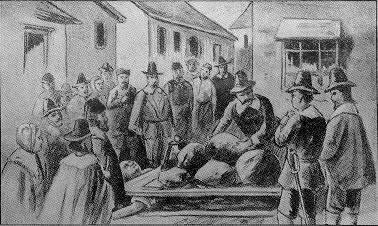
Drawing of the death of Giles Corey (Sept. 19, 1692) by being pressed with heavy stones. Credit: Wikimedia
Giles Corey was killed during the Salem Witch Trials in 1692. These trials were a series of events that have since become renowned for their gory, shameful, and unjustified proceedings. In the strict and ultra-religious Puritan society of the new American colonies, citizens viewed witchcraft in Massachusetts as something utterly profane and inexcusable. They believed witches to be followers of Satan, and the idea of witches living in the area caused mass hysteria and societal breakdown, despite being entirely based on lies and fear.
What Sparked the Salem Witch Trials
Trouble started within the village of Salem when the two daughters of minister Samuel Parris began having fits of convulsions and screaming. The cause was diagnosed as bewitchment and blamed on Tituba, a slave woman brought from Barbados who was working in the household. Other young girls in the village began to exhibit the same symptoms, and more people were consequently accused of witchcraft and dealing with the Devil, and so began various investigations, hearings, convictions, and even executions of these supposed “witches.” Several of these accused “witches” themselves accused others in an attempt to lessen the punishment thrust upon them. Paranoid frenzy spread like wildfire as more girls joined in on the accusations, finding ludicrous ways to show evidence, such as claiming specters of the accused visited them at night, forcing them to sign the Devil’s book. Sorcery and Satan worship were not seen to be bound by gender, and so either a man, woman, boy, or girl could be a witch. Giles Corey was one such village citizen who was unfortunate enough to get caught up in the unjust consequences of the delirium.
Who was Giles Corey
Giles Corey was born in 1611 in England. He immigrated to Salem, where he lived until 1659, at which point he bought a large piece of farmland in Salem Farms, just outside of Salem Village. He did not get on well with some of his fellow villagers, clashing with because he was considered to have lived a “scandalous” life. He did, in fact, have a few run-ins with the law, proving him to be not such an upstanding citizen. He was accused of stealing twice, and in 1675 he pummeled a farmworker named Jacob Goodell to death for stealing apples, though he claimed Jacob had fallen from a horse.Depiction of the Salem Witch Trials He was put on trial, found guilty, and ordered to pay a substantial fee in place of imprisonment. From all this, he earned a horrible reputation, causing villagers to sometimes blame him for other crimes, like when John Proctor’s house burned down. This most likely helped to contribute to his being accused as a witch. He married a woman named Martha, who was devoted to the church, and he then, at the age of 80, applied to be a member of the church as well. He was asked to repent for his sins for a month and was then accepted back to the brethren. After marrying Martha, Giles never committed another crime, and the village saw Martha as an impetus for change in his life.
Witchcraft Accusations
It, therefore, speaks to the amount of fearful panic and deranged paranoia running rampant that Martha of all people was accused of witchcraft. When giving testimony in court, she was so calm about her denial of it that the judges mistook her demeanor for evil intentions. Martha incriminated herself further when she tried to go to Ann Putnam’s house, where Ann and her mother acted as if Martha was torturing them. Moreover, the village girls began to mimic Martha’s movements as if she was controlling them, cementing her guilt in the eyes of the jury. Giles defended his wife and was then swiftly accused of witchcraft as a result. The fact that he was a stubborn man who very likely expressed skepticism and criticism of the whole situation might have also made him seem guilty. There was no substantial evidence against him, other than his previous murder conviction. He was alleged to have been at a witches’ sacrament, torturing girls. Giles was arrested and put in jail with his wife, then left there for five months awaiting trial.
The Trial and Sentence
At his trial on September 16, 1962, he attended only to plead “not guilty” and then, being a proud man, refused to put himself fully on the court to be judged by a jury, as he knew they had already decided on his definite guilt. He was ruled as a “standing mute” because he denied being tried, and was thus sentenced to death.Drawing of the death of Giles Corey (Sept. 19, 1692) by being pressed with heavy stones He was given the atrocious death sentence by way of peine forte et dure, which meant having heavier and heavier stones placed on your body until you were crushed to death. This practice was actually determined to be illegal in the colony by the governor of Massachusetts because there was no law permitting it, and it went against the Puritan code that disallowed “barbarous punishment.” Nevertheless, his sentence was carried out. He was placed in a pit in the field next to the jail where all his neighbors could see. They positioned a large board across his body and heavy stones set on top. He is famously known for continuing to utter the words, “more weight,” in an attempt to seem obstinant and quicken his death. Over the course of two days, his request was granted with more and more weight, until finally he was pressed to death at the age of 81 on September 19, 1692. Until this day, he is the only person in the history of the United States to be given a court-ordered death sentence via pressing.
The Effect of His Death
Memorial marker in the Salem cemetery for Giles Corey Giles Corey’s tale led to him being perceived as a martyr willing to die for what was right, or at least as someone who fought against the ridiculousness of what was happening in his society. At the time, his death influenced others to see the light about the unfairness of trials, seeing as the way he acted during his punishment did not reflect someone who was indeed guilty of being a witch. To this day, he is viewed as one of the faces who stood up against the immoral and unwarranted proceedings. By the end of the events, 25 people had been killed – 19 by hanging. Martha, Giles’ wife, was hung to death on September 22, only three days after her husband died, and was buried along with him and all of the other convicted people on the part of town that became known as “Gallows Hill.”