On January 26, 1996, America saw the tragic end of one of its most bemedaled Olympic wrestlers, Dave Schultz. He was killed by the hands of his improbable murderer, du Pont family fortune heir, and philanthropist, John du Pont. The reclusive scion first caught the public’s eye after donating over $3 million into U.S. Wrestling and starting FoxCatcher Farms, a factory of wrestling champions that Dave would later manage. But none of this mattered when du Pont opened fire at the wrestling icon. His motive remains a mystery.
Who Was John du Pont?
Image credit: https://murderpedia.org/ John Eleuthère belonged to one of the wealthiest broods in America, the du Ponts of DuPont Chemical & Energy Operations Inc. The family’s default riches lent him a rather cold and solitary childhood. He found solace riding thoroughbreds in their prodigious Pennsylvania farm or ogling at avians and other fauna. Before sunset, he would retreat into the family’s mansion, a place none the warmer for the lonely progeny, whose far older siblings barely even looked at him. The only concept of a relationship he had was with his chauffeur, whom his mother paid to stay “friends” with him. An odd duck from the beginning, John founded the Delaware Museum of Natural History as soon as he finished a doctorate in natural sciences. Still, nothing proved meaningful for the young du Pont, who also kept dabbling with different sports and even ended up on the Olympic pentathlon team in 1976.
Unexplained Passion for Wrestling
As a young boy, John suffered a horse-riding mishap that cost him his two testicles, which kept him away from any contact sport forever, including wrestling. It’s believed that this added to his deep insecurity and created a hole that he would spend the rest of his life fixing. Nevertheless, du Pont felt a pressing need to participate in wrestling as much as he could, even if he couldn’t be the wrestler himself. In 1985, he put up FoxCatcher Farms on the family’s estate and devoted himself to churning the greatest wrestling champions the world would ever know, much to the zeal of the wrestling community. Finally, somehow, du Pont felt a sense of purpose.
Early Days at FoxCatcher Farms
The first Olympian du Pont hired to lead his team was Dave’s brother, Mark, but it didn’t take long before the older Schultz decided to quit. Mark loathed how du Pont handled him like a property with a six-figure monthly price tag – and didn’t hesitate to show it. In 1988, he stopped his own victory at an Olympic trial match in Pensacola, Florida just to pique du Pont. Two years later, Dave had taken over his brother’s place on the team and would soon be known as FoxCatcher’s softhearted coach. Aside from Mark and Dave Schultz, no other freestyle wrestling brothers had bagged medals both at the Olympics and the World Championships. Dave went on to become a World and Olympic medalist seven times in a row, and that’s on top of gaining a reputation for being wrestling’s very own Mr. Nice Guy. In the end, this led him to accept du Pont’s offer to lead team FoxCatcher despite his brother’s unencouraging words. Everyone felt Dave saved the team as no one else was excited about going. Meanwhile, du Pont became harder and harder to deal with, let alone relate to, and Dave Schultz became the only human who could come close enough to taming him.
Du Pont’s Mental Disintegration
Du Pont’s mother’s death in 1988 sent him on a downward spiral that soon gave way to visions of Disney characters romping around the estate and suspicions of geese casting a black spell on him. He discarded all treadmills in the property, believing they reversed time, and hired security to scan the property for spying trespassers, including behind walls and underground. Drugs and alcohol were believed to be the cause of duPont’s mental decline, but in any case, it was clear that team FoxCatcher had gone haywire. Du Pont fired three wrestlers on a whim, including Kevin Jackson, announcing the camp was now a white supremacist group that repelled black wrestlers. Dan Chaid cowered as an unprovoked du Pont pointed a machine gun to his head. This environment took a toll on the entire camp and made it a torture den for everyone.
Dave Schultz, Murdered
Dave Schultz While Dave was the closest to John at FoxCatcher Farms, he was no bootlicker and was never afraid to speak his thoughts, even if it meant jabbing at his moneyed boss’s ego. The story goes that this drove du Pont to develop an irrational, baseless fear of his team manager, which might have contributed to the murder. Then again, no one really understands why John picked up a 44 magnum and hatched his plot. All the world knows is that he killed Dave in cold blood, and his wife only had three words for the 911 operator who asked why: because he’s insane.
Justice for Dave Schultz
Justice came relatively easy for Dave Schultz and his family, with the du Ponts pinning the blame on John’s security adviser, Patrick Goodale. They accused Goodale, who literally – and perhaps figuratively – drove du Pont to his prey, by bleeding the heir of his money while enabling his schizophrenic tendencies. He made him a monster as the world looked on. Mark, Dave’s brother, reeled from his own personal misery as the movie FoxCatcher showed in cinemas and depicted him as du Pont’s lover. As soon as Mark saw the final cut, he set Twitter ablaze and didn’t stop short of writing the director, lambasting the movie for its lack of accuracy. Mark’s anger soon fizzled out but without undoing the harm. National media had started plucking scenes from the film to develop stories that somehow sealed him as the paramour of his own brother’s murderer. The best consolation was the jury’s rejection of du Pont’s insanity plea, although they did acknowledge his mental illness – just that he wasn’t ill enough to be declared insane and exonerated. Du Pont was sentenced to 30 years in prison and became the first and the only member of the Forbes 400 richest Americans pack ever to be convicted of murder. At 72, thirteen years into incarceration, John du Pont died of chronic obstructive pulmonary disease in his prison cell.
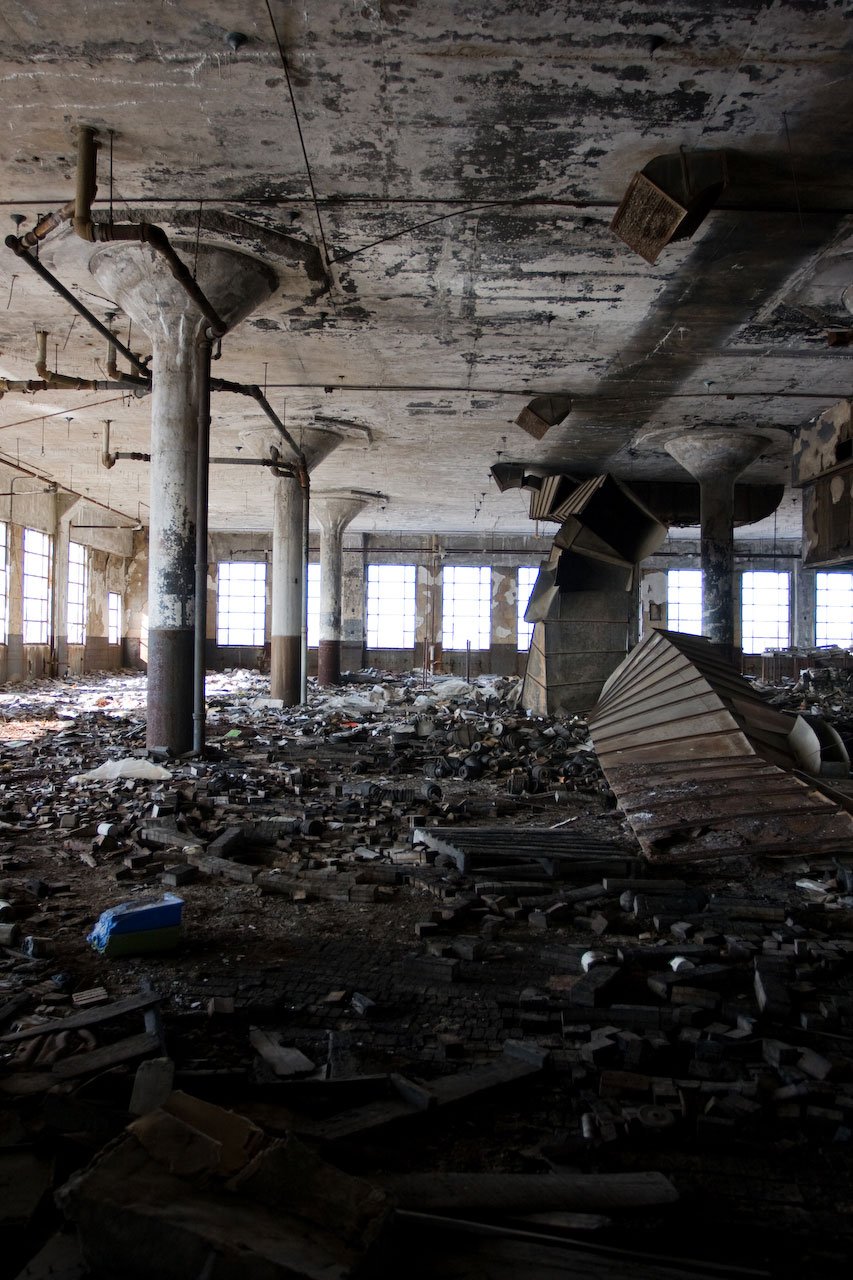
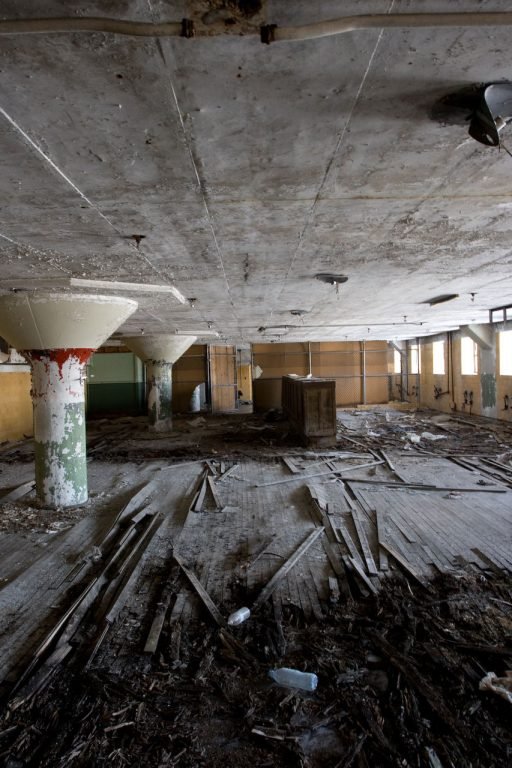
The abandoned Detroit Public Schools Book Depository sits on 2230 Dalzelle Street, quiet yet screaming with questions. Designed by architect Albert Kahn and constructed in the early 1900s, the building was originally used as a post office before it was converted into a giant stockroom for the city’s public school records, books, and other supplies. In 1987, a fire razed the warehouse and ravaged certain areas but none so desolately as its precious contents. In a move met with heavy criticism, the building’s new owners fled the property as quickly as the fire wrecked it, never to return for anything – not even official school documents that dated more than a century back, or books and supplies that remained pristine in their original packaging as wanderers would later unearth. The building remains where it always stood, on Detroit’s oldest extant neighborhood, only now it’s densely vandalized and gutted of interior metals.
Massive Book Destruction
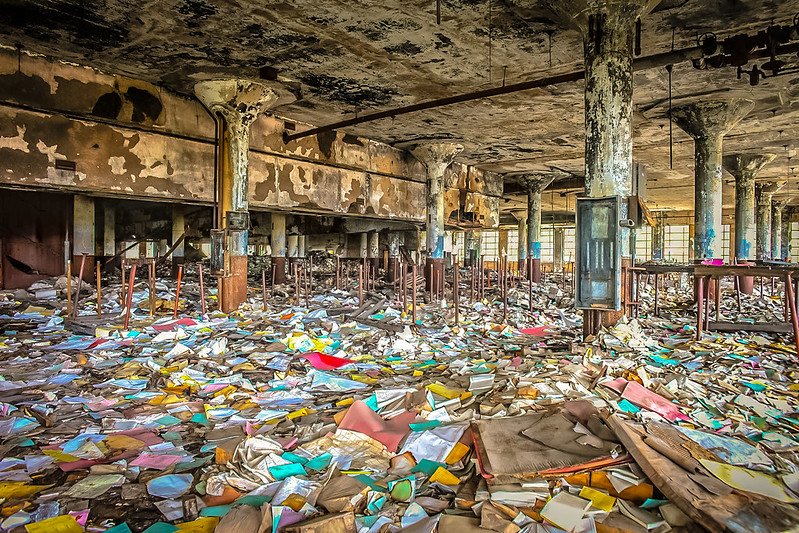
Of far greater value than any property lost to the fire are pieces of living literature that building owners had dismissed with bold, unrestrained abandon. A tour of the building instantly reveals a creepy, wondrous charm unique to its pillaged interior. Damp and musty air, floors padded with carbonized and decayed paper, collapsed metal shelves, and piles of educational materials are reduced to waste as thousands of Detroit schoolchildren remain deprived and starved of them. To this day, the former book depository is an iconic museum of wasted knowledge, not as a casualty of profundities like divergent ideals or social systems, but of brazen negligence.
A Billionaire’s Purchase
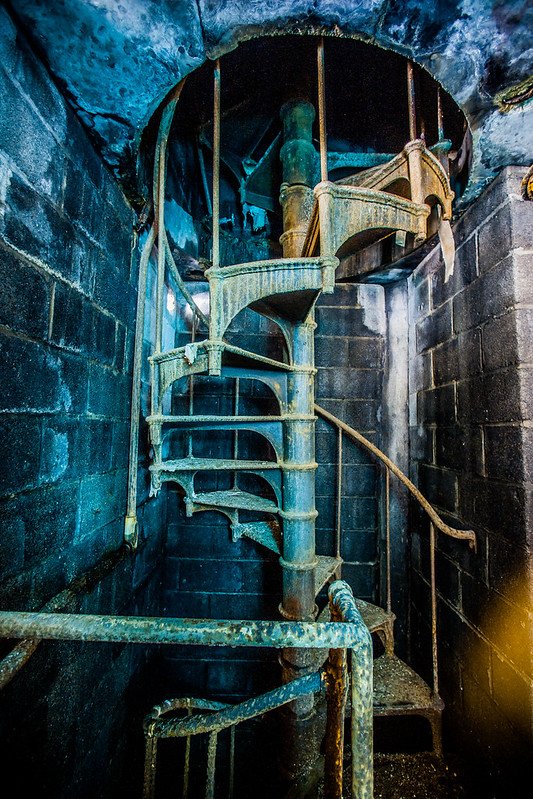
In 1995, trucking and real estate tycoon Manuel Moroun acquired the two key symbols of southwestern Detroit’s blight – the Detroit Public Schools Book Depository and the old, bedraggled Michigan Central Rail Depot that sits adjacent. Even after the purchase by the Moroun family, the warehouse stayed open to lookers and the homeless. Its fence and side entrance were riddled with holes and the elevator shaft was left wide open. And while the new owners had received a permit to demolish it in 2001, the building is untouched to this day.
Home of the Homeless and the Story of Johnnie Redding
Over two decades since the fire, a man broke headlines after getting stuck at the bottom of the building’s flooded elevator shaft, frozen. His name was Johnnie Redding. A group of curious explorers first encountered the corpse as they played ice hockey in the basement but chose to ignore it as did homeless people who regularly congregated in the warehouse.Photo by Hallie Harker There are at least 20,000 homeless people in Detroit, with most shelters offering no more than a chair that’s automatically reassigned as soon as it is vacated. Holding onto a chair has become the daily grind for thousands of the city’s vagrants. But for a time, the home was the former Michigan Public Schools Book Depository, even if they shared it with a frozen body whose legs stuck out like popsicle sticks with shoes.
Found and Reported
It wasn’t until a reporter acted on an anonymous tip that news of the corpse officially reached authorities. Soon, grim pictures of Redding’s dismembered body, the result of extrication efforts with the aid of chainsaws, flooded the media. Since the reporter published his first story on the ill-fated former factory worker, countless spins had emerged online, especially in blogs and blog commentaries that attempted to unsnarl the tangle that was Redding. Initially thought to be homeless, the 59-year-old’s brother passionately refuted the speculation, saying Johnnie had “too many places to live in,” including the Holcomb family home where he grew up and a sister’s home in Georgia. Homer Redding said they saw each other on Johnnie’s birthday in 2009 as he was heading on out to party. It was also around this time that his body was found in the neglected warehouse. Like everyone else, including investigators, the Reddings are still clueless as to how Johnnie ended up in the abandoned building. Why it took at least 24 hours and three emergency calls for the Detroit Fire Department to respond, is also as much a secret as the Detroit Public Schools’ failure to recover heaps of intact, usable books and supplies that somehow escaped the blaze.
The Cause of Death
Of course, what happened to Johnnie is another riddle. Was it murder? Murders were quite rampant on this side of town. Perhaps he drank himself to death or tripped down the sinister-looking elevator shaft. The coroner eventually ruled cocaine overdose as the cause of death, but only one thing was clear: the frozen man sparked a controversy that marked the advent of tighter security around the once free-for-all property.
Transfer to Ford Motor Company
Michigan Central Station By Brian W. Schaller – Own work, FAL, Link In 2018, the long-deserted former book depository and train station in Detroit’s Corktown neighborhood were transferred from the Moroun family to Ford Motor Company, which had been eyeing it both as part of a new urban campus. While the Morouns were predictably mum on the properties changing hands, Ford was more vocal about its agenda of establishing its presence in Detroit. Before the transfer, Ford’s technology and electrification crew had moved four blocks east of the train station in a facility called The Factory, which would become the nerve center of the automotive giant’s self-driving and electric vehicle departments. Industry experts cited the possibility that the Morouns still had a stake in ownership, but this wasn’t your ordinary scenario unless it came with a tax advantage.
The Detroit School Book Repository Today
Today, Ford has closed all access points to the area, except for a tunnel that runs below 15th Street from the warehouse to the train station, which had once come in handy for the city’s postal service. Before the sale to Ford, the Morouns came under fire for leaving the property to rot instead of investing in it through their years of ownership. But that’s just another question in the arsenal of truths, half-truths and blatant lies that make the abandoned Detroit Public Schools Book Depository a running mystery. (Image credits: Thomas Hawk / Flickr)
There are a lot of historical places in Europe to visit where you can learn quite a lot about the past. One of those places in the southeast is the long-abandoned Underground military Air Base known as Zeljava. It was strategically hidden behind mountains and located near a number of important facilities, including Europe’s Plitvice Lakes. This underground air Base holds a lot of secrets about what happened during the Croatian War of Independence and very few people know about its significance.
When was the Zeljava Underground Air Base Built?
Hidden in the center of different military facilities and numerous airfields nearby, Zeljava Underground Air Base, is considered to be one of the largest, hugely complex and extremely expensive underground airports in Europe. Some people believe it was built by the Yugoslavian government between 1946 and 1968 while shrouded in complete secrecy. It fully functioned until 1992. After this, it was abandoned by the Communist government during the civil war between Serbians and Croatians. Since then, it is now only guarded by the border police and no military installations are welcome near the border.
What Was Its Purpose?
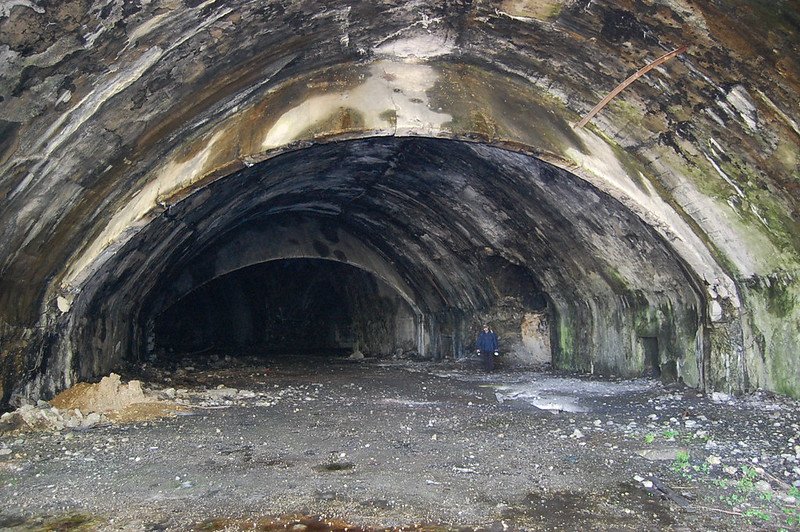
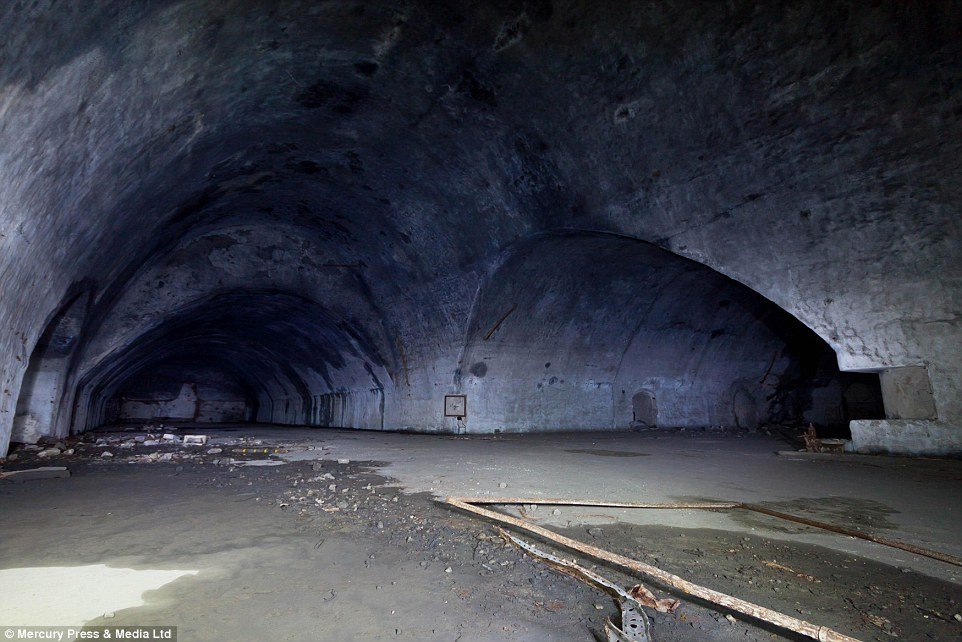
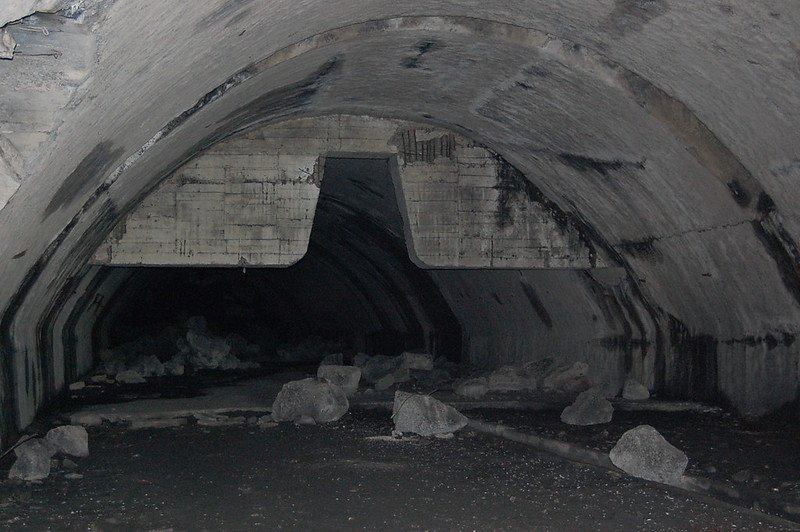
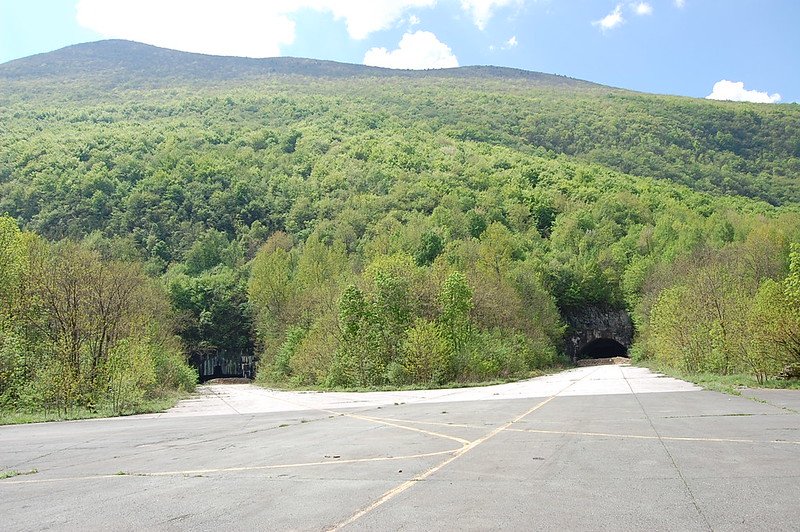
This important former military airbase lies on the border between Croatia and Bosnia and Herzegovina. The military airbase’s official code name is “Objekat505,” though it is informally sometimes referred to as the Bihac airport since it is located near Bihac city. It’s said that the construction of the Underground military Air Base, which was seen as a centralized control area that had secure forms of communications, was built with the sole purpose of establishing countrywide early warning systems, and was meant to defend the country against external attacks. This project saw the Yugoslavian government use an estimated 6 billion dollars, building a complex design able to sustain a direct hit from a nuclear bomb. Zeljava Underground Air Base was constructed with four entrances with pressurized retractable doors and exits all capable of neatly launching MiG fighter jets. One of those entrances has an exit which leads directly to the Bosnian side. Steer clear of this particular exit unless you want a run-in with the law. Otherwise, you might be accused by the Bosnian police of trying to cross the border illegally! The Underground mess hall was purported to be large enough to feed more than 900 people, and it stocked enough supplies, firewood, and arms to last a month without needing to ask for a resupply. Zeljava Air Base also has two underground tunnels which had aircraft squadrons, plenty of underground water supply, and a power generator.
Destroying the Air Base
Unfortunately, no one had planned for Civil war and when it broke out, this massive airbase ended up being destroyed by the Serbians following instructions from the great Marshal Tito himself to stop the Croatians from getting their hands on the facility during the civil war, where thousands of innocent people were killed and thousands more left homeless. To destroy the facility, they set off built-in explosives and the entire demolition took roughly about a year. Currently, only the police use it to train their K9 on how they can retrieve the explosives.
During this period, aircraft and other equipment were transferred to airbases in Serbia as well as several affected civilians who were also moved to Serbia for safety and anything else that could be mined. Whatever was not salvaged was permanently destroyed in 1992.
Zeljava Underground Air Base Today
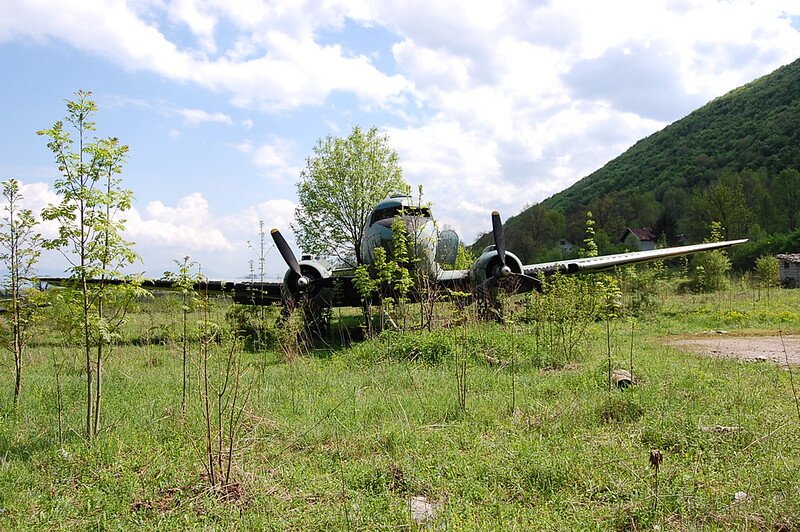
Abandoned Aircraft The cold and humid facility which once housed plenty of MiG Fighter jets now lies silent and completely abandoned, with no hope of reconstruction due to the huge financial budget it would require. It now only boasts of rusting and rotting bullet-riddled planes and missiles, huge dangerous holes, wheels, and metals on the floor and ceilings which were severely damaged by the explosives used. Be vigilant as they look like they can curve in at any time. The military base’s tunnels are completely dark, and the air is quite dusty and polluted from all the charges deployed in the base which destroyed it from the inside. And even though the Underground Air Base is no longer functional, it is important to note that there are still a lot of active minefields. Visitors are advised to stay on the road and not to venture into any of the restricted areas.
Touring the Base
Many sources say that the facility also had five runways, some used for taxiing, while others were used for takeoff and landing and only people with special authorization were allowed to enter the heavily guarded facility. The facility also had barracks and other buildings as well as workshops. To access the facility now, you need to have or at least hire a car since no buses go to that particular area. It’s also a good idea to hire a tour guide for your safety and security as there have been many lives lost around the area near the minefields. These tour guides will save you a lot of time and most of them are well-known to the police on patrol. They can help you translate and understand area maps so you can focus on enjoying your visit.
Tour Supplies
This isn’t your average museum tour. You’re going to want to come prepared with some serious supplies. First of all, carry powerful flashlights and back up batteries to help you navigate through the darkness inside the Underground Air Base. You’ll also need warm clothing to keep you comfortable inside the cold, damp building. And most importantly, wear sturdy shoes to protect your feet from stepping on any sharp steel or metal shrapnel. Unfortunately, this airbase may not be the spot to visit if you have a fear of enclosed places. The long, dark tunnels can feel cramped. Carry a mask to shield yourself from the dust and toxic fumes. And make sure you carry your passport and identification with you, as the patrol police officers are constantly checking the facility. Above everything else, come prepared to learn and explore this historical site. (Image credits:krunchi on Flickr)
About an hour west of Bournemouth and less than a half mile from England’s intimidating Jurassic Coast is Tyneham village, a feudal relic and one of the country’s best-preserved ghost towns. Tyneham’s 225 residents were evacuated by the War Office in December of 1943 in preparation for D-Day. After the war the temporary measure became permanent and the village was never allowed to return. In the years following the war the Army abandoned the village and to this day uses the area as a test range and training ground.
When it was built in 1914, the Nueces County Courthouse was both majestic and massive. The local newspaper proudly declared “the new building poses us an empress, sitting on her throne with her courtiers, the city of Corpus Christi lying at her feet.” The impressive Classic-Revival structure was the county’s third courthouse, built during a time when county buildings represented more to the people than mere offices and courtrooms. It was symbolic to the arrival of Corpus Christi Bay as an economic center of South Texas. During the twentieth century Nueces County exploded in size, eventually outgrowing the square footage of the building. The courthouse battled progress, technology, and multiple hurricanes but ultimately it lost its fights with capacity, deterioration, and maintenance funding. Since the county moved out in 1977, the courthouse has spent forty years unused and deteriorating while Corpus Christi’s most decorated civil servants debated its future. In 2017, that future may finally come into focus.
What’s left of the North Wilkesboro Speedway is not hard to find; the dilapidated stands of this abandoned race track sit less than one hundred feet from the highway, just five miles east of town. The 5/8-mile track was built by moonshiners in 1946 and was a NASCAR original in 1949. It became a North Carolina legend after hosting nearly 100 races across a half-century of operation. Over time NASCAR crowds and TV contracts outgrew North Wilkesboro Speedway. As the sport got bigger and faster the track found itself ill-equipped to support the next generation of the sport. When the speedway’s founder died, so did its fortunes. The track’s final Cup race was in 1996, and aside from a brief revival in 2010, the track has been unused for 20 years.
Atop a dormant volcano in the Azores, the remnants of the abandoned Monte Palace Hotel slowly disappear behind vegetation. In the late 1980s this hotel was the culmination of more than ten years of planning. It offered its guests top-shelf accommodations surrounded by million dollar views, but the business collapsed before its second operational birthday. Natives know why the hotel struggled: the location is too remote, weather too unpredictable, tourism campaign too ineffectual, and there’s nothing else to do up there. It was probably all of the above, plus a healthy serving of developers exhausting financing and succumbing to enormous debt. The hotel was designed to be purposefully unspectacular, its designers intending to blend the structure into the landscape while not detracting from the magnificent views offered by São Miguel’s Vista do Rei. Now it has been abandoned for years, and many feel the building detracts.
For the last twenty years this modern car factory in northern Italy has been abandoned, quietly fulfilling a lonely existence behind overgrowth in a gated compound. From 1991 until 1995 it was the most avant-garde factory in the world, home to Bugatti Automobili SpA and the place where 240 people built some of the world’s fastest cars. Bugatti Automobili was an Italian revival of the classic French nameplate, which for five years produced history’s forgotten supercar, the Bugatti EB110. When the company ran into financial problems in 1995, it filed for bankruptcy and was forced to abandon its state-of-the-art facilities. Almost miraculously, the complex has avoided redevelopment and serious vandalism for more than two decades. Today the unloved Bugatti EB110 and its abandoned factory are little more than footnotes in history, however the well-preserved buildings serve as a time capsule for the legacy of a dream and the forgotten triumph in engineering it produced.