Thirty minutes east of Washington D.C., a collection of brick buildings are deteriorating on a sixty-acre campus buried in a residential pocket of Glenn Dale, Maryland. A foreboding appearance supports local lore of ghosts haunting a former insane asylum, although the truth is more benign. The Glenn Dale Sanatorium was the government’s post-Depression answer to fighting tuberculosis among the working class in the nation’s capital. The hospital’s service life was cut short by advancements in medicine, which eventually forced the facility to close its doors before its fiftieth birthday. Multiple attempts to sell the remaining tract to a developer have been thwarted by a well-meaning law designed to protect the buildings and preserve Glenn Dale’s quiet, pastoral landscape. Some of the structures are still salvageable, but asbestos abatement alone could approach $5 million dollars. If the former hospital is to be saved, its rescuer must have deep pockets, and certification to operate a continuing care retirement community.
ADX Florence, built south of Florence Colorado in 1994, is the maximum security prison in the United States prison system. Commonly referred to as a “Supermax” prison, it has 490 beds in a compound which encompasses 37 acres. The florence co prison was designed to house prisoners deemed too dangerous or high-profile for regular incarceration, and nearly 95% of all inmates that have been sent to Florence were transfers with histories of violent behavior in other prison facilities.
You’re not far from Shanghai, yet the spire of the Victorian revival church in front of you casts its shadow across a medieval town square. A row of Tudor homes are just around the corner from a string of pubs and shops. But you notice everything is closed. The only people you see are the occasional wedding party taking photographs. A sign at the entrance reads:
“Welcome to Thames Town. Taste authentic British style small town. Enjoy sunlight, enjoy nature. Enjoy your life and holiday. Dream of Britain. Live in Thames Town.“
It’s not quite right, much like the rest of the town. The borough known as Thames Town was part of a 2001 initiative to move millions from Shanghai’s city center into nine international suburbs. The concept had noble intentions, but things did not go as planned.
Seattle isn’t called the Emerald City for nothing — its lush, evergreen trees are dazzling. But one thing that makes this seaport metro sparkle, even more, is its wealth of buildings and infrastructure that have been lost to time. If you want to get to the soul of Seattle, here are five old and abandoned structures that can instantly transport you to its storied past:
Ramps to Nowhere
A deserted overpass, Ramps to Nowhere goes back to the 1960s when it was built to connect Highway 520 and the R.H. Thompson Expressway. Cutting through the Washington Park Arboretum, the project would have wiped out an entire predominantly black community, if not for mass protests that quickly halted construction. The fate of the unfinished ramps has been left in limbo, but a group called Seattle ARCH (Activists Remembered, Celebrated and Honored) is working to maintain part of the structure as a tribute to the democratic process that once prospered here. You’ll likely find the ramps dotted with sunbathers and stargazers, including young people jumping off into Union Bay. Safety and upkeep costs have become a problem though, especially because the ruins are part of an area revered for its high natural and ecological value.
Pioneer Square Pergola
High on the list of Seattle’s historical charmers is the Pergola at Pioneer Square, whose story fascinates lookers as much as its Victorian architecture. Made of cast iron and glass, the Pergola was part of subterranean restrooms. They were designed by local architect Julian F. Everett for 19th-century cable car passengers on the James Street and Yesler Way lines. At the height of its glory, the so-called “Queen Mary of the Johns” shone with marble dividers, terrazzo floors, brass fixtures and two streetlamps doubling as ventilation for the restrooms below. It was sealed over at the end of World War II before getting a total makeover in 1972. In 2001, the Pergola was demolished by an amateur driver in a truck accident that cost the government some $3.4 million in repair costs. The Pergola stands on the same spot in downtown Seattle today, now protected from collisions.
Snoqualmie Tunnel
Running 2.3 miles, the Snoqualmie Tunnel formed a section of the Chicago to Seattle train line for over half a century since 1914. After the last train passed through on March 15, 1980, the site has been repurposed for recreation. It’s now part of the 1.6-acre Iron Horse State Park in the Cascade Mountains and Yakima River Valley. Burrowed into a mountain, the interior of the Snoqualmie Tunnel is at least 20 degrees colder than ambient temperature and offers zero visibility. If you might have observed or read about, hikers usually go all wrapped up with flashlights or headlamps for safety, the trail passing through Annette Lake, Twin Falls State Park trailheads, and exuberant greenery before exiting at the western end where picnic tables and outhouses await. To get to the tunnel’s mouth, you’ll need to walk about 400 meters from the Iron Horse Trailhead. Don’t go during winter though — temperatures can be hazardous.
Olympia Beer Brewery
Driving down Interstate 5, you’ll catch a view of the iconic Olympia Brewery founded by German immigrant Leopold Friederich Schmidt in 1896. The company shut down in 2003 but not without leaving a void in Seattle’s otherwise animated beer culture. The building has become one of the city’s most popular abandoned spots. Just looking at the former brewery’s deep red brick walls, now mostly concealed by overgrown, unkempt trees – will give you barrels of history. The brewery was the only one that used artesian water to make its beer. In 2018, the building caught fire, supposedly caused by people cutting copper wires. Then again, the resulting damage only adds to the building’s mystique.
The Seattle Underground
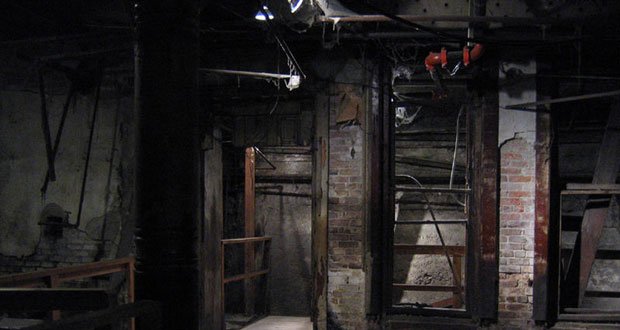
Did you know that 21st century Seattle is practically sitting on top of its older self? Seattle was actually one of three cities, the other two being Chicago and Atlanta, that had to be elevated 15-30 feet higher as industrialism took hold. With the great Seattle fire of 1889, building a new Seattle above the old was unavoidable. As construction began, people were given access to both the upper and the lower levels to make transition easier. Once construction was complete, the underground was sealed off for public safety. But that didn’t stop Seattleites and tourists from exploring the down under — the Seattle Underground that we know today. A day tour can give you lots of insights into the old Seattle business circuit, but many parts still remain untouched up to now, awaiting discovery. The list could go on, but there’s no doubt that the five mentioned above make for some of the most unforgettable encounters in this gem of a city. Each location gives you a better appreciation of Seattle’s charming character.
Dixie Square Mall has quite a history, despite standing in ruin for more than double the number of years it was in operation. Most recently classified as a “dead mall” (a shopping mall with a high vacancy rate or low consumer traffic), Dixie was perhaps most famous for being the mall used in the chase scene in the movie The Blues Brothers.
Located in Harvey, Illinois, it stood vacant for over 30 years before finally being torn down in May of 2012. Here is the story of the Dixie Square Mall.
Waterbury is the fifth-largest city in Connecticut and is often called the “Brass City,” an homage to its centuries-old roots as a producer of the alloy. It is the birthplace of the founder of the Knights of Columbus, the original Mickey Mouse watch, and Timex. The city is also home to Holy Land USA, a defunct interactive Bible scene set across eighteen acres in the center of town. For the last sixty years its lighted “Peace Cross” on top of the mountain has stood as a beacon for Waterbury and I-84 motorists. Construction of the attraction began in 1957, the work of a devout Catholic lawyer with help from an army of volunteers. During the 1960s and 70s the 200-piece Holy Land USA was a popular attraction, drawing 40,000 visitors per year at its peak. When its founder and chief caretaker became frail in the 1980s, so did the park. It was closed in 1984 and left in the hands of under-equipped nuns, who for the next thirty years watched over the site as its features became overgrown and vandals hastened its demise.
On the Maryland side of the Potomac River just west of Chesapeake Bay, the largest shipwreck fleet in the Western Hemisphere sits half-sunk and decomposing. In the early 20th century, hundreds of U.S. vessels were sent to Mallows Bay to be destroyed and scrapped – and to this day the remains of dozens can still be seen in the shallow water. How did the ships end up here and why were they abandoned?
As of mid-2011, Mount Everest has claimed the lives of over 216 known mountain climbers. The area above 26,000 feet is called “the Death Zone”, where breathing fresh oxygen from canisters is necessary for all but the most experienced climbers. The atmospheric pressure is about a third of that at sea level, meaning there is about one third the amount of oxygen to breathe. The air is so thin recovery of bodies has proven impossible – and for many, Everest is where they take their last breath.