Located about 50 miles north of Hong Kong in Dongguan, China, the New South China Mall is the largest abandoned mall in the world by gross leasable area. Twice the size of United States’ Mall of America, it was opened with room for 2,350 stores in 7.1 million square feet of leasable space. No mall in the world can rival New South China in any category, except perhaps number of tenants. Despite having every amenity a shopper could want, the mall has been 99% vacant since it’s opening in 2005.
During its heyday Witley Court was one of Europe’s most lavish Victorian estates. An iconic portico and timeless fountain – both penned by famed designers – are hallmarks of this West Midlands treasure. Nearly one hundred were on staff, and for centuries it served as a residence for British Lords who often entertained royalty. However an early twentieth-century fire ravaged the building, and a prohibitive cost to rebuild forced the owners to abandon the home. It wasn’t until decades later the derelict building was rescued by a preservation commission, and today it stands as the grandest Victorian manor in arrested decay.
A supercollider is a large ring designed to accelerate particles of protons and anti-protons until they collide. Its purpose is to create large amounts of energy in a controlled and monitored environment.
In the mid 1980’s, the United States wanted to construct the largest particle collider in the world. But when the escalating costs across multiple revised estimates became financially insurmountable, the project was terminated before completion. Now, nineteen years after construction was terminated, it still sits abandoned and vacant.
At approximately 10:00 pm on September 25th, 2002, a large explosion was detected in the Vitim River Basin near the town of Bodaybo in the Irkutsk Oblast, Russia. The explosion was so large, U.S. military missile-defense satellites reported it. Russian physicist Andrey Olkhovatov estimated the explosion to be between 4-5 kilotons. For perspective, the Oklahoma City bombing – which used a fertilizer bomb to destroy half of an office building – yielded .002 kilotons. So what caused the explosion? Unsanctioned nuclear test? Extraterrestrial activity?
Frank Wills was born in February 1948, in the Savannah region of Georgia State, US. He was the famous security guard who received national acclaim for his pivotal role in preventing the 1972 attempted break-in at the Watergate Hotel in Washington DC. Incidentally, the same hotel housed the Democratic Party National Committee headquarters on its sixth floor. As a result of Frank’s quick action, significant political events occurred in the US. These climaxed with the resignation of Republican President Richard Nixon in 1974, following “the Watergate Scandal.” Nixon was accused of committing heinous political crimes while seeking re-election in the presidential race. As noted, the attempted break-in took place in the headquarters of the Democratic National Committee on June 17th, 1972. In 1978, Frank famously received a special honor from the Democratic National Committee. He was recognized for helping expose one of the biggest political scandals in America’s recent history.
Frank’s Early Life
Frank Wills was brought up by his single mother, Margie, after the parents separated. He received a modest education, dropping out of school in Grade 11. He went on to study machine operation in Michigan, eventually obtaining a Job Corps qualification. Frank later landed a job at the Ford Corporation’s motor vehicle assembly line in Detroit, Michigan. Unfortunately, he was soon forced to quit his job because of health problems associated with an asthma condition. Frank then decided to travel to Washington, DC, where he got employed at the Watergate hotel as a security guard.
Frank’s Heroic Expose of the Watergate Scandal
Interestingly, Frank Wills was only 24 when the Watergate scandal erupted. Frank found duct tape that was discreetly hidden and replaced on a bolt on the basement door near a stairwell, next to the parking area. Evidently, this action was the work of burglars sent there on the orders of President Richard Nixon. On finding out someone was tampering with the building’s locks, Frank acted fast, calling in the police. This led to the arrest of five men who were hiding inside the Democratic Party headquarters. Eventually, through Frank’s heroic action, clear evidence was adduced in court, proving that the president was deeply involved in committing a crime. President Nixon had apparently instructed the committee working for his re-election to arrange the burglary. Yes, with Frank’s help, it was proved that the president had been illegally spying on his Democratic Party opponents.
Shocking Revelations and the President’s Resignation
It was subsequently determined that the burglars had been dispatched to the hotel with instructions to access confidential materials in the Democratic National Committee’s sixth-floor offices. Significantly, the five men who were arrested by the police included a former CIA agent. Moreover, it was revealed that the Republicans were systematically involved in wide-ranging crimes, including corruption, break-ins, slush funds, enemy-lists, bugging, and perjury. Consequently, state authorities were ordered to arrest, prosecute and imprison several of President Nixon’s political co-conspirators. In the wake of these arrests, the Watergate scandal was born. This scandal eventually triggered the resignation of President Nixon in 1974.
Frank’s Humiliation and Joblessness
Interestingly, despite Frank’s pivotal role in helping expose one of the most significant political scandals in the history of the US, the man received little recognition. His salary was marginally raised from $80 to a paltry $82.50 per week. Many considered this an act of disregard against a man whose efforts had made the nation proud. Moreover, Frank was never honored with a promotion at work, and neither was he accorded public recognition. Instead, he was later forced to resign from his job at the Watergate hotel as a result of racial harassment and discrimination. When he tried seeking employment in other institutions, including the University of Howard, Frank’s requests were consistently turned down because the employer risked losing federal funding.
His Imprisonment and Death
Frank, who was hailed as a national hero just months before, was forced to return to Georgia with his mother. In a tragic twist, Frank’s mother suffered a stroke, leaving her vulnerable and in dire need. Nevertheless, the two were forced to struggle with the meager Social Security Stipend of $450 per month. Later, in 1983, Frank was imprisoned for one year on accusations of stealing a pair of sneakers worth $12. Notably, the police admitted the accused never left with the items when he exited the store. Eventually, Frank Wills died in abject poverty on September 27th, 2000. He was 52. Just before his death, a downcast Frank tragically confessed the following to a news reporter: “I never received anything for my role in the infamous Watergate Scandal. I have lost faith completely in our current political system.”
Located in the hills of Eastern Tennessee, this abandoned complex was once home to the International Printing Pressmen and Assistants Union of North America. The bucolic setting was chosen for its remote location and proximity to a spring believed to offer health benefits. The property was purchased in 1911, and for sixty-five years Pressmen’s Home offered training, healthcare, and leisure services to union members and their families. By the late 1960’s union leadership had decided the remote location was too far removed from the political eye, and in 1967 the headquarters was moved to Washington D.C. Pressmen’s Home spent the next two years winding down operations, and the buildings have been vacant ever since.
If you traveled across Europe in the 1990s, you know how difficult it was to cross borders. You had to stop at every border post, queue in the long wait lines, and endure the ignominy of the occasional frisking by a security agent. Thankfully, this lengthy process is no longer the case due to changes in European law. Remarkably, you can now cross 26 European countries without fishing out your passport. Many consider this a tremendous change that has greatly enriched the lives of tourists and residents alike. Because of the change, there are now several abandoned border crossings that are waiting for you to come to explore.
Visiting the Desolate European Borders
You can still visit these deserted border crossings. Indeed, taking a tour around Europe’s vacant border posts is a most revealing experience. It gives visitors a rare glimpse of what the face of Europe looked like decades ago. Walking the border between Hungary and Austria, you’ll meet some abandoned sentry boxes that epitomize the ghost status of the yesteryears’ border patrol systems. Moreover, you’ll soon discover that some of these memorable landmarks in the French and German borderlines are now converted to different facilities like restaurants or museums. Let’s explore two locations that used to be large border crossings.
Visiting Ukraine’s Historic Oleshky Sands
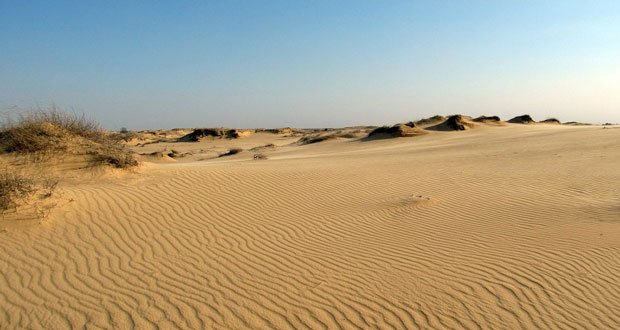
Ukraine’s Oleshky sands are renowned as Europe’s second-largest sandy expanse. It’s is among Ukraine’s most striking natural spectacles. Experts classify this place as a semi-desert due to its fluctuating temperatures and rainfall levels. There’s no doubt that Ukraine’s Oleshky Sands boasts a rather unusual history. In the early 1900s, a sheep breeder is reported to have brought in varieties of sheep. However, before long, the sheep exhausted the grass. Soon, fierce winds smashed through the area. The ground eroded, revealing sand deposits beneath. And suddenly, a desert was born. If you visit the area now, you’ll find that the ribbed dunes are gently sloping into the distance. Moreover, the place is enriched with lush green pine forests and secluded oases. When you’re done sampling these magnificent features, you can end the day by visiting the thrilling town of Optima Kherson.
Touring Poland’s Picturesque Bledow Desert
Europe has long enjoyed a distinguished reputation as the pinnacle of natural beauty. If you love adventure and plan to tour this area, visit one of the deserts, it will be a truly unforgettable experience. Many who toured Poland’s Bledow desert in the 1900s generally thought the desert was a mirage. If you have ever visited the desert, you know it evokes nostalgic visions of the rugged Tatra Mountains and the glistening Masurian Lakes. Of course, this is also the home of the picturesque Bledow Desert, otherwise known as the “Polish Sahara.” This primarily tidy sandy area is nestled between the native Polish villages of Klucze and Chechlo. A keen observer will note that the spectacle is a rare combination of natural coincidence and raw human activity. Due to the effects of deforestation, which is discernable by visitors, you’ll notice that considerable glacier activity has produced deep sandy layers that lie securely below the ground. Significantly, the famous Bledow is Poland’s only desert. It offers a unique experience characterized by a scenic desert heritage. The best way to reach the desert is to travel by car. This is the ideal place to take your kids, showing them this one of a kind destination. Once you’re done viewing the desert, you can proceed to the Ogrodzieniec’s Hotel Pod Figura. Here, you might decide to talk a walk around the crumbling ruins of the medieval Ogrodzieniec Castle; and yes, this castle is said to be haunted by unknown dark powers.
Conclusion
Making a tour around Europe’s deserted border crossings is undoubtedly an unforgettable experience. Many consider these desolate open European borders a significant milestone that adds a feather to the cap of European integration. The free borders have also facilitated tourism, travel, supply chains, and trade across the bloc besides engineering faster economic growth in the surrounding areas. Any well-traveled European adventurer should visit one of these picturesque destinations. Most likely, this peculiar experience will remain etched on your mind for a long time and leave you itching to explore more abandoned border crossings and their surrounding beauties.
The United States has many ghost towns scattered throughout the West. Most have the same story: A deposit of some precious metal is discovered, then a town is set up and people flock to the new town in search of riches. Eventually the natural resources of the area run out and if the town had no other industry, it would die. A unique story is that of Eagle Mountain, California. A rich iron ore deposit brought Henry Kaiser (of Kaiser Steel and Kaiser Permanente fame) to the area in 1948. The mining produced iron ore for 35 years before lawsuits shut operations down. Eagle Mountain was not done, however. Numerous attempts to bring industry back to revitalize the town have tried, and failed, to resurrect the old mining site. So what is standing in the way of progress? The answer might just be surprising.