The Benefits of Pickleball

women playing pickleball
Pickleball is a sport that began in a backyard. It quickly grew in popularity with seniors and teenagers, and high schools have even started holding tournaments. Today, there are over 500 high schools in New York State that offer pickleball classes. In fact, it’s one of the most popular sports on college campuses. As a result, it’s easy to see why. Here are some benefits to play pickleball. Pickleball improves balance, reflexes, and hand-eye coordination. It is a great exercise for the body, but it doesn’t put too much strain on your body. For older players, picking up this sport is a great way to continue playing tennis. It’s also an excellent option for people with physical limitations. In addition, it’s a fun, competitive sport. And it doesn’t cost a fortune. Pickleball was invented in 1965 on Bainbridge Island, just a ferry ride from Seattle. It was designed to be a sport for the whole family, not just for seasoned players. The game was created by three fathers, Joel Pritchard, William Bell, and Barney McCallum, who were interested in creating a fun, healthy, and affordable sport for everyone. The popularity of pickleball has grown tremendously. Unlike regular tennis, pickleball does not have complicated rules. Players have to follow a set of guidelines to get a point, but it is easy to learn how to play. The friendly atmosphere makes pickleball an easy sport to learn. Many players are willing to help newcomers learn the rules and improve their game. The more people you know, the easier it will be to become a pro. There are many venues in every state to play the sport, and most schools teach the sport. Pickleball is a relatively new sport. It was originally popular with kids, and has since become widely popular with adults. It’s a great sport for everyone and can be played by anyone of any age. It’s unregulated, which means it is not governed by an international governing body. In addition, it is an uncompetitive sport. That’s what makes it so appealing to people of all ages. When it comes to pickleball, the rules are simple. The game is a sport that has been played for over 100 years. There are no dress codes, but players do need to be comfortable. Wear tennis dresses or skirts and wear sneakers or flip flops. Similarly, don’t forget to protect yourself from the sun. As long as you play safely, you’ll have a lot of fun playing pickleball. Pickleball is an extremely social sport. Beginners are welcome at pickleball courts and are often a great resource for introducing the sport to others. Ambassadors are often armed with extra paddles and court shoes to help new players. The ambassadors will also help spread the gospel of the sport. Most pickleball clubs and leagues will welcome newcomers, and the games will not be competitive. It is not uncommon to see people in tennis attire, but pickleball is often a better option for this. Another perk of pickleball is that it’s an inexpensive sport. Because it only requires basic equipment, it’s easy to get started. As a result, it’s an accessible sport for communities of all sizes. In fact, many recreation departments refit their tennis courts and make them available to everyone. If you have a small court, you can refit it to suit your needs. In a few hours, you can be playing the game with friends and family. In addition to an official USAPA shirt and ball, a pickleball player’s gear should be comfortable and appropriate for the weather. For example, they may wear a tennis dress or skirt, visors, and safety glasses. Some players will also wear a sweatband, and other accessories. Additionally, they can use an official USAPA logo to represent their team. If you’re a beginner, it’s important to consider the equipment that you will need. Pickleball is a great way to stay in shape. A small court allows for fast-paced games that don’t last long. But don’t let this stop you from enjoying the game! It’s a great way to get a great workout and socialize with friends. But don’t forget to drink plenty of water and stretch your legs frequently! When you’re ready to play, check out some pickleball courts in your area. They’re an excellent source for the latest pickleball information.

Abandoned Underwater: Corsair Plane Wreck

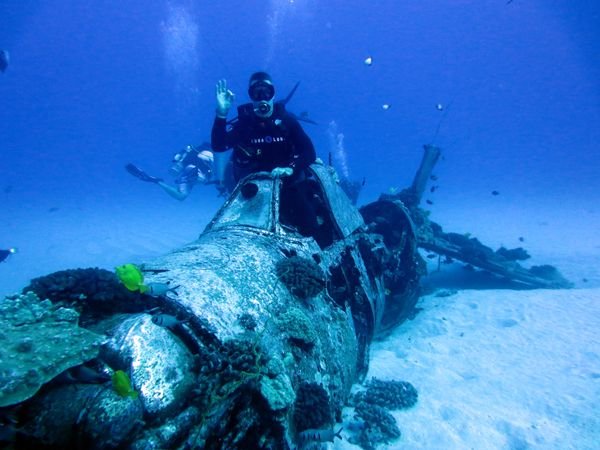
In Oahu, HI, the wreckage of ships, planes, or other large structures is often sunk deliberately with the intent of making an artificial reef. However, the sinking of the Vought F4U Corsair was not intentional but rather an accident. The warplane Vought F4U Corsair crashed in 1945 during World War 2 after allegedly running out of fuel. Today, the abandoned wreck is located on the southeast side of Oahu, approximately three miles away from the Hawaii Kai marina. The wreck can be found at about 110 feet below seawater and is only accessible by boat, but only by professional divers granted access to the watery site.

What Happened on the Vought F4U Corsair’s Last Flight?

The Vought F4U Corsair was a Navy and Marine military plane with bent wings that emitted a unique sound during flight. Its approximate length was 33 feet, with a height of almost 16 feet. The plane was shipped to Oahu and assigned to the USMC, MAW-1, and MAG-12, among other departments. One day, Lt. W. H. Holden took out this plane for a routine training mission from Molokai Field at Oahu to Ewa Field. Within twenty minutes of being airborne, the aircraft started sputtering, presumably due to a fuel shortage or other malfunction. Fortunately, the pilot maneuvered the craft to a smooth water landing before the engine could ultimately fail. However, the plane could not remain afloat and began sinking. Luckily for the pilot, he did not go down with the plane; his lifejacket saved him. (See kids, always wear a lifejacket!) Lt. Holden was later rescued with only a slight cut on top of his right eye as evidence of his harrowing tale. The plane remains primarily intact, with the ocean gradually reclaiming it as its own.

The Vought F4U Corsair Plane Wreck Today

The wreckage of the Vought F4U Corsair rests at a depth of over 100 feet, sitting on the sand surrounded by strong currents. The left wing of the Corsair has sunk into the seafloor, anchoring the wreckage from being washed away by the strong currents. Since the area is free from rocks or other natural structures, the wreckage is suitable for various marine creatures. After over seven decades of sitting underwater, the Corsair plane wreck is a popular adventure site for divers and photographers. However, since the area has unpredictable and strong currents, advanced diving knowledge is a necessity.

The Vought F4U Corsair Plane Wreck as a Natural Habitat and Attraction Site

The wreckage of the Vought F4U Corsair has become an ideal space in the sea for housing several varieties of fish, turtles, and eels. The Corsair lies so deep with harsh currents that it only attracts hard coral colonies. The popularity of the Corsair plane wreck grew in the mid-80s when the wreckage was featured in an episode of the US tv show Magnum. Since then, researchers, adventures, and diving professionals use the wreck as a place to photograph, visit, and study the effects of the ocean in the process of reclaiming a manufactured structure.

The Best Season to Visit the Vought F4U Corsair Plane Wreck

The best time to visit the Corsair plane wreck is during off-peak travel times. Usually, Oahu is less crowded during these periods, and hotel rooms are plenty and at affordable rates. Visiting the site during winter may give you an unmatched experience. During the cold seasons, whales tend to seek shelter on or near the wreckage, making it a stellar place to watch herds of whales.

How to Reach the Underwater Vought F4U Corsair Plane Wreck

Accessing the plane wreckage is fairly easy from the Hawaii Kai marina. You will board a boat from Koko Boat Marina, which will sail off in the northwest direction. After traveling for approximately three miles, you will anchor and ready yourself to dive. The area does have strong currents, so you will need to have a guide while touring. While anchored on top of the wreckage, you will descend an anchor line and swim for about 30 feet down towards the wreck. As you approach the intact plane wreckage, you will notice its exposed wheels, indicating the courageous pilot’s water landing. You will also notice that the plane’s bent propeller, showing the brutal force that took place during landing and sinking.

Key Takeaways

While the plane failed Lt. Holden the day of the crash, Lt. Holden’s training allowed for his survival. And the sinking of the Vought F4U Corsair created an underwater attraction for sealife and humans alike.

Forgotten Romanian Bath House

If you traveled between the Mehedinți Mountains and the Cerna Mountains of Romania, you’d come across Băile Herculane. Băile Herculane is a small historic town, home to one of the oldest resorts in the world. Legend has it that the great Roman hero, Hercules, once came to the town and bathed in the warm sulphuric springs, which are still believed to have healing properties. The many statues of Hercules found throughout the town suggest that his presence has been significant to its past residents. But it’s the famed thermal and sulfur springs that truly set this town apart. The Romans first began developing the natural hot springs back in 153 AD, when members of the Roman aristocracy would frequent the town for the healing waters. Over the years, the resort has undergone elaborate construction as people returned to Băile Herculane for rest and relaxation—or at least the nobles of the ruling class did. In 1852, Emperor Franz Joseph even called Băile Herculane “the most beautiful resort on the continent.”

Băile Neptun

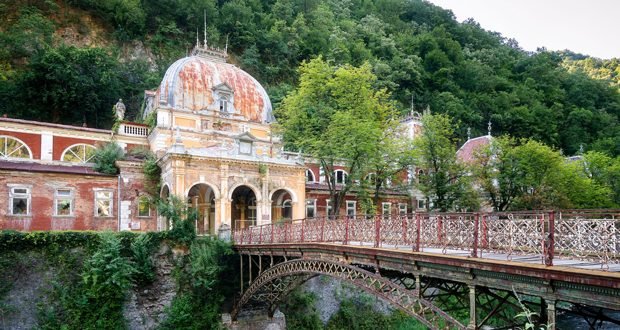
The most significant developments were made in the 19th century, specifically between 1883 and 1886, when the Austrian imperial baths were built. The bathhouse known as Băile Neptun, named after the Roman god of the sea, was once a magnificent spa resort. But, after having been abandoned for hundreds of years, it is now a dilapidated ruin. Before its demise, however, it was a vibrant resort that attracted a lot of tourism under Romania’s communist rule. Hotels were constructed during this time to accommodate the growing tourism.

The Man Behind the Design

The architect behind Băile Neptun, Alpar Igna, created a monument to a bygone era, and now the images captured in the wake of its decay are both haunting and beautiful. Designed with a neoclassical interior, the sulfur and thermal baths consisted of 32 individual cabins and two large pools built of red marble. The grand reception hall is decorated in fine detail, with incredible colors and a ceramic fountain in the middle. While some of the rooms have deteriorated badly, this room has remained relatively preserved.

Capturing the Bathhouse

Image credit: Roman Robroek
The fearless urban photographer, Roman Robroek, found his way into the abandoned buildings and took pictures of the state of the bathhouse in 2019. It is through his lens that we can marvel at the absolute beauty of the place. You could easily imagine what the buildings could have looked like in their prime. Robroek said of his discovery, “In the resort, Roman origins are present throughout the building. For example, plaques dedicated to Hercules, Aesculap, and Hygeia (protective gods of this place) can be found.” While the Băile Herculane is closed to the public—and definitely a safety hazard—these pictures may have been the last remaining memento we have of this forgotten monument to the past.

What is Being Done to Preserve the Bath House?

The bathhouse and surrounding structures were said to be beyond rehabilitation-only a few years ago. Although, as a heritage building, people believed the government should restored it with the help of financial aid. The fact that it’s on land divided between two private owners, even while the building belongs to the city hall, has been an issue of concern and ongoing legal disputes. A few brave archeologists have been fighting for the baths in the hopes that they can change its fate. Between the collapsing walls, plaster, and ceilings, it was becoming a matter of urgency for them to get in and begin the restoration process.

Herculane Project

Image credit: herculaneproject.ro
And so the NGO, Herculane Project, was launched to save the historic building complex, as reported by the BBC. A team of about 25 volunteers, including architects and students, has already raised around €75,000 as of early this year. The team has estimated that they would need about €12 million to fully restore the buildings. They have managed to gain access inside the complex and have started saving vital sections that were under threat of being destroyed irrevocably. So far, they have added 12 sections of roofing, erected structural supports, and protected various interior and exterior relics. “This building needs constant maintenance,” says Oana Chirila, one of the architects responsible for setting up the NGO. Their goal is to have a fully restored, functioning spa in the future.

In Conclusion

While there are other fully operating spas in Băile Herculane, none can compare to the magnificence of the Băile Neptun. To experience Băile Neptun as visitors to the bathhouse were meant to enjoy it would be an honor to any future tourist.

The Abandoned Association and the St. Ambrose Church in Wisconsin

St. Ambrose Church is located in the small town of St. Nazianz, Wisconsin. This Roman Catholic Church was founded in 1898 by Father Ambrose Oschwald, an immigrant from Germany. Father Oschwald left his church in the village of Black Town, Germany, amid claims of mystical and prophetic works to avoid religious persecution from the town’s citizens. But not every townsperson was critical of Father Oschwald. While in Germany, he amassed a following of believers who fled with him to the U.S. Father Oschwald and his cult-like following are said to have used a “divine white heifer’ to guide them through the forest. The heifer took them to what is now known as the village of St. Nazianz. The land was held communally, with all members agreeing to divide tasks equally and work without pay. After settling, Father Oschwald and his followers formed “The Association of Oschwald Brothers and Sisters” simply referred to as “The Association.”

The Death of Father Oschwald

Father Oschwald fell ill in early 1873. There were reports of strange happenings as he succumbed to his illness, like pounding on the walls of his and other residents’ houses. The mysterious pounding stopped after his death on the morning of the next day, February 27th. Father Oschwald’s coffin remained unsealed 63 days after his death before he was moved to a burial site within the Church compound.

The Decline of The Association

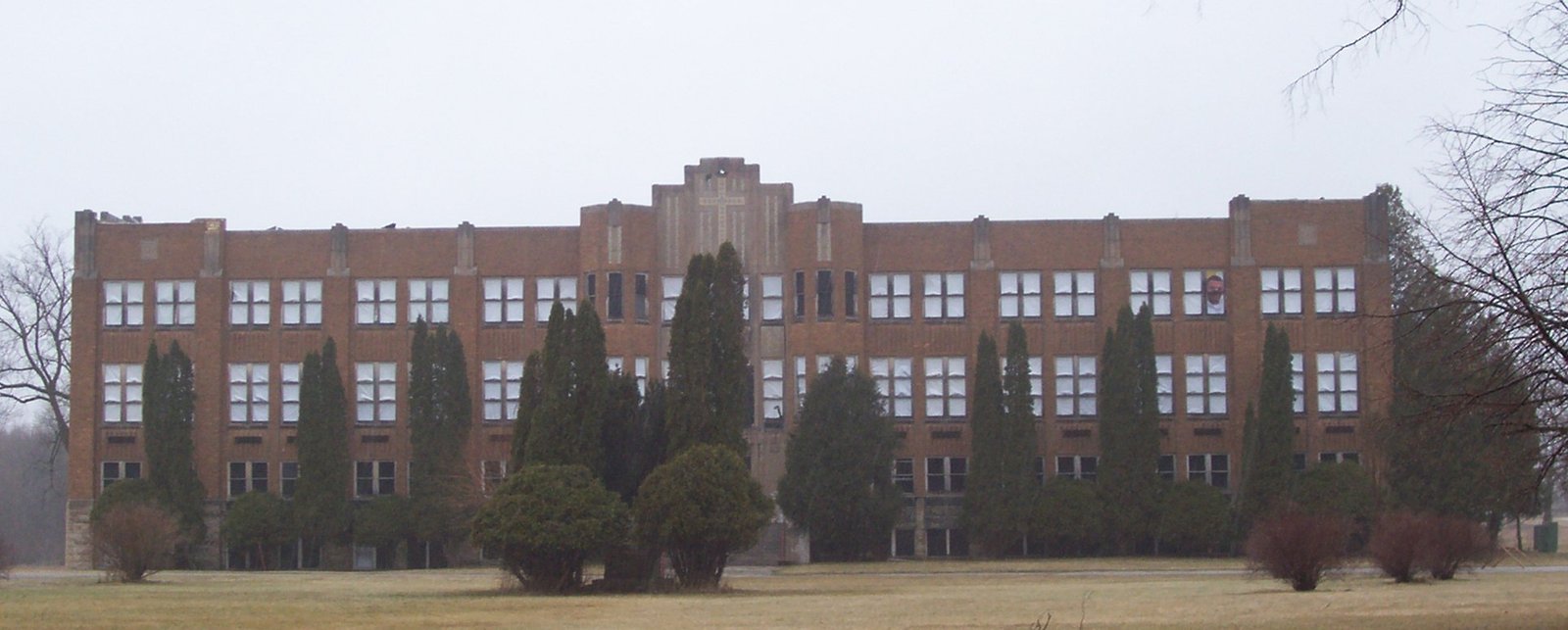
The Association and, by extension, the community that Father Oschwald created started falling apart shortly after his death. The decline was mainly due to legal property battles that strained the Association’s membership and finances. In 1886, The Association invited Father Francis Mary of the Cross Jordan, a German Catholic priest and the founder of the Society of the Divine Savior (Salvatorians). Later that year, the Association turned over its leadership and governorship of their remaining land to the Salvatorians. The remaining members of the Association thrived under The Salvatorians. During the 1920s and the 1930s, the Salvatorians beautified the church in brick and Gothic Revival styles. They also built a new church within the property, the new St. Ambrose Church. In addition to the new church, the Salvatorians also built a new Monastery, utility and farm buildings, a garage, a gymnasium, and a Chapel for the Salvatorian sisters. Most of this construction went into creating accommodation for newly admitted seminarians, who at the time were quite a number. In 1939, the church hosted up to 150 seminarians. Intake at the seminary started to decline in the 1960s. By the mid-1960s, only a few students were enrolling every year. This led the Salvatorians to convert the seminary to a school—the John F. Kennedy Preparatory High School. The following year, the school’s intake was at an all-time high, with the Salvatorians attempting to revive the once glorious seminary days. Unfortunately, the school was unable to maintain adequate enrollment, and it closed down in 1982.

The Haunting of John F. Kennedy Preparatory School

JFK Preparatory was rumored to be haunted. There were reports of unexplainable events happening in the school, attributed to the spirit of Father Oschwald, who is claimed to have cursed the church and other spirits of angry seminarians. The seminarians are said to have been mistreated by nuns while studying in the church. There were also accounts of the ghost of a seminary’s former student who is said to have committed suicide in the school’s dormitory. Currently, the former JFK Preparatory building lies in ruins, abandoned.

Passed Around and Converted

After the school closed in 1982, the church complex went through several owners every decade or so. The property as it stands now has been severely neglected and vandalized. Most of its buildings are dilapidated and uninhabitable. In 2008, United Ministries, a religious organization based in Green Bay, purchased the property and began its transformation to a Christian youth center campus. The Ministry has refurbished some of the church’s properties and buildings, including the former football field and several dormitories. The organization has remodeled the former gymnasium into a thrift store and built a campground near Lake Oschwald. The thrift store is one of the St. Ambrose church properties open to visitors. Even with these renovations, the main St. Ambrose Church building remains run-down and deserted, with only a temporary roof left to shelter curious visitors during the summer.

Conclusion

Despite its mysterious and slightly creepy history, the St. Ambrose Church in Wisconsin is a marvel to both visitors of St. Nazianz and long-term dwellers. The building is now a former shadow of itself with dimly lit windows and shabby structures but is still magnificent and full of history.

5 Abandoned Hotels in the American South

The American South has centuries of history, recording countless important events from the American Revolution to the Civil Rights Movement. Today you can catch a glimpse of this history firsthand in the abandoned hotels that remain. You might run into a ghost, an apparition of the South’s past—or a squatter. Depends on the time, day, and hotel. Here are five abandoned hotels in the American South that are sure to spark anyone’s curiosity.

1. The Ben Moore Hotel, Montgomery, Alabama

The Ben Moore Hotel became a significant part of history when, in 1951, it was the first hotel to welcome African American guests in Montgomery. It was a significant meeting spot for Civil Rights leaders, including Martin Luther King Jr. and the Rev. Ralph Abernathy. It also hosted numerous musical icons, such as B.B. King, Clarence Carter, and Tina Turner. The 28-room hotel was built in 1951 but fell into disrepair after several alleged scandals. By the 70s, it closed its doors and now has an uncertain fate. Once a vibrant social scene free from racial hostilities, the hotel now has pigeons flying through its broken windows, leaving droppings on the dusty ticket booth counter. The barbershop on the premise, however, is still available for tours by appointment.

2. The Baker Hotel, Mineral Wells, Texas

Opened in 1929, the now-abandoned Baker Hotel attracted legendary guests like Lyndon B. Johnson, the Three Stooges, and Bonnie and Clyde. As the first skyscraper outside of a major metropolitan area, the hotel featured 450 guest rooms, meeting rooms for 2,500 guests, automatic light controls, and air conditioning. It also had the first Olympic-sized hotel swimming pool, which was the first-ever built in Texas. Despite surviving the Great Depression, the hotel closed down in 1972 after financial troubles. The Baker Hotel stood abandoned until 2019. Developers expect to reopen the restored hotel in 2022.

3. Orlando Sun Resort, Irlo Bronson Memorial Hwy, Florida

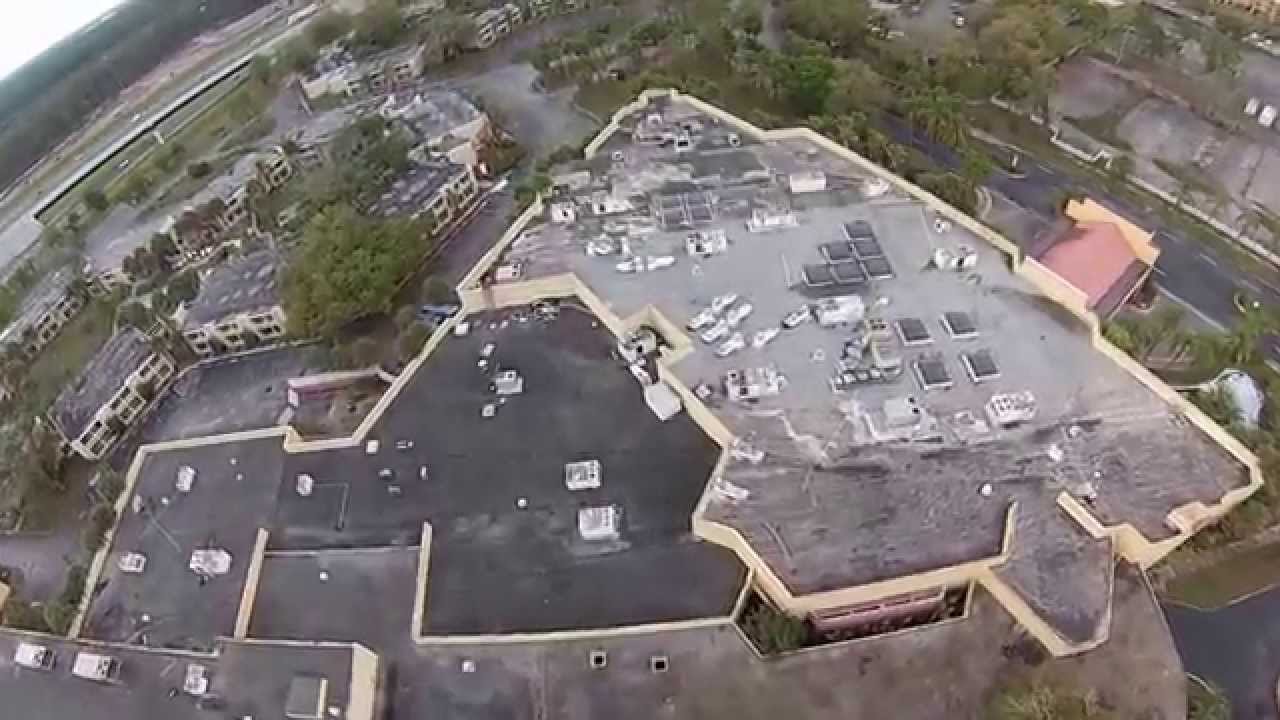
First opened as the Hyatt Orlando Resort in 1972, this abandoned hotel is only five minutes from Magic Kingdom. It attracted many visitors, especially as other parks started to open following Disney’s move to Florida—Epcot in 1982, Hollywood Studios in 1989, and Universal Studios in 1990. Unfortunately, after September 11, Flordia’s tourism significantly dropped due to people’s reluctance to fly. By September 12, 2003, the Hyatt Orlando Resort closed abruptly, telling guests in the morning to leave by noon regardless of their travel plans. The space sat vacant for years before reopening as the Orlando Sun Resort in 2007. However, after horrible reviews, it closed again in 2012.

4. Hotel Viggo, Hebbronville, Texas

Located in the historic Jim Hogg County Courthouse square, the Hotel Viggo was built in 1915 to accommodate local travelers and businessmen. After the oil boom in 1924, developers added a south wing to the hotel to serve wealthy ranchers. The hotel also became significant to Texas history when Hebbronville residents used it as a fortress to protect them against Pancho Villa’s army of bandits. After the Hotel Viggo closed its doors, the County repurposed it as a senior center and space for EMS services. However, even those activities were abandoned, leaving a crumbling structure left to the climate’s destruction. Despite its decay, the state recorded it as a Texas Historic Landmark in 1983, and it still stands today for visitors.

5. The Savoy Hotel, Nowata, Oklahoma

Image credit: digitalprairie.ok.gov
The oldest hotel on this list, The Savoy Hotel was built in 1909 with 62 rooms. It was an elegant hotel and health spa that featured “Radium Water Baths” (I know, I cringed, too) after Nowata workers discovered a water spring while digging for oil during the 1900s oil boom. The owner, J.R. Cruff, advertised the mineral baths as having health benefits for malaria, skin diseases, nervous trouble, and rheumatism. In actuality, radium is a radioactive and extremely harmful element. After the hotel closed its doors, the city repurposed it as a County Hospital in the 1940s. The hotel underwent renovations in the 1990s to be used for weddings, dinners, and events. The feature film “Possums” was also filmed there in 1998. Today it remains abandoned with a leaking roof and decaying interior—and a ghost. In 2013, a man who tried to restore the hotel fell off the roof and tragically died.

What These Landmarks Represent

These abandoned hotels are a glimpse into the rich culture of the American South’s history. They stood as landmarks surrounded by significant historical events or were left abandoned for similar reasons. While the ones on this list still stand, others, such as the Wonderland Hotel in Tennessee, burned down in 2016. Now that you know their story add them to your road trip wish list before they disappear completely.

Concrete Arrows and the U.S. Airmail Beacon System

airmail-beacon-concrete-arrow-cover
Scattered across the United States are a network of mysterious concrete arrows. They are often found in remote locations or areas difficult to access. Some will be accompanied by a small shack, a few have a metal tower affixed to their base. Many are in good condition while others have succumbed to nature. The shape and direction of the arrows vary, but it is clear they served the same purpose. The purpose was important: helping early pilots navigate U.S. transcontinental flights at night. In a era before radar, pilots used ground-based landmarks for guidance. This solution worked for flight during the day, but grounded pilots at night. Before long, a system of beacons was established across the United States to guide airmail pilots around-the-clock. When radar and radio communications made the beacons obsolete years later, most were torn down or abandoned.

Abandoned Kaua’i Jewel: The Coco Palms

On the east coast of Hawaii’s oldest island, an abandoned hotel is slowly being reclaimed by nature. It was a landmark for 40 years, a success story immortalized in classic American movie culture. The Coco Palms Resort was the result of hard work by the Guslanders, a couple who offered an enjoyable Hawaiian experience on beautiful grounds featuring a coconut grove and lagoon. The resort enjoyed worldwide fame when it was featured in several mid-century films, most notably the Elvis Presley classic Blue Hawaii. It thrived for decades as a popular hotspot among royalty and stars, but when Hurricane Iniki struck Kauaʻi in 1992 the hotel was critically damaged. Twenty-plus years later, most businesses and residents in Kauaʻi have moved on. But at the Coco Palms, it’s still 1992: A perfect storm of obstacles has kept the dilapidated structure in a seemingly-inescapable purgatory.

Abandoned Anthrax: Vozrozhdeniye Island

Kantubek Russia
The Aral Sea was known as “the Sea of Islands,” and once upon a time this camp – now in the middle of the desert – sat on the largest. The secrets buried on Vozrozhdeniye Island lurk in the shadows of the greater Aral desiccation storyline. It was once the epicenter of biological warfare testing and housed the largest facility in the world. Its labs experimented with some of the deadliest pathogens known to man. The island operation was shut down in the early 1990s, and authorities believed the remote location of “Anthrax Island” offered the buried biological weapons insulation from the rest of the world. But when the Aral’s water level dropped a land bridge was revealed, which offered anyone access to the site and its arsenal of pathological weapons.