Fifty miles north of Atlanta, a 34-acre compound houses one of the largest car collections in the world. But this collection doesn’t have polished Ferraris or Porsches under shining lights. There are no immaculate Mercedes or Bentleys proudly displayed behind velvet ropes. A rusty sign out front of the site reads “The world’s oldest junkyard jungle, here 80 years.” Curious about the value of your old car? You might find yourself asking, “how much is my junk car worth?” To determine its value, reach out to local junkyards, car removal services, or online platforms specializing in buying used or junk cars. Factors like the make, model, year, and overall condition of your car will influence its value, so gather relevant information before seeking quotes. Most of this collection is unsalvageable midcentury American steel, and it lays strewn about a forested property in rural Georgia. Over 4,500 cars – most of which are model year 1972 or older – belong to a man who spent his life saving some of America’s classic cars from the crusher. Sometimes-Interesting teams up with a fellow blogger to explore the what and why behind Old Car City U.S.A.
Fantasy Glades is strategically located at 44 Parklands, CI, Port Macquarie. The world-famous small exotic theme park successfully entertained visitors in this idyllic Australian area for more than 35 years. With a beautiful rainforest setting, the park catered mostly to families and tourists. The celebrity couple, George and Rosemary Whitaker, and their family, first owned the fairy tale park, opening it in 1968. The original owner later sold Fantasy Glades to Brian Hutchinson, who ran the business in partnership with the Spry family until it closed its doors in 2002. Later, according to records, Tony Williams purchased some of Fantasy Glade’s most popular rides and attraction sites. Williams planned to move these attractions to a different location and then hold a grand reopening of the park in the Hastings River area, but the idea hit a snag and never materialized. Today, this fantastic, historically-rich property can be purchased (or even traded at a lower price) if the buyer is willing to restore the park to its former glory. First, let’s discover more about this impressive, world-renowned fairy tale-inspired theme park.
Owners and Designs
Fantasy Glades is located in a paradisiac area recognized as one of a kind on the Port Macquarie beachside. In 2009, Shane and Karen Hay from Queensland took charge of the property. They planned to reopen the park as soon as possible, but they needed funds and council approval. These tasks became problematic when the health of the owners took a dive. However, in a turn of events, Jeff Crowe later announced he had acquired the site in 2015. The park owners’ initial idea was to develop a children’s Fairy Tale Theme Park. Interestingly, even then, the now deserted park’s main attractions reflected the renowned artiste Brothers Grimm’s work. Further, part of the park’s cherished riches was generally derived from the values cultivated by George and Rosemary Whitaker, who were the founding owners. Fantasy Glades is currently raising awareness about finding a new owner who would be willing to undergo a massive renovation. Social media has had a considerable influence in trying to “save” the beloved property. There were even rumored plans to create a new, environmentally-friendly accommodation center that will serve hundreds of tourists who regularly visit Port Macquarie on holiday.
Impressive Land
The land that Fantasy Glades sits on is impressive. The park covers four acres of tropical rainforests, approximately two hectares of land. It’s located in an area next to the beautiful Shelley Beach. The natural patch of bushland aids in the magical quality surrounding the property. This area of land can be used for many things. You could build a dream home, establish an artist’s retreat, open a caravan park, or start a fanciful bed and breakfast. You may even choose to purchase and refurbish the famous theme park and let tourists access the park once again. Fantasy Glades first became available for purchase beginning March 2008. Its price is currently-tagged at $560,000, or a trade value of $210,000. With the price tag comes a significant amount of work. Left alone for many years, that park has fallen to vandals and their graffiti, broken windows, decaying architecture, and overgrowth from the surrounding land.
Fairy Tale Wonder
Fantasy Glades is a magnificent jewel- it is no wonder it once won wide international acclaim. The enchanted idyllic forest that characterizes the park has several scattered fairy tale stories that greatly enrich the four-acre property. Among these are priceless elements of the Magic Dragon Cave, the Crooked Man’s House, the Old Woman in the Shoe’s shoe, and a creepy Old Witch’s Cottage. The park also features other beautiful attractions, including the Seven Dwarves’ famous bedroom, the magnificent Snow White’s Cottage, and other fairy tale hideaways.
Final Thoughts
The classic fairy tale experience that inspired Fantasy Glade’s original character has given it a peculiar, magical setting. Without a doubt, the park retains a massive potential for a future revival. The surrounding community would love to see its rebirth and profit from its reopening as well. Happily, the beautiful Fantasy Glades current owners would prefer to turn over this priceless resource to people who can bring it back to life. Could you be the one to restore the fairy tale magic?
This New Zealand protectorate is one of the most isolated communities in the world. Palmerston Island is the westernmost islet of a coral atoll belonging to the Cook Islands in the Pacific Ocean. Just sixty two people – all from the same bloodline – occupy the remote island, which sits approximately 2,000 miles (3,200 km) northeast of New Zealand and 2,850 miles (4,590 km) southwest of Hawaii.
While the enclave is an island utopia, paradise comes at a cost: Palmerston lacks an airport, gas station, grocer, and hospital. There are no cars, marinas, hotels, or restaurants. Yet despite this lack of amenities, one family has managed to prosper on the island for over one hundred and fifty years.
With its Carrara marble, terraced English gardens, and Tiffany stained glass, Swannanoa is one of the few Virginia estates that can rival the Gilded Age mansions of Newport, Rhode Island. It was a love song built by a successful railroad baron as a gift for his wife. The Italianate palace was later leased to a convent and then a university for fifty years, before eventually returning to the family who has owned it for three generations. Recent years have not been kind to Swannanoa. The owners’ resources have been spread thin after millions were spent on upkeep. But it wasn’t enough, and the once-proud estate continues to deteriorate. Today the mansion serves out its life hosting paranormal sleepovers and weekend weddings. Fortunately tours are available, which offers explorers a rare opportunity to legally visit a decaying piece of history before it is lost.
Deep in the middle of Sri Lanka, a massive column of rock juts out from the green tropical forest. It reaches 660 feet tall and features frescoes, graffiti, and landscaped gardens. The rock is known as Sigiriya (see-gee-REE-yah) and holds a special place in the island’s cultural history. It was established as the stronghold of a rogue king over 1,500 years ago, and today the Sigiriya complex stands as one of the earliest preserved examples of ancient urban planning. Ultimately the rock was unable to save its king, but it succeeded in preserving ancient Sinhalese culture.
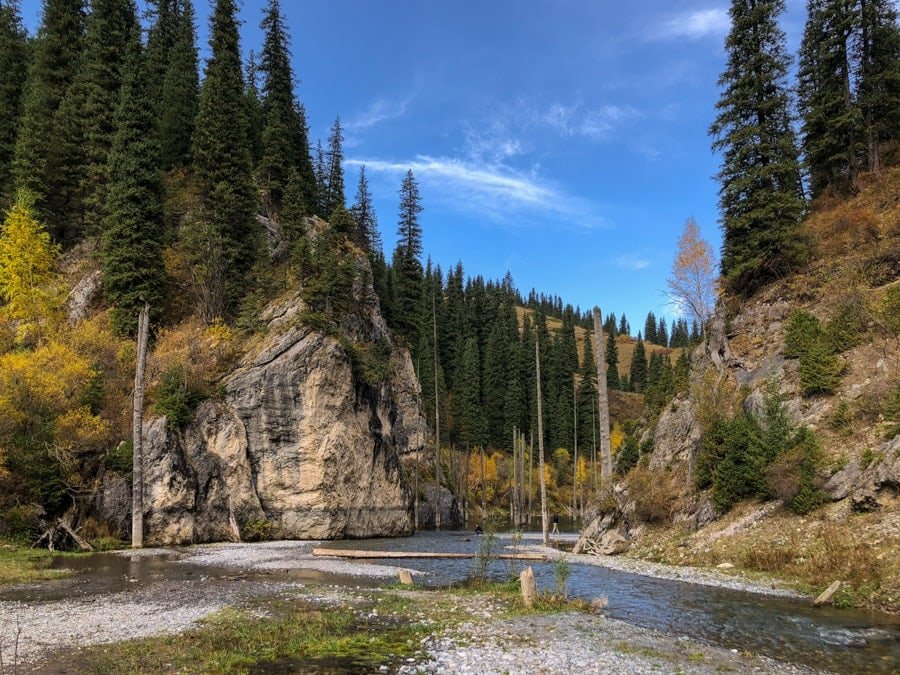
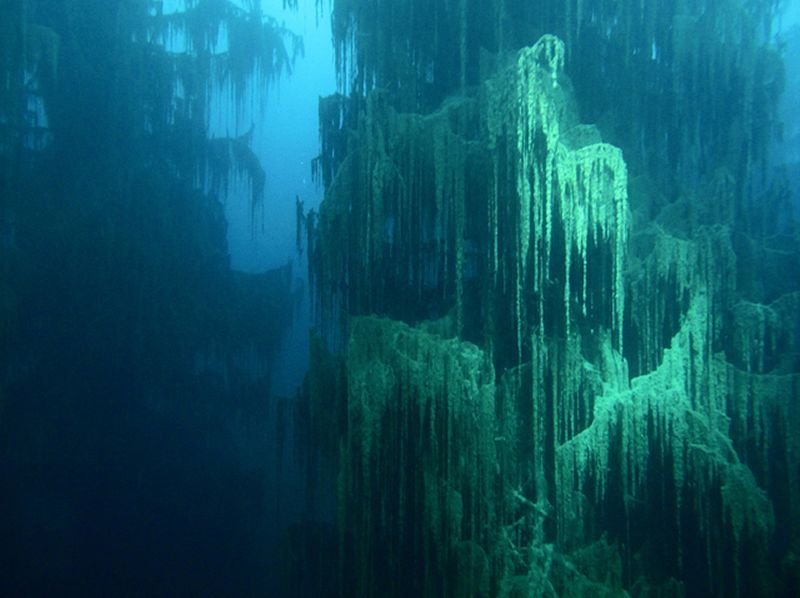
While it sounds like something out of a fairy tale, Kazakhstan’s Kaindy Lake is home to an upside-down, underwater forest. Located in the southeastern Tien Shan Mountains, this lake was formed by an earthquake that hit the area. It led to a massive landslide that blocked the gorge and formed a natural dam. With time, rainwater covered the valley creating a lake. Kaindy Lake receives thousands of visitors each year who are curious to see the unearthly, limestone blue water and submerged tree limbs that pokes out from beneath the water.
History of Lake Kaindy and The Ghostly Trees
Lake Kaindy covers about 400 meters, with its deepest point being about 30 meters. The number of unique dead and bleached Picea Schrenkiana trees rising above the water surface makes the lake so interesting. Together with the improbable turquoise water, these trees’ ghostly image makes the place an unforgettable travel destination. When viewing the sunken trees from above, they appear as large masts from lost ghost ships or even a mysterious army hiding underwater, waiting for the chance to emerge. See, the ice-cold water has been preserving the trees’ trunks for close to over 100 years now. Lake Kaindy has clear mountain water allowing you to see deep into the expanse of the lake. Another unique characteristic of this lake is that the upper part of the trees protruding from the surface lost their branches and bark, so the wood turned white. It’s also home to the world’s largest evergreen tree that grows to 130 to 160 feet. Despite their eerie appearance above water, the lower part of the trees seems to be thriving beneath the water, and many branches are intact. Some tourists go swimming in the lake just to see the underwater forest.
How to Get to Lake Kaindy
To make your way to Kaindy Lake, you’ll need to hire a vehicle that can handle the rough roads. You’ll pass through Saty Village from Almaty, then drive to the lake. Or you can hop on a bus tour. Then there’s a walking distance where cars can’t access, there are lots of cultural activities to experience along the way, and the local cuisine is exceptional. You can also ride a horse from Almaty to the lake since many Kazakh men have horses. The community here has developed a bridge made of logs used when crossing from one side to another, and that way, you get to view the stunning lake from above it. This lake freezes during winter and transforms into the perfect spot for trout fishing and ice diving. The temperature of the lake never gets above 6 degrees centigrade, even during summer. There is an entry fee to the lake, around 550 KZT per person, and an additional 500 KZT for bus tours. The amount can only be paid in cash; credit cards are not accepted. The best way to visit Kaindy Lake is by using a bus tour because they’ll direct you to the best areas to view the lake, and they know their way around the place. On your way to the lake, you’ll get to view desert and canyons before getting to see the ghostly looking trees.
Best Time to Visit Lake Kaindy
The month of September happens to be the best time to tour the lake as the trees display a variety of colors. While the weather is ideal during the summer, the place is less crowded in the fall and you’ll spend less traveling off-season.
What to Carry When Visiting Lake Kaindy
Hiking Boots: This is a nature trip, and you’ll be doing lots of walking. Bring sturdy shoes to avoid hurting yourself on the path.
Water Bottle: The water in Kazakhstan’s local villages isn’t always fresh or clean for drinking, but there are few places you can find clean water to refill. Ideally, you’ll want to bring your own water or a water purifier.
Cash: Come prepared with enough money for all the activities you have planned, including the entry fee for the lake. There is no ATM around the lake and its surrounding areas.
Dry bag: If you plan on hiking at Kaindy Lake, you should know that once you start the journey, there’s no turning back, regardless of the weather. Bring a dry bag to protect your belongings and waterproof gear to shield you from the rain.
The drive and the hike are worth it to see the breathtaking view of these white trees dipped in the turquoise water. If you have the opportunity to explore this ghostlike treasure, found in the mountains of Kazakhstan, it’s a once-in-a-lifetime experience.
Much less serious than the Dancing Plague was the Tanganyika laughter epidemic of 1962. On January 30th, three girls at a boarding school in Kashasha, Tanzania began laughing. The laughter spread like wildfire throughout the school, affecting nearly 60% of the students. Symptoms of those affected lasted from a few hours to 16 days. The behavior was so disruptive, the school was forced to close down.
Genevieve “Gennie” Pilarski quietly passed away in her nursing home room one September day in 1998 at the age of 79. Few noticed or cared as she had been a prisoner of Illinois state mental institutions for over 50 years. Gennie’s parents had her committed to Manteno State Hospital in 1944 when she was only 25. But after being committed to Manteno, Gennie would never be the same. The state would take her freedom, and the doctors would take her sanity.